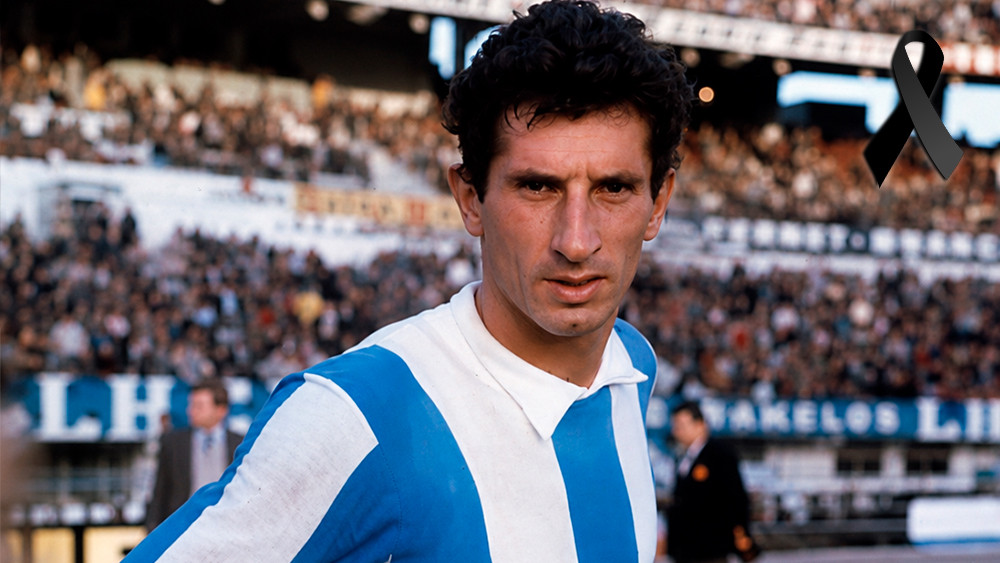
Argentina football legend and former captain Antonio Ubaldo Rattín, whose infamous sending-off against England at the 1966 FIFA World Cup helped pave the way for the introduction of the yellow and red card system, has died at the age of 89.
His former club, Boca Juniors, confirmed his death on Saturday, coinciding with Argentina and England both winning their 2026 FIFA World Cup quarter-final matches to set up another meeting between the historic rivals in Wednesday’s semi-final.
“With deep sorrow, we regret the passing of Antonio Ubaldo Rattín, an idol and emblem of our institution,” Boca Juniors said in a statement.
Read Also: Mbappe overtakes Messi in FIFA 2026 World Cup Golden Boot race
“We stand with his family and loved ones in this difficult moment. Farewell, ‘Rata’.”
The Wembley incident that changed football
Although revered as one of Boca Juniors’ greatest-ever players, Rattín is remembered worldwide for his controversial dismissal during Argentina’s 1966 World Cup quarter-final defeat to England at Wembley.
The midfielder was booked after a challenge on England’s Roger Hunt before protesting to German referee Rudolf Kreitlein, insisting he could not understand him because of the language barrier. Unable to communicate with the Argentine captain, Kreitlein eventually sent him off for what he described as “violence of the tongue.”
Rattín refused to leave the pitch immediately, delaying the match for several minutes before walking towards the touchline, where he crumpled the England corner flag and sat on a red carpet reserved for Queen Elizabeth II.
Reflecting on the incident years later, Rattín said: “When I got to the corner, I twisted the English flag and insulted them. Then I went over to the carpet the Queen used to enter the stadium and sat there for about five minutes. It was a very nice red carpet.”
The controversy exposed the communication challenges between referees and players from different countries and ultimately influenced FIFA’s decision to introduce the now-universal yellow and red card system at the 1970 World Cup.
Boca Juniors icon
Born on May 16, 1937, Rattín spent his entire professional career with Boca Juniors, establishing himself as one of the club’s greatest midfielders.
He made 382 appearances, scored 28 goals and won four major trophies, including Argentine league titles in 1962, 1964 and 1965, as well as the 1969 Copa Argentina. He also helped Boca reach their first Copa Libertadores final in 1963, where they finished runners-up to Pelé’s Santos.
At international level, Rattín earned 34 caps for Argentina and represented the Albiceleste at the 1962 and 1966 FIFA World Cups.
Legacy beyond football
Following his retirement, Rattín coached Boca Juniors during the 1980 season before moving into politics, serving as an Argentine National Deputy from 2001 to 2005.
His contribution to Boca was recognised in 2015 when the club unveiled a statue in his honour outside La Bombonera Stadium.
As Argentina prepare to face England once again on the World Cup stage, the footballing nation is also mourning one of its most iconic captains, whose legacy extends beyond trophies to a moment that changed the game forever.

Join BusinessDay whatsapp Channel, to stay up to date
Open In Whatsapp