
For most logistics businesses, international expansion is not limited by demand. It is limited by the infrastructure required to deliver at scale. Esther Kalu’s Maxmove Logistics found a way around that barrier. Three years ago, Esther Kalu needed to send a package from Nigeria to the United States.
It was a routine shipment, but the experience exposed a problem familiar to many growing logistics businesses: moving a package across borders is only one part of the challenge.
The bigger question is how to manage international carriers, pricing, customs documentation and shipment visibility without building an expensive global logistics infrastructure from scratch.
For Kalu, the answer came through an unlikely route. At the time, Terminal Africa was primarily known for helping online retailers ship internationally. Logistics companies were not its intended customer base. Kalu tried the platform anyway. That first shipment was successfully delivered.
What followed was more than a one-off transaction. It became the beginning of a partnership that would transform Maxmove Logistics, a Nigerian third-party logistics (3PL) company, and influence how Terminal Africa built for logistics operators across Africa.
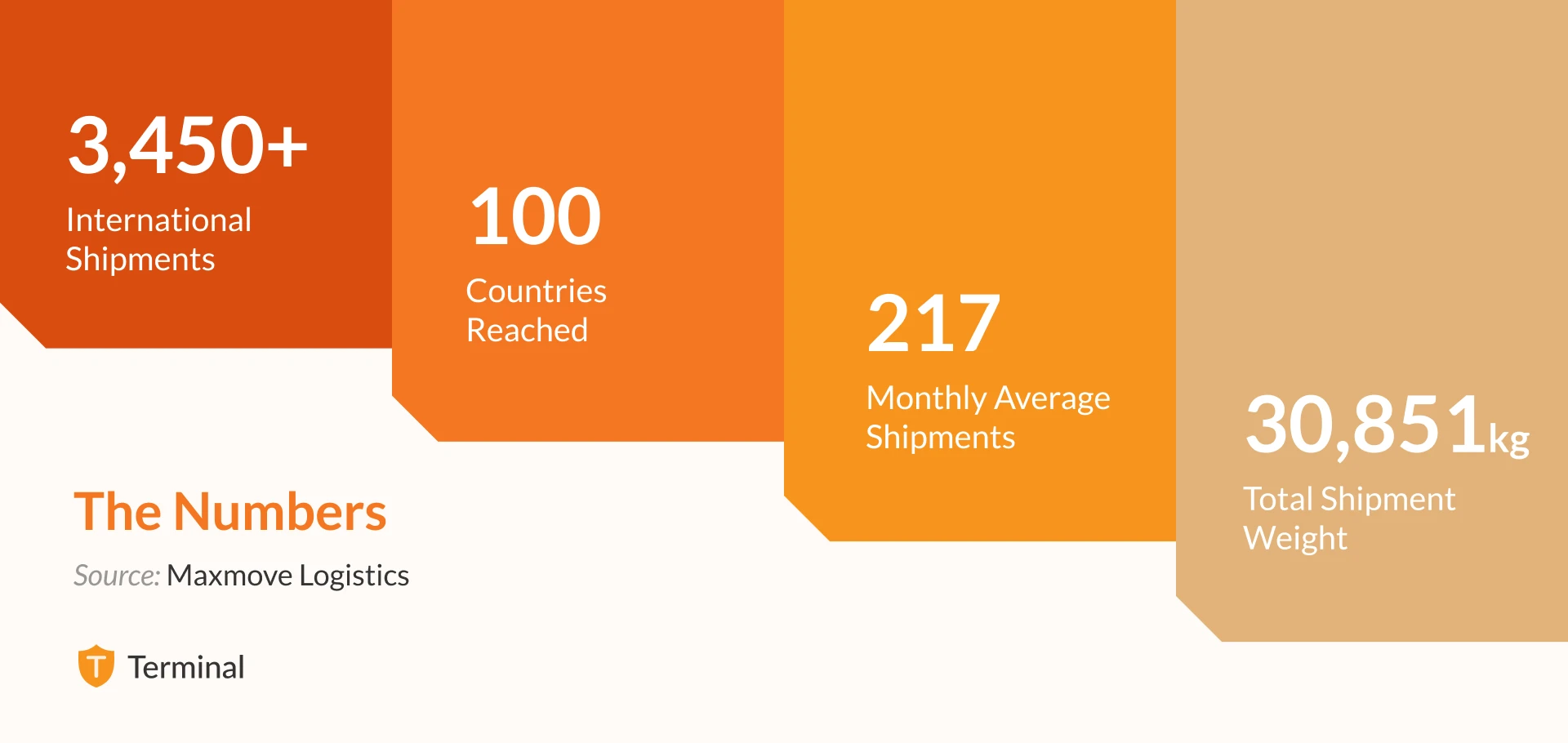
Today, Maxmove has completed more than 3,450 international shipments, reached over 100 countries and moved more than 30,851kg of goods globally. The company now handles more than 200 international shipments monthly.
The infrastructure challenge facing growing logistics businesses
Logistics is an industry where small mistakes can have significant consequences. A delayed shipment can damage customer trust. Incorrect documentation can hold up a package. Unclear pricing can affect margins. And poor visibility can leave both the logistics company and its customer asking the same question: Where is the shipment?
For smaller logistics operators, these challenges are amplified.
International shipping often requires managing multiple carriers, comparing rates, navigating different customs requirements and maintaining a consistent delivery experience across several destinations. The cost of building those systems independently can be significant.
For Kalu, those pressures came at a time when she was also building a business in an industry where women remain underrepresented at the ownership and leadership levels. Rather than focus on the barriers, she focused on building a business her customers could trust.
As Maxmove grew, international shipping moved from an occasional service to a core part of the business. The company needed systems that could handle rising demand without creating additional layers of complexity.
Terminal Africa gave Maxmove access to multiple international carriers through a single platform, alongside upfront pricing and streamlined shipping workflows.
For the company, the impact was practical.
Maxmove could manage more international shipments without having to build the same infrastructure in-house. The time saved could be redirected towards serving customers and growing the business.
The results have been significant.
More than 3,450 international shipments have been completed. Over 100 countries have been reached. And more than 30,851kg of goods have been shipped globally.
What started with one shipment now represents a long-term business relationship.
Why the story matters for African logistics
Maxmove was Terminal Africa’s first logistics-company customer. The relationship demonstrated that infrastructure built for e-commerce businesses could also support independent logistics companies seeking to compete beyond their domestic markets. It also highlighted a wider reality about the African logistics industry.
The companies that successfully expand internationally are not always the largest. In many cases, they are businesses with the systems and infrastructure to support growth.
For a logistics operator sending 10 packages a month or thousands, international shipping requires the same fundamentals: reliable carrier networks, clear pricing, efficient workflows and visibility across the delivery process. For Maxmove Logistics, one shipment proved that international growth was possible.
More than 3,450 shipments later, the company has shown that the opportunity was not luck.
Terminal Africa provides free training and software infrastructure for African businesses that send packages globally. Learn more at www.terminal.africa.

Join BusinessDay whatsapp Channel, to stay up to date
Open In Whatsapp