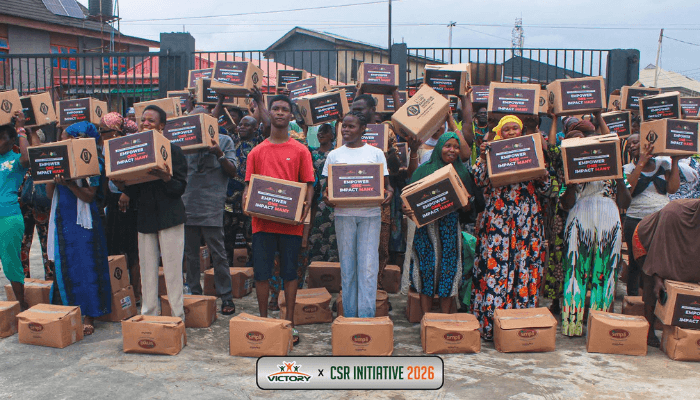
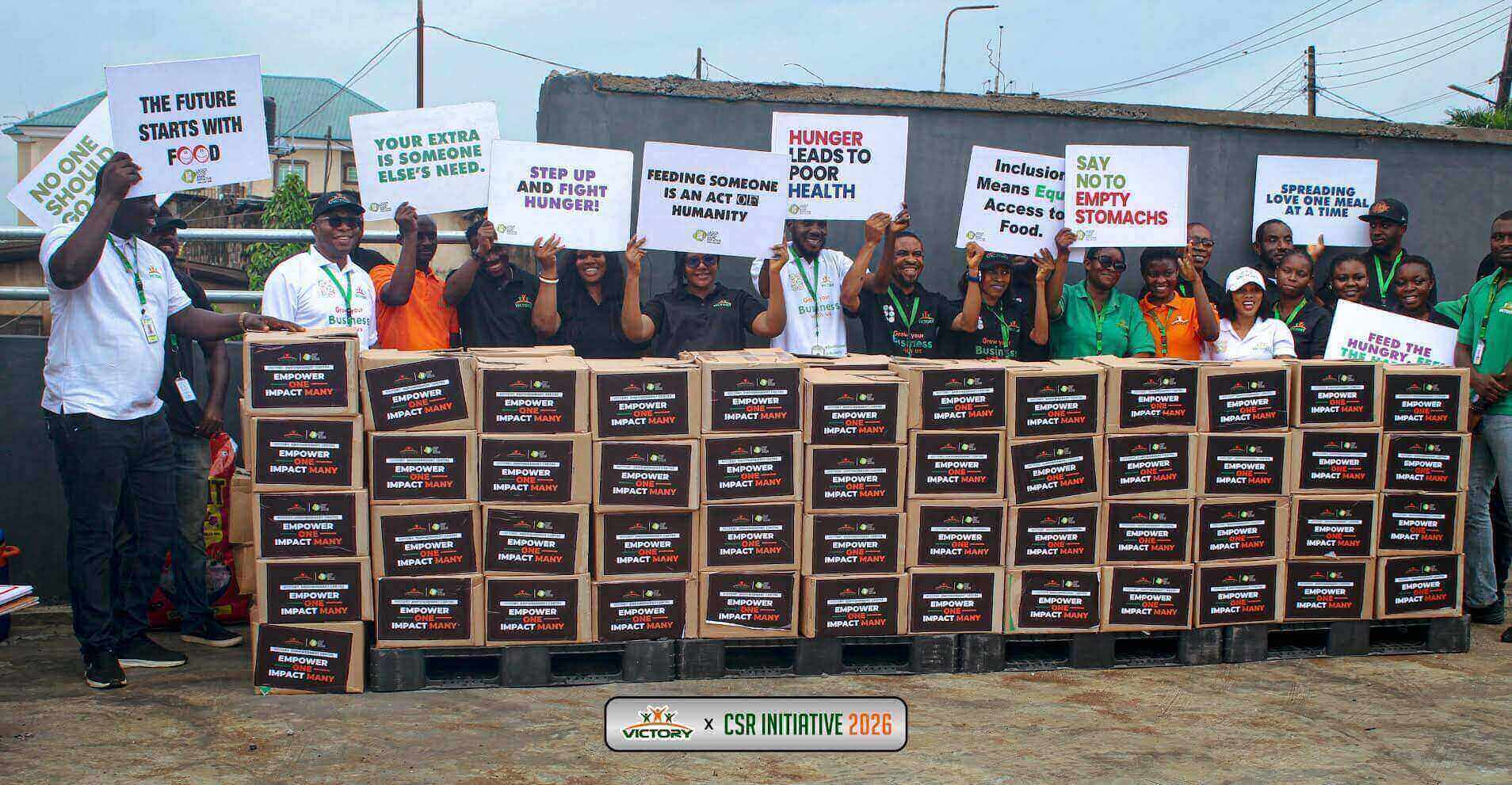
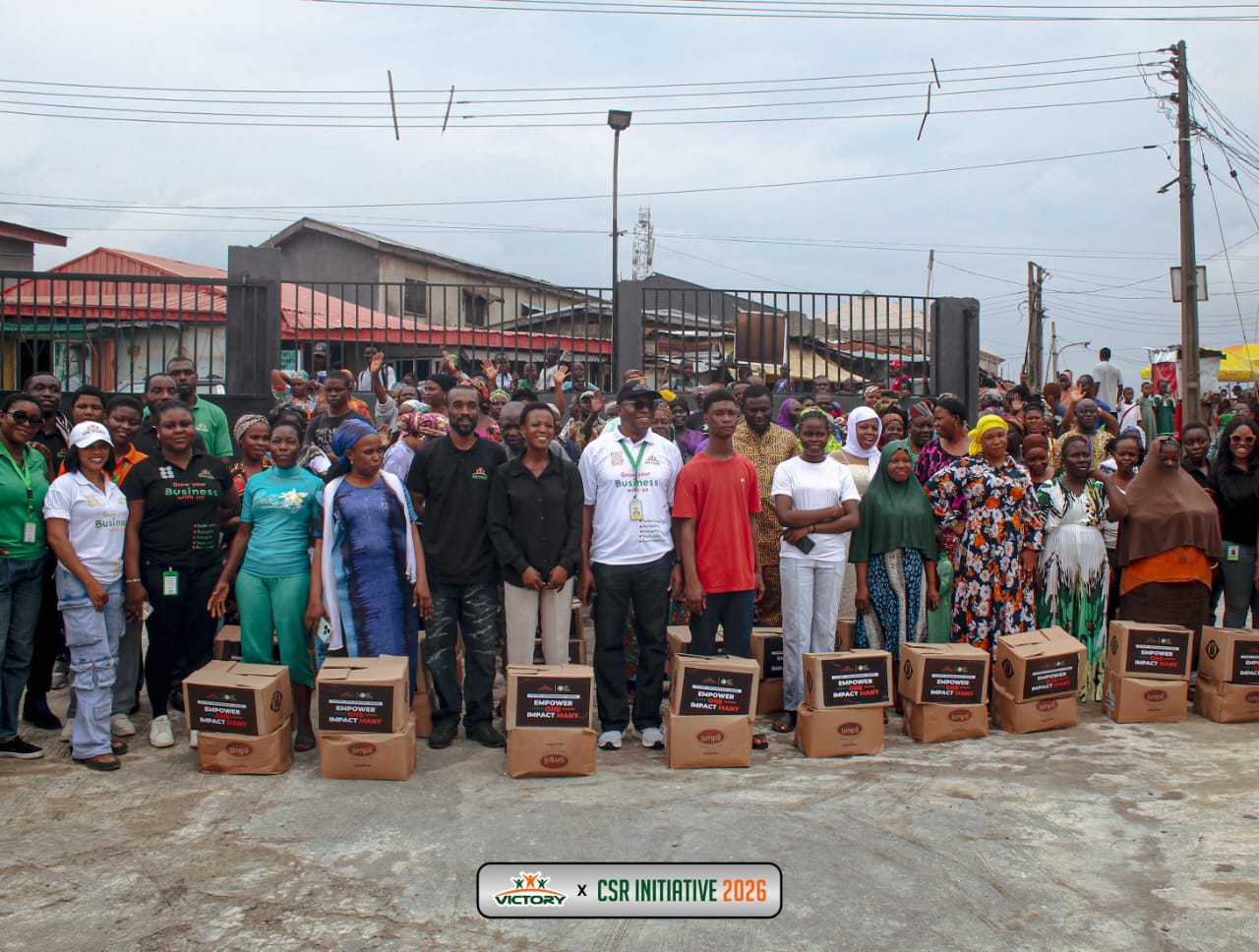
Nigeria — In a country where the difference between a thriving market stall and a shuttered one could often just be ₦50,000 and a little faith, one organisation has spent the last thirteen years quietly betting on the people traditional banks walk past. Last week, that bet took a new form: over 100 households in Gbagada, Ifako LGA, Lagos received food boxes, courtesy of a partnership between Victory Empowerment Centre (VEC) and the Lagos Food Bank Initiative, in what officials describe as a natural extension of the organisation’s core mission —not just lending money to the poor, but standing beside them.
The Corporate Social Responsibility outreach (Empower one – impact Many), held on 26th June 2026, saw VEC staff, volunteers and representatives of the Lagos Food Bank distribute packaged food items to families identified as most in need within Gbagada, Ifako LGA, Lagos — many of them, fittingly, drawn from the same market clusters and trading communities that make up VEC’s client base. For an organisation whose entire business model is built on trust in the “active poor,” it was less a one-off gesture than a public reaffirmation of a promise it has kept, branch by branch, group by group, community by community since 2013.
“For thirteen years, we haven’t just given loans — we’ve given people a reason to believe in tomorrow. This week’s partnership with the Lagos Food Bank is proof that empowerment and compassion have always been the same mission at Victory Empowerment Centre.” Dr Uzoma Nwazuoke B.Tech, MSC, MPM, DBA (CEO, Victory Empowerment Centre)
A Model Built on the Margins
Victory Empowerment Centre (VEC) is a registered non-bank microfinance, technology-enabled financial inclusion institution, operating in Nigeria with a mission to expand access to finance for underserved women, youth, micro-entrepreneurs, and economically active low-income communities
VEC has since expanded beyond its original group loans to offer SME loans and individual loans for entrepreneurs ready to scale beyond micro-trading into larger enterprises.
Since inception, VEC has:
✔ Impacted more than 1.5 million lives
✔ Disbursed over USD 14.6 million in loans
✔ Maintained a 97% loan recovery rate
✔ Built a client base comprised of approximately 95% women and youth. Expanded financial services to underserved and financially excluded communities.
Beyond the Loan Book
What last week’s food distribution made visible is something VEC’s balance sheet cannot fully capture: an institution that sees its clients as neighbours first and borrowers second. Partnering with the Lagos Food Bank Initiative —itself renowned for its logistics-driven approach to hunger relief across Lagos State —allowed VEC to extend support to households experiencing acute need, including some outside its existing client base, reinforcing a broader commitment to community welfare that sits alongside its financial services.
It is a pairing that makes intuitive sense. Both organisations operate at the intersection of poverty and dignity — one addressing the immediate hunger gap, the other addressing the longer arc of economic self-reliance. Where the Lagos FoodBank offers relief today, VEC’s micro-loans are designed to reduce how often that relief is needed tomorrow.
For an institution built on the idea that Nigeria’s poor are not charity cases but “active poor” — capable, industrious, simply underserved — the CSR outreach is a reminder that empowerment and compassion are not competing strategies. They are, as VEC’s thirteen-year history suggests, two halves of the same commitment.

Join BusinessDay whatsapp Channel, to stay up to date
Open In Whatsapp