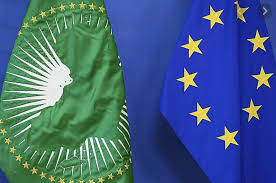
Africa and Europe have an opportunity to double bilateral trade to $1 trillion over the next decade by integrating value chains, according to a new report by Boston Consulting Group (BCG).
The report, titled ‘Strengthening the Africa-Europe Corridor: Strategic Imperative in a Multipolar World,’ highlights the potential for Africa’s industrialisation and Europe’s competitiveness to drive growth.
The report noted that Africa and Europe are long-standing partners with deep economic and cultural ties, underpinned by geographic proximity and complementary socio-economic dynamics.
However, the report said that the corridor has lost momentum. “While Europe remains Africa’s leading partner across all major flows (trade, investment, finance, and mobility), the economic corridor has seen trade and investment grow more slowly than global averages over the last two decades,” said the report
The report warned that, at the same time, evolving trade patterns and technological concentration are now reshaping both continents’ global positioning. It added that increasing trade deficits and limited value capture in the digital and AI economy highlight opportunities for deeper collaboration.
To harness these opportunities, the BCG report proposes focusing on 15 priority industrial clusters with high potential to deepen value chain integration, including resource-based goods, light manufacturing, and tradable services, to drive value chain integration.
The report highlighted two illustrative case studies where deepened value chain integration could create greater value for both continents.
According to the report, Zambia and DRC hold between 70-75 percent of global cobalt and 15-17 percent of copper production. Chinese companies dominate midstream and downstream of the cleantech industry.
Europe could support Zambia and the DRC in their ambition to capture greater midstream value, while securing supply for its own emerging cleantech sector, the report said, while estimating that the value of the corridor could scale from $2 billion to $6 billion over the next decade.
The report also noted that West Africa dominates global cashew production, with the region exporting 70 percent of unprocessed cashews to mostly Asian markets. Vietnam has large processing capacity despite limited domestic production and is responsible for 70 percent of Europe’s cashew imports.
The report noted that integrating the Africa-Europe cashew value chain corridor more directly could scale it from $220 million today to between $500-800 million over the next decade.
The report cited Morocco’s industrial transformation as an example of successful integration into European markets.
“Africa and Europe are objective allies in a fragmented world,” said Patrick Dupoux, BCG managing director and senior partner.
“Shifting from trade to co-production offers a rare win-win: sustainable growth for Africa and strategic resilience for Europe.”
Badr Choufari, BCG managing director and Partner, said, “Success will depend on execution, not ambition alone. Coordinated action from governments, development finance institutions, and companies is needed to seize this opportunity.”

Join BusinessDay whatsapp Channel, to stay up to date
Open In Whatsapp