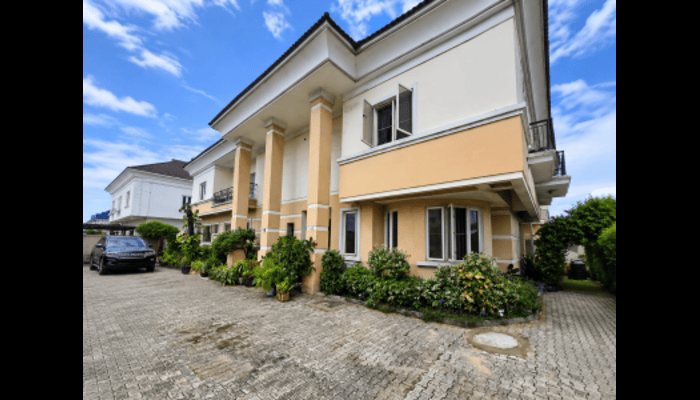
Lekki Phase 1, one of the highbrow island locations in Lagos, Nigeria, now leads other locations within the region in residential rental market growth, recording an average rent of N10 million per annum for a two-bedroom apartment, which is the highest in five years.
The area, which has recorded approximately 36 percent compound annual growth rate over the last five years, also leads the region’s market demand for apartments, even though it is a destination with a mix of commercial and residential properties.
Analysts posit that this area presents a good case for investment in apartment buildings, explaining that investors will gain from its strategic location, strong rental demand, and modern developments.
“The area is well-equipped with top-tier amenities, including reputable international schools, advanced healthcare facilities, and diverse shopping and dining options. It is a growing hub for businesses, startups, and professionals and is supported by ongoing infrastructure development.
A recent Lagos Island Residential Market Report 2026 by Lagos Realty, which tracked residential rental prices, sales values and land costs across Ikoyi, Victoria Island, Lekki Phase 1 and Ikate between 2022 and 2026, ranked Lekki Phase 1 as the strongest-performing rental market.
The report shows that, as against this area’s five-year compound average growth rate (CAGR) of 35.9 percent, Victoria Island has 33.5 percent, ahead of Ikate’s 29.6 percent and Ikoyi’s 22.6 percent.
It shows further that, while Ikoyi remained Lagos Island’s premium residential market by rental, home sale and land values, Lekki Phase 1 recorded the strongest rental growth over the five-year period, highlighting sustained demand for residential properties in the neighbourhood.
The report notes that, despite the stronger growth, Ikoyi remained the most expensive rental market, with the average annual rent for a two-bedroom apartment at N17.25 million, followed by Victoria Island, N15 million, Lekki Phase 1, N10 million, and Ikate, N8.5 million.
For investors, this area is an irresistible destination as it has Lagos Island’s most liquid rental market, supported by the broadest renter base and highest transaction volumes.
In the last five years, average annual rents for one-bedroom apartments have risen from N2.5 million in 2022 to N7.5 million in 2026. Two-bedroom rents increased from N4 million to N10 million, while three-bedroom apartments climbed from N5 million to N15.5 million, representing a five-year CAGR of 32.7 percent.
Four-bedroom apartment rents rose from N5.5 million to N21.5 million, while five-bedroom units increased from N6.5 million to N25.7 million.
The report notes that actual rents vary by project type, unit size, specifications and amenities, with premium gated communities, serviced residences and waterfront developments typically commanding higher prices.
Overall, rent in Lagos has seen outrageous increases such that in the last 24 months, the rental market has recorded 50-200 percent increase, mostly in the residential market, which has been blamed chiefly on inflation and building materials costs, which have pushed up construction costs.
Cement, for instance, has seen unimaginable price increases in the last 12 months, rising from between N7,700 and N9,000 for a 50kg bag by the second quarter of 2025 to its current retail price of between N12,500 and N15,000 in markets across Lagos, Abuja, and Abia, depending on location.
Close market watchers are worried that, even though Nigeria produces a surplus of 25–30 million tonnes of cement annually, local prices are nearly double the African average, questioning why its costs have remained aggressively high despite stabilisation in other macroeconomic factors.
A recent report by Fortren & Company found that Nigeria’s construction costs rose by 20 percent between December 2025 and May 2026 due to higher material and energy prices.
The report added that, besides inflation and other macroeconomic factors, rising freight costs linked to the Iran-Israel conflict pushed up the prices of cement, steel and finishing materials, forcing some developers to delay projects, renegotiate contracts or scale back project specifications.

Join BusinessDay whatsapp Channel, to stay up to date
Open In Whatsapp