…assures on infrastructure delivery to promote business growth
The Lagos State government has said that opportunities are emerging in urban regeneration, affordable housing, logistics and industrial parks, climate-resilient infrastructure, and transit-oriented development.
The state notes that the outlook for Nigeria’s construction and real estate sectors in 2026 is cautiously optimistic, adding, however, that the sector will reward only those who plan deliberately.
Moruf Akinderu-Fatai, the state’s commissioner for housing, who gave these hints, cautioned that the opportunities in the sector will not be unlocked by policy volatility or fragmented planning.
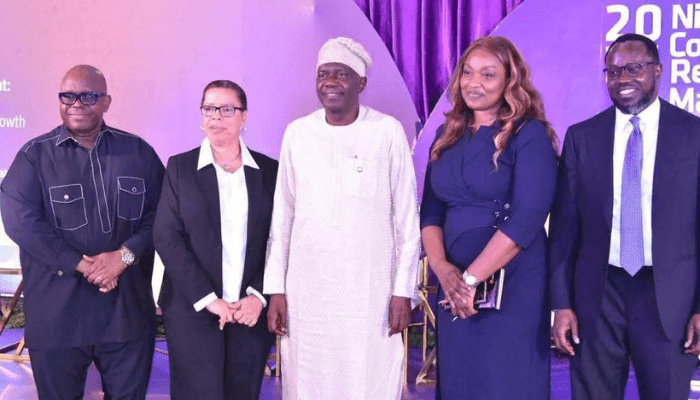
He spoke at a forum on Nigerian Construction and Real Estate Market Outlook 2026 hosted by the Royal Institution of Chartered Surveyors (RICS) Nigeria Group, where he represented the state governor, Babajide Sanwo-Olu.
The event had its theme as ‘Infrastructure Development: A Catalyst for Real Estate, Construction, and Economic Development.’
Akinderu-Fatai assured that the state government would provide the needed infrastructure for profitable investment in the sector.
“For Lagos, the next phase is clear. Our priorities remain focused on deepening infrastructure delivery, strengthening institutions, expanding climate-adaptive investments in drainage and resilience, and ensuring that urban growth translates into measurable improvements in quality of life,” he disclosed.
“We are committed to providing a stable policy environment, improving data-driven planning systems, supporting innovation in construction methods, and broadening partnerships with the private sector and professional bodies,” he added.
In Lagos, it is believed that infrastructure is not an accessory to growth, but rather it is its architecture. It determines where value emerges, how cities expand, and whether growth is inclusive or exclusionary, and whether it is resilient or fragile.
The commissioner said that Lagos offers a practical case study of this reality, pointing out that, as Africa’s largest city and Nigeria’s economic nerve center, the state absorbs thousands of new residents every day.
“This scale presents enormous pressure, but it also creates opportunity — provided infrastructure is planned ahead of demand, not behind it. Our experience has shown that when government leads decisively in infrastructure, markets respond with confidence,” he said.
Earlier, Tayo Odunsi, chairman of RICS Nigeria Group, had highlighted the interconnectedness of construction, real estate, and economic development in what he described as three essentials for the sector namely, conviction, access to patient capital and execution of projects.
On his part, Ayo Ibaru, Director, Research / Chief Investment Officer, Panterra, stated in his presentation at the event that Nigeria’s real estate market in 2026 will be shaped by the ever-evolving implementation of fiscal policies and the structural imbalances they aim to resolve.
Ibaru, whose presentation drew extensively from his company’s 2026 market outlook, noted that the real estate market in 2026 will see uneven submarket growth tempered by pre-election uncertainties.
“Some analysts see infrastructure-led expansion and digital integration driving opportunities. The former remains a trusted pattern. The latter, not so much,” he said, citing recent studies that underscore the market’s resilience, contributing 5-6 percent to GDP.
“This outlook draws on patterns, where pre-election years often witness caution and a slowdown in transaction volumes. Analyses of past election cycles reveal that the 2019, 2015, and 2011 presidential elections reflected sensitivity to electoral cycles. Investment activity is characteristically hesitant and then selective,” he surmised.
Ibaru noted further that market performance in pre-election periods has been marked by subdued activity and delaying commitments, recalling that ahead of 2023, the market saw high inflation and policy flux contributing to a 20 30 percent dip in foreign investments.
According to him, there may be similar fortunes for 2026-2027, but election-related spending will likely boost short-term rentals and commercial spaces, albeit temporarily. Long-term projects with dependencies on the government will stall due to concerns around policy somersaults.

Join BusinessDay whatsapp Channel, to stay up to date
Open In Whatsapp