Nigerians are still trying to make sense of what has happened to their economy over the past three years. Public debate has largely centred on inflation, fuel prices, exchange rates and the immediate hardship caused by recent reforms.
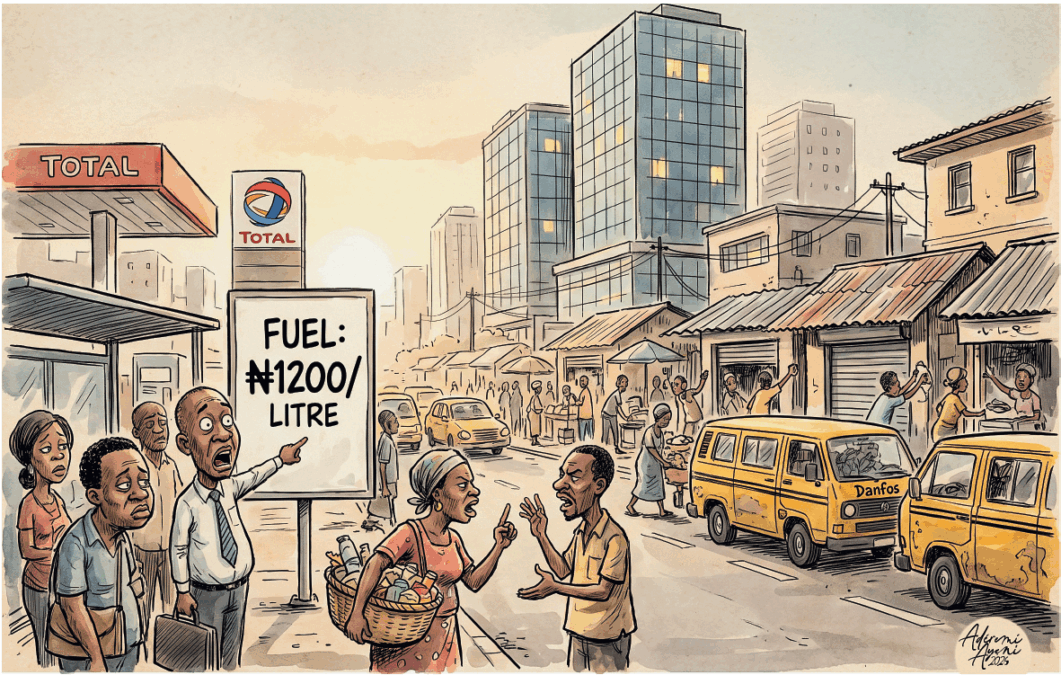
Households worry about shrinking purchasing power, businesses grapple with rising costs and thinner margins, while policymakers defend painful decisions as the price of restoring stability. What has received far less attention is that Nigeria has crossed an important economic threshold. The country is moving away from an era where subsidies, administrative controls, preferential access to foreign exchange, and oil revenues shaped prices more than market realities.
The transition has been painful and politically contentious, but it marks what might be called “the end of cheap Nigeria.” The phrase is deliberately provocative because life has never been cheap for millions of Nigerians burdened by poverty, unemployment, and insecurity. “Cheap Nigeria” is not about the cost of living. It describes an economic system in which petrol, foreign exchange, imports, and, in many cases, credit were priced below their true economic cost.
Nothing in economics is free. Every artificially low price simply shifts the cost elsewhere. Governments bear it through widening fiscal deficits, future generations inherit it through rising public debt, businesses face declining competitiveness, and the wider economy pays through years of underinvestment in infrastructure, education, and productivity. Oil revenues allowed Nigeria to postpone these costs for decades, masking deep structural weaknesses. Over time, businesses adapted by relying less on innovation than on subsidised fuel, preferential foreign exchange, and government patronage. That economic model eventually reached its limits.
The reforms introduced from 2023 did not create Nigeria’s economic problems; they exposed them. The sequencing flaws notwithstanding. The removal of petrol subsidies revealed the true cost of energy. Exchange-rate liberalisation revealed the depth of the scarcity of foreign exchange. Higher interest rates reflected the effort to restore macroeconomic stability after years of inflationary pressure. Across the economy, prices moved closer to market realities.
For households and businesses, the adjustment was severe. Costs rose far faster than incomes, while companies built around cheap imports, inexpensive energy, and privileged access to foreign exchange suddenly confronted a very different commercial environment. Consumers experienced a sharp erosion of purchasing power. However, beyond these immediate pressures, the broader economy is by several macroeconomic measures stronger today than it was a few years ago. Inflation has eased from its peak, external reserves have improved, the balance of payments has returned to surplus, capital inflows have strengthened and international investors are paying closer attention to Nigeria again. That amounts to macroeconomic stabilisation, not prosperity.
Macroeconomic stability creates the conditions for growth by reducing uncertainty and restoring confidence, but it does not automatically raise incomes, create productive jobs or improve living standards. Those gains depend on a second phase of reform centred on productivity rather than price correction. Nigeria’s economic debate should now move beyond whether subsidies were removed or exchange-rate reforms came too quickly. Those questions matter, but they are no longer the central issue. The greater challenge is what kind of economy emerges after the era of artificially cheap inputs.
For decades, Nigeria occupied an uncomfortable middle ground. Much of its competitiveness depended less on efficiency than on subsidies, administrative controls, and privileged access to cheap inputs. As energy prices become more market-driven and fiscal constraints tighten, that model is giving way to one where competitive advantage depends increasingly on productive capability. The businesses most likely to thrive will be those that create more value with fewer resources, embrace technology, strengthen local supply chains, and innovate. This may prove one of the most important economic shifts in Nigeria’s post-reform economy.
This transition also redefines the role of government. Removing subsidies cannot be the destination of reform but only its starting point. Markets deliver better outcomes when governments provide the foundations of productivity through reliable electricity, efficient transport, quality education, public security, digital infrastructure and effective institutions. The objective of reform was never to make Nigerians pay more but to enable Nigeria to produce more. Higher prices merely expose long-hidden inefficiencies. Prosperity comes when workers become more productive, firms become more competitive and investment generates greater value. That remains Nigeria’s unfinished reform agenda.
The impact of the current reforms cannot be measured simply by the removal of subsidies, movements in the exchange rate, or even the pace at which inflation declines. Those are important indicators of stabilisation, but they do not determine whether an economy becomes more prosperous. What matters is whether Nigeria generates rising incomes through stronger institutions, higher productivity and sustained innovation rather than hidden subsidies, price controls and periodic oil windfalls. That is the deeper significance of the present moment. Nigeria is confronting the limits of an economic model sustained by oil revenues that delayed difficult reforms for decades.
Nigeria’s economic debate can no longer revolve around making things cheaper. It must now focus on making the economy more productive. Countries become prosperous not by permanently suppressing prices but by creating more value with the resources they possess. The era of cheap Nigeria has ended. Whether it marks the beginning of a more productive economy will depend less on the prices Nigerians pay than on the productivity they achieve, the institutions they strengthen, and the economic choices they make over the next decade.
More from our YSoT Column


Join BusinessDay whatsapp Channel, to stay up to date
Open In Whatsapp