….“When hospital wards go dark, and taps run dry, the fight to save lives becomes even harder,”- Health Union
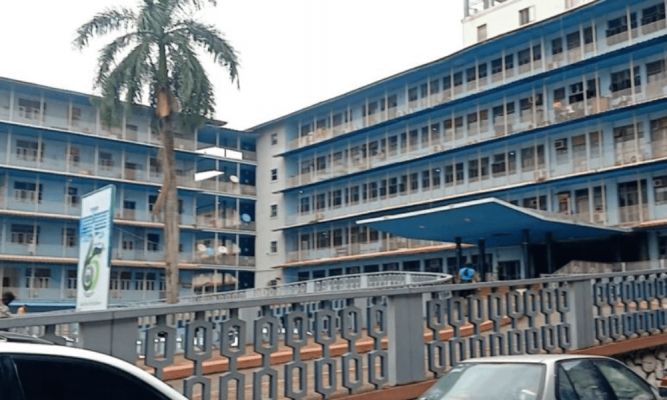
Poor power supply and a persistent water shortage have pushed healthcare services at the University College Hospital (UCH) in Ibadan to the brink, leaving patients and health workers struggling to cope with worsening conditions. UCH was established in 1948, making it the first in Nigeria.
The double whammy of power and water crisis has triggered a strike action among health workers, who say the deteriorating situation is not only disrupting medical services but also putting lives at risk.
Patients receiving treatment at the hospital are now bearing the brunt of the breakdown, as delays, disruptions, and strained resources threaten the quality of care in one of Nigeria’s foremost tertiary health institutions.
Health workers also say the conditions have reduced patient care to its lowest standard, raising urgent concerns about safety, hygiene, and doctors’ and nurses’ ability to effectively attend to the growing number of patients seeking medical attention.
“Some patients in critical conditions, such as those suffering from chronic diarrhoea, have resorted to leaving the facility because there is no water to clean them up after passing stool,” noted Uthman Adedeji, president of the Association of Resident Doctors (ARD), UCH chapter.
“Some health workers and patients bathe in bowls rather than bathrooms to save water for other cleaning services. The situation is bizarre,” he noted.
Other health union members shared similar concerns, lamenting wastage and redundancy caused by poor power supply and water shortages.
“Most of the machines we use depend on power, while some drugs require preservation at a certain temperature. But with the crisis, they go bad or become ineffective, fueling wastage of resources,” noted Daniel Adejobi, public relations officer of the Nigerian Union of Allied Health Workers (NAUPHW), UCH chapter.
“The crisis has also triggered avoidable deaths as ventilators malfunction, while health workers trip on staircases due to the lack of power,” he added.
Read Also: Inside Nigeria’s $6bn freight market where local investors are missing
Extreme implications of poor power supply
The crisis has deteriorated to a point where patient care and staff safety are increasingly at risk. Ventilation failures, extreme heat in operating rooms, and poor lighting conditions have created dangerous working environments for health workers.
“The crisis has deteriorated to a point where health workers collapse in operating rooms due to heat stress,” noted Adedeji, ARD president, UCH chapter. “A colleague of mine recently collapsed while operating on a patient due to heat stress,” he added.
He added that the poor working conditions are exposing health workers to serious health risks.
“Sometimes our colleagues prick themselves with needles while struggling to administer injections in darkness, putting them at risk of HIV or Lassa fever,” he said.
Adedeji warned that the situation could worsen if a disease outbreak occurs under the current conditions.
“If there’s an outbreak, many patients might deteriorate due to poor hygiene conditions resulting from the lack of adequate power and water supply,” he further explained.
The crisis is also affecting medical training at the institution. A medical student who pleaded anonymity said their learning experience has been severely disrupted.
“I’ve not been learning what I should as a medical student due to poor power supply, as major surgical operations are being stalled,” the student said.
The student also described the daily struggles faced by trainees.“Sometimes we have to queue for hours to get water, and other times we don’t even bathe in the morning before going to work because there’s no water,” the student added.
Read also: US troops in Nigeria only on training assistance, says Christopher Musa
Poor internally generated revenue
Health workers also lamented declining internally generated revenue as a result of the crisis, noting that many patients are turned away because critical conditions cannot be attended to.
“I have seen the number of surgeries decline from 300 to fewer than 20 per week. This has led to reduced income for the hospital,” Adedeji, ARD president, noted.
“MRI machines, CT scans, and other equipment that should be generating income are not operational as a result of poor power supply,” he added.
Other health workers also lamented that laboratory services are operating minimally as a result of the crisis.
“Labs are not fully operational. We find it difficult to attend to patients because there’s no water to mix reagents or clean up tools,” Adejobi, NAUPHW PRO, noted.
102 days in darkness
In 2024, the entire health facility was in total darkness for 102 days( Between November, 2024 and February, 2025) after management raised concerns about increased electricity tariffs and accrued debts, which led to federal government intervention through the Minister of Power, Adebayo Adelabu, according to sources.
Residents at UCH also raised concerns about electricity being rationed to just three hours per day, making it difficult to pump enough water to sustain the facility daily.
“We pay for electricity at Band A premium rates of N256 per unit rather than the N209 others pay. However, electricity is still rationed to as low as three hours per day,” Adedeji stated.
“For a hospital that once treated the Prince of Saudi Arabia, this crisis is so bizarre,” a source stated.
“We cannot continue like this,” Chinonso Egemba, co-founder of AwaDoc, noted.
To date, the internal crisis has not been resolved, as management still enforces electricity rationing despite steady supply from the Ibadan Electricity Distribution Company (IBEDC), the unions say.
With the ongoing five-day warning strike by health workers under the Council of UCH Union Leaders (CUUL) to resolve the crisis, health workers state that if the matter is not addressed, the strike may continue, putting patients’ lives at risk.
Way forward
Health workers are soliciting the intervention of the government and relevant stakeholders to restore order in the facility.
“Stakeholders should ensure an enabling environment for operations while restoring sanity to our workplace,” Adejobi noted.
Other union leaders also called for a resolution to the ongoing internal crisis between the management and the health unions.

Join BusinessDay whatsapp Channel, to stay up to date
Open In Whatsapp