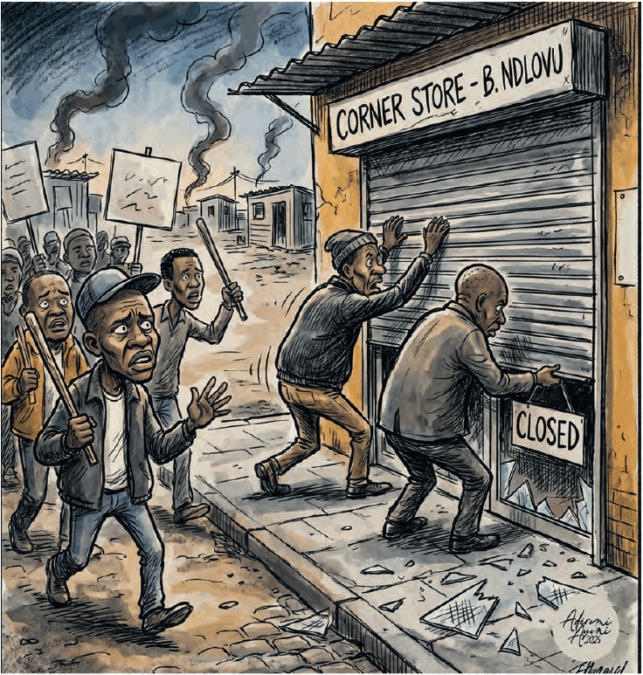
There is now a grim pattern to the recurring episodes of violence in South African townships: armed youths pounding storefront pavements, targeting immigrant shopkeepers and workers for harassment, and displacement. Predictably, the public debate that follows settles into a familiar moral vocabulary – xenophobia, Pan-Africanism betrayed. These labels carry emotional weight, but they offer little practical help in solving a problem rooted in economics and governance.
If this structural crisis continues to be misdiagnosed as a psychological ho