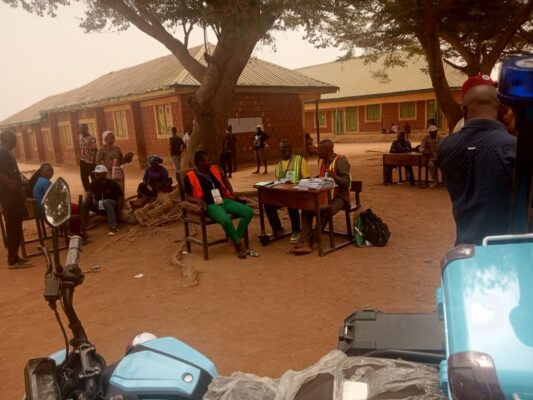
Low voter turnout, confusion over polling units, and widespread disenchantment marked voting at Maitama I and II Primary School, Polling Unit 006, Area Code 9, Kubwa village, Bwari, on Saturday, as youth and women leaders of the Peoples Democratic Party said frustration and loss of trust in the process were driving apathy and vote trading.
Many voters were seen loitering around the polling unit, clutching their permanent voter cards, unsure whether to cast their ballots. Some said their original polling units had been disbanded, leaving them unable to locate their names on the voter register. Others, particularly young people, were observed approaching party agents, openly discussing the possibility of selling their votes for small tokens.
A young voter, who spoke to BusinessDay on condition of anonymity, said he no longer believed his vote would count. He said he left the comfort of his home to vote for the PDP candidate, only to be told on arrival that the candidate had stepped down.
“Why should I vote? We came out in 2023, gave our all, but at the end, citizens voted and politicians won. Now, I have my PVC, but it is for sale,” he said.
Maryam Madaki, former woman leader, small letters, of the PDP in Kubwa ward, popularly known as 33, said decades of loyalty to the party had yielded little, deepening her sense of grievance.
She said she had been a PDP member for over 40 years, beginning her political journey in her twenties, and recalled campaigning during the era of the G34 and mobilising support for former President Olusegun Obasanjo at the International Conference Centre in Abuja.
“To vote is now very painful. I spent my transport to come and cast my vote, only to get here and find that the PDP structure has collapsed to the APC. Politics should be give and take. After elections, voters should be carried along and compensated, but that is not what we get,” she said.
Madaki said she felt aggrieved and sidelined by party elders, adding that years of sacrifice and mobilisation had not translated into recognition or support.
The scenes in Kubwa reflect broader concerns about declining public confidence in the electoral process, with voter frustration, poor logistics, and internal party disputes combining to dampen enthusiasm and participation.

Join BusinessDay whatsapp Channel, to stay up to date
Open In Whatsapp