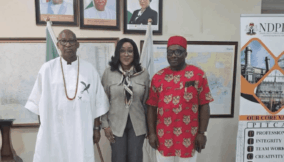
Abba Kabir Yusuf, governor of Kano State, has resigned his membership of the New Nigeria People’s Party (NNPP), marking one of the most consequential political defections since the 2023 general elections and triggering a mass exit of elected officials across the state.
Yusuf’s resignation, which takes effect from Friday, January 23, 2026, was formally communicated in a letter addressed to the chairman of Diso–Chiranchi Ward in Gwale Local Government Area, his ward of registration. The decision, according to the governor, was driven by protracted internal disputes and unresolved leadership crises within the party that have eroded cohesion at both state and national levels.
The development was confirmed by Sunusi Tofa, the governor’s spokesperson and director-general of media and publicity, who said Yusuf’s decision followed weeks of internal consultations and reflection.
In his resignation letter, Yusuf acknowledged the role the NNPP played in his political rise, particularly its support during the 2023 elections, but said the party’s internal instability had become a constraint to effective governance and political coordination.
“In recent times, the party has been confronted with persistent internal challenges arising from leadership disagreements and ongoing legal processes, many of which are presently before the courts for judicial determination,” the letter stated.
Read also Kano NNPP crisis deepens as Deputy Governor Gwarzo aligns with Kwankwaso camp
He added that what began as internal disagreements had gradually evolved into deep structural divisions, leaving party members increasingly disenfranchised and uncertain about the party’s direction.
“The growing disenfranchisement among party members has created deep divisions within the party structure, resulting in cracks that appear increasingly irreconcilable and have generated uncertainty at both state and national levels,” Yusuf said.
The governor described his exit as a decision taken in good faith and in the overriding interest of Kano State, stressing that it was not motivated by bitterness or personal grievances.
“After careful reflection, and without prejudice to the party’s capacity to resolve its internal challenges, I have come to the conclusion that my resignation is in the best interest of the people of Kano State,” he noted, adding that he remained committed to peace, unity, and development in the state.
Beyond the governor’s departure, the resignation has triggered a sweeping political realignment within Kano. According to the statement issued by Yusuf’s media office, 21 members of the Kano State House of Assembly, eight members of the House of Representatives, and all 44 local government chairpersons in the state have also resigned their membership of the NNPP.
The coordinated nature of the exits underscores the depth of the crisis within the party’s Kano structure, which had been one of the NNPP’s strongest political bases nationwide. Kano delivered the party’s most significant electoral victories in 2023, positioning it as a rare third-force success in Nigeria’s largely two-party political landscape.
Political analysts say the development effectively empties the NNPP of institutional power in Kano, raising questions about the party’s long-term viability and its ability to retain relevance ahead of future electoral cycles.
The resignation also comes against the backdrop of escalating legal battles over the party’s national leadership, factional disputes, and control of party structures, issues that have repeatedly spilled into the courts and strained relationships among senior party figures.
While Yusuf did not disclose his next political destination, the timing of the move has drawn attention. The resignation follows his meeting with President Bola Tinubu at the State House in Abuja on January 19, a development that has fuelled speculation about potential political realignments at the national level.
Neither the Presidency nor the All Progressives Congress (APC) has commented on the meeting or its implications, and Yusuf’s camp has declined to confirm whether he intends to join another party or lead a new political platform.
For now, the governor has signalled a desire to stabilise governance in Kano while navigating the political transition. However, with a sitting governor and a large bloc of federal and state legislators exiting the NNPP simultaneously, the party faces its most severe test since its emergence on the national stage.
As Nigeria’s political class continues to reposition ahead of the next election cycle, Yusuf’s defection underscores the fragility of smaller parties in the face of internal governance failures and the enduring pull of power-centred realignments in the country’s political economy.

Join BusinessDay whatsapp Channel, to stay up to date
Open In Whatsapp