Yesterday, I attended the United States versus Germany pre-World Cup friendly in Chicago.
As the starting lineups were announced, the first name on the U.S. team sheet was Folarin Balogun. Looking across to Germany’s lineup, two more names stood out: Jamal Musiala and Felix Nmecha.
Three of the 22 players starting one of the most important World Cup warm-up matches had Nigerian heritage.
Fourteen percent of the players on the field.
Not bad for a country whose national team failed to qualify for the tournament.
That moment captured a reality that many Nigerians already understand: when it comes to global football, Nigerians are everywhere.
The disappointment surrounding the Super Eagles’ absence from the FIFA World Cup 2026 is understandable. For a nation of more than 220 million people, with one of the deepest football cultures in the world, missing back-to-back World Cups remains difficult to accept.
Yet if one steps back from the qualification tables and looks at the broader picture, Nigeria’s influence on the tournament is impossible to miss.
Across the countries that have qualified, at least 15 players of Nigerian descent are expected to feature.
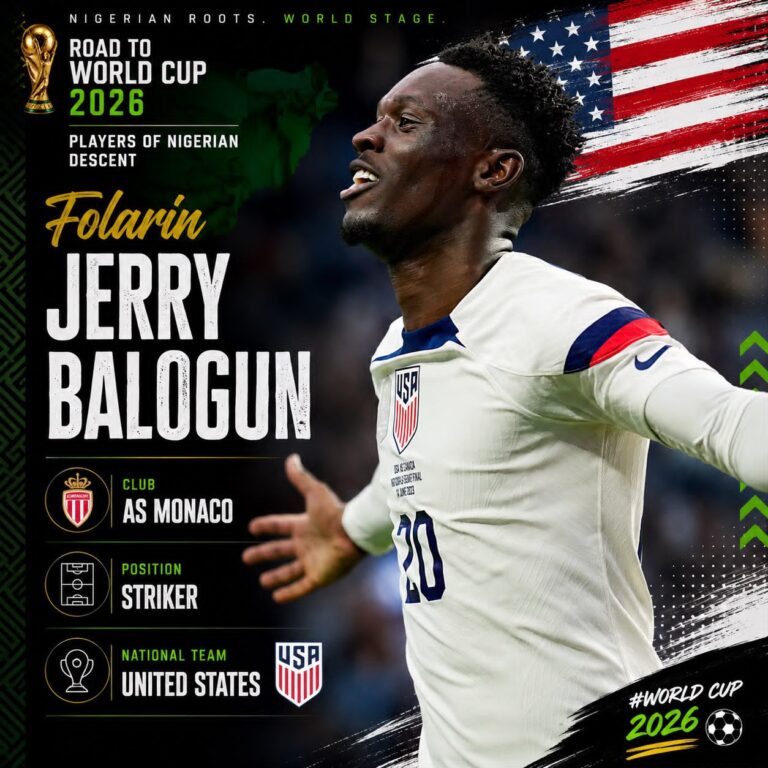
Canada will likely field Tani Oluwaseyi and Promise David. The United States has Balogun. South Africa has Ime Okon.
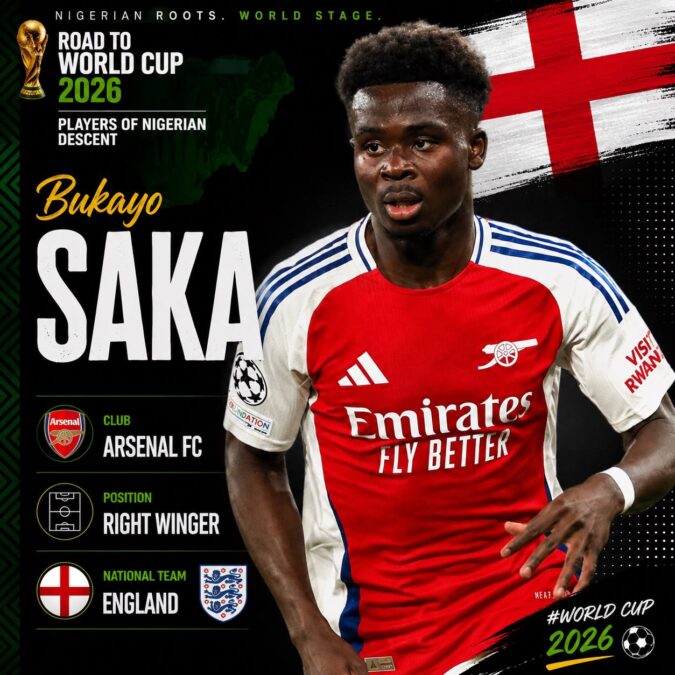
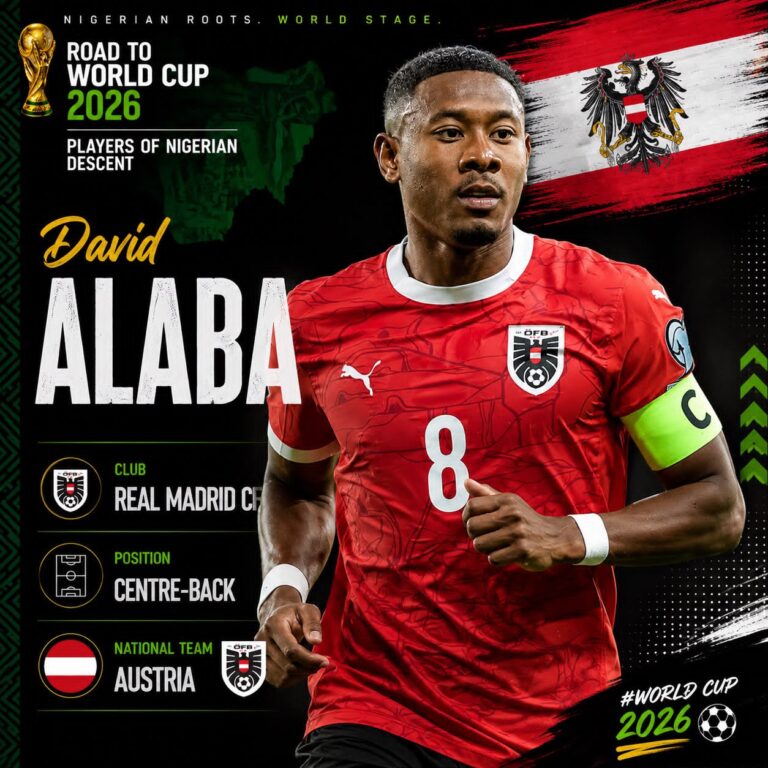
England’s squad includes Bukayo Saka, Noni Madueke and Eberechi Eze. Norway has Antonio Nusa. Austria has David Alaba and Carney Chukwuemeka.
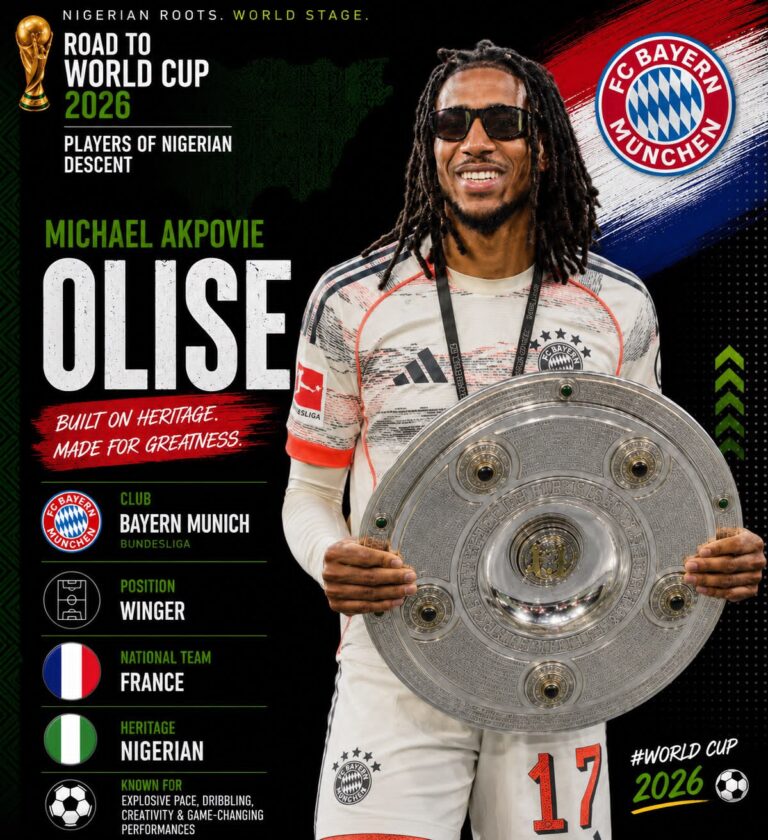
Germany boasts Musiala and Nmecha. Switzerland has Manuel Akanji and Noah Okafor. France has Michael Olise.
Fifteen players.
Enough to field an entire Nigerian-descended starting eleven at the World Cup – just missing a goalkeeper.
And that number could have been even higher.
Joshua Zirkzee, Emmanuel Emegha and Samu Aghehowa have all featured for their respective countries in recent years but are missing the tournament because of injury, form or selection decisions.
Beyond the qualified teams, there are additional Nigerian-descended players representing countries that unfortunately did not make the World Cup. Denmark has Philip Billing, William Osula and Patrick Dorgu. The Republic of Ireland has Chiedozie Ogbene, Gavin Bazunu, Adam Idah and Festy Ebosele. Italy has Michael Kayode, Destiny Udogie and Caleb Okoli.
This raises an uncomfortable question for Nigerian football administrators.
How can a country produce enough talent to strengthen national teams across Europe, North America and Africa, yet struggle to consistently convert that talent into qualification success for its own national team?
That debate will continue long after World Cup 2026 concludes.
But Nigeria’s influence extends far beyond the players on the pitch.
In the boardrooms helping shape the future of football, Nigerians are also present. Oguchialu “Oguchi” Onyewu, one of the most senior executives within U.S. Soccer, is helping guide the development of the game in one of the host nations as preparations for the tournament accelerate.
Then there is the music.
For many years, football’s global soundtrack was dominated by Latin America, Europe and the United States. Today, Afrobeats has become one of the defining sounds of international popular culture.
Burna Boy’s involvement in “Dai Dai”, the flagship song associated with the World Cup build-up, ensures that Nigerian music will be heard throughout the tournament cycle. He is not alone. Davido, Rema and Ayra Starr are all featured on the official World Cup music project, underscoring Nigeria’s growing cultural influence on the world’s biggest sporting event.
Even from a commercial perspective, one could easily assume Nigeria had qualified.
Nike continues to release some of the most sought-after football apparel in the world under the Nigerian banner. The country’s jerseys, lifestyle collections and related merchandise have become global fashion statements, often enjoying visibility that rivals or exceeds many nations actually participating in the tournament. Few countries absent from a World Cup command that level of commercial attention.
This is perhaps the most important lesson from World Cup 2026.
Modern influence is no longer measured solely by qualification, trophies or official representation. It is measured by talent, culture, creativity, entrepreneurship and global reach.
Nigeria’s greatest export has never been oil.
It has always been Nigerians.
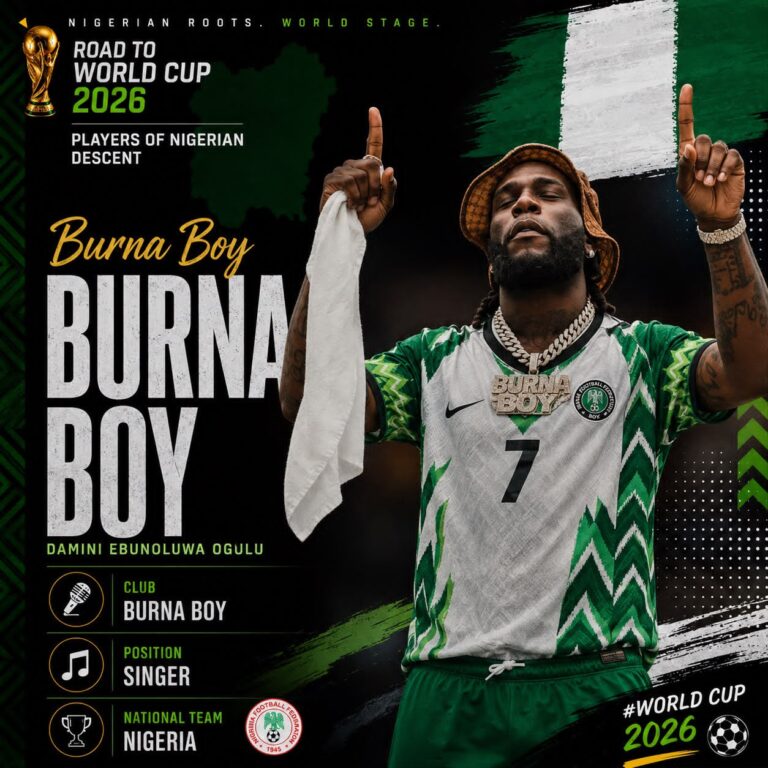
Whether on the football field, in music studios, in corporate boardrooms or across the diaspora, Nigerians continue to shape global conversations far beyond the country’s borders.
The Super Eagles will not be at the World Cup 2026.
But Nigerians will be.
They will be playing for nine different countries across three continents.
They will be helping lead the institutions that govern the game.
They will be creating the music that accompanies the tournament.
They will be influencing the fashion, culture and commercial energy surrounding football’s biggest stage.
The Nigerian flag may not be on the field.
But make no mistake: Nigeria will still be everywhere.

Join BusinessDay whatsapp Channel, to stay up to date
Open In Whatsapp