1. World Cup 2026 Continues to Dominate Global and Nigerian Discourse
Three days after the final, the 2026 FIFA World Cup remains the dominant topic across social media platforms in Nigeria and worldwide. Nigerians continue to celebrate memorable moments while expressing disappointment over the Super Eagles’ absence from the expanded 48-team tournament.
Final Result and Key Highlights
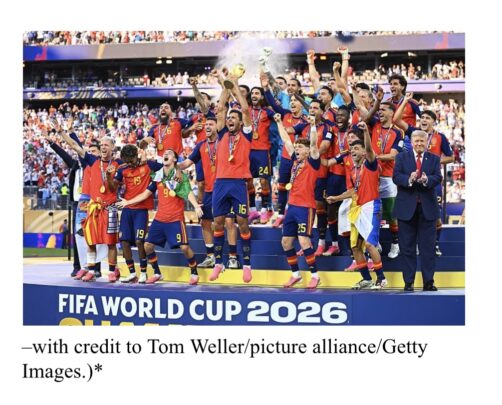
Spain defeated defending champions Argentina 1-0 in extra time at MetLife Stadium, New Jersey, with Ferran Torres scoring the decisive goal in the 106th minute. The match remained goalless after 90 minutes, with Enzo Fernández receiving a red card (second yellow) for Argentina, shifting momentum toward Spain.
Spain demonstrated exceptional dominance through strong defence and clinical finishing, securing their second World Cup title. Lionel Messi and the Argentine team showed visible emotion post-match, with some reports and social commentary criticizing perceived poor sportsmanship.
FIFA Rankings Update
– Top 10: Spain (1), Argentina, France, England, Brazil, Morocco, Portugal, Belgium, Netherlands, Mexico.
– Nigeria ranks 26th globally but dropped four places in the African standings.
Celebrations and Reactions
Massive parades and crowds filled Spanish streets. In Nigeria, discussions mixed nostalgia for past glories with debates on national team performance.
Major Fallouts and Controversies
The tournament, a commercial triumph for FIFA (estimated $13–15 billion in revenue), sparked widespread criticism:
i. Governance & Player Welfare: La Liga president Javier Tebas called for FIFA President Gianni Infantino’s resignation, decrying a “sick” and “rotten” system prioritizing commercial interests over player health and club football. Sepp Blatter echoed concerns about political influence eroding credibility.
ii. Refereeing & VAR: Debates over key decisions, penalties, and perceived biases (including social media claims involving a Ronaldo Instagram interaction).
iii. Club Football Impact: English Premier League clubs (e.g., Arsenal, Aston Villa, Manchester United, Tottenham) reported significant player fatigue, injuries (ACLs, hamstrings), and fixture congestion ahead of the new season.
iv. Off-Field Issues: High ticket prices via dynamic pricing led to empty seats; host nations faced cost overruns, logistics challenges, visa issues, and protests. Economic benefits were debated, with FIFA profiting far more than localized gains for hosts.
As domestic seasons resume, expect:
• Continued debates about tournament formats and scheduling.
• Increased scrutiny of FIFA governance and commercial priorities.
• Potential for collective action from clubs, leagues, and players’ unions.
• Long-term conversations about balancing international and club football.
2. France Implements Landmark Social Media Ban for Under-15s
France has become the **first EU country** to ban social media access for children under 15, citing mental health concerns. The law, expected to take effect in September 2026, also extends mobile phone restrictions in high schools.
This follows similar moves by Australia (under-16 ban) and Canada’s pledge for under-16 restrictions. Early Australian feedback is mixed: some families report reduced pressure and healthier habits, while others note circumvention, social isolation, or enforcement challenges. France will likely rely on EU-level regulation of major platforms.
Implications: This signals a growing global regulatory trend addressing digital harms to youth. Monitoring public reaction in Nigeria and across Africa will be key, especially regarding platform enforcement and parental perspectives.
Misinformation remains rampant, often targeting politics, security, and ethnic relations. Key recent debunked claims include:
**False Reports Targeting Political Figures**
– Publisher Ejike Ofoegbu of *Igbo Times Magazine* and *iNews* publicly apologized to Anambra Governor Chukwuma Soludo for fabricating stories about the governor and his son. The publisher faced court arraignment.
– Dangote Group denied a viral fake endorsement of Peter Obi, labeling quotes attributed to Aliko Dangote as “FAKE NEWS.”
**Misleading Military and Conflict Narratives**
– Dubawa debunked claims of bandits killed by troops in Zamfara using old South African footage and 2022 Nigerian Army training video.
– A viral claim of “Fulani jihadists” massacring 350+ Christians in Tegina, Niger State, was false; it was a communal clash between Fulani and Kamuku communities with higher Muslim casualties.
– Ethiopia footage was misused to claim Fulani attacks on Yoruba people in Nigeria.
**AI-Generated Content**
– Rivers State Police confirmed a widely circulated image of “female kidnappers” disguised as market women was AI-generated; no such incident occurred.
Government Agency Rumours
– The EFCC strongly debunked fake “secret recruitment” claims, warning of fraudsters exploiting job seekers.
**Recommendations**: Heightened fact-checking (e.g., via Dubawa) and platform accountability are essential. Social listening should track how these narratives fuel ethnic tensions and erode trust.
**Overall Insights**
– **World Cup** sustains high engagement with a mix of celebration, controversy, and reflection.
– **Regulatory shifts** on social media (e.g., France) could influence future policies and platform behaviors regionally.
– **Misinformation** persists as a high-priority issue requiring ongoing monitoring, especially in politically and ethnically sensitive contexts.
This digest can be expanded with sentiment analysis, top hashtags, or influencer mentions in future editions. For a polished, formatted version (with headings, bullet points, and images), I recommend saving this as an updated **.docx** file. Let me know if you’d like further customizations, such as adding charts, executive summary, or distribution-ready formatting!
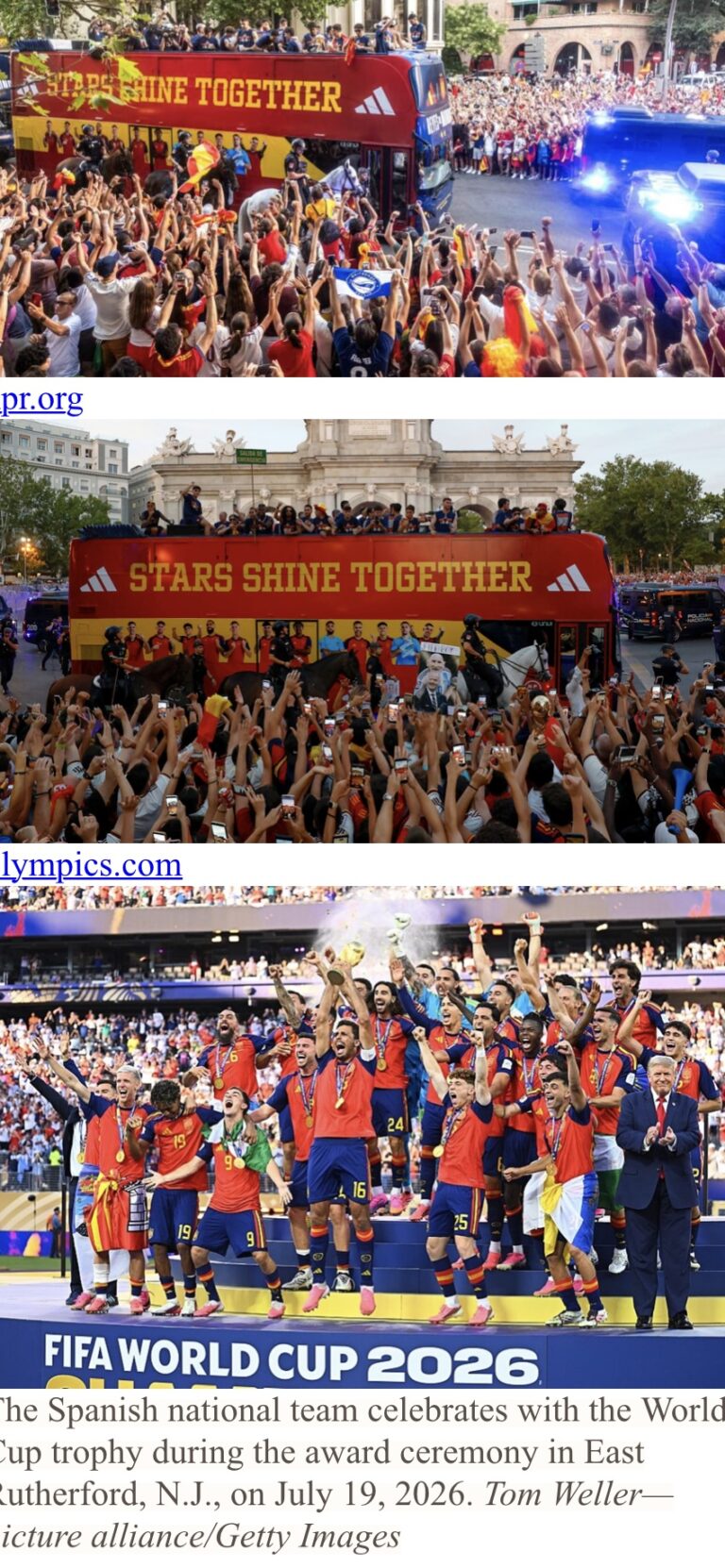
The Spanish national team celebrates with the World Cup trophy during the award ceremony in East Rutherford, N.J., on July 19, 2026. Tom Weller—picture alliance/Getty Images
Celebrations in Spain were massive, with parades and huge crowds.
Major Fallouts and Controversies
The tournament generated significant backlash alongside its successes:
1. FIFA Governance and Player Welfare Criticism:
o La Liga president Javier Tebas called for Gianni Infantino’s resignation, labelling FIFA’s system “sick” and “rotten.” He criticised commercial priorities (e.g., long half-time shows, hydration breaks in cooled stadiums), fixture congestion, and expansion plans that harm club football and player health. Sepp Blatter echoed concerns that politics is eroding credibility.
2. Refereeing, VAR, and Match Integrity:
o Ongoing debates over decisions, including red cards, penalties, and perceived favouritism toward Argentina (e.g., social media claims, a brief Ronaldo Instagram like sparking backlash). Some Argentines alleged simulation or bias.
3. Club Impacts and Injuries:
o Premier League clubs (especially Arsenal, Aston Villa, Man Utd, Tottenham) faced heavy tolls from player minutes, fatigue, and injuries (e.g., ACLs, hamstrings). This affects the start of the upcoming season.
o Broader fixture congestion debates intensified.
4. Off-Field Issues:
o Tickets and Pricing: Dynamic pricing led to high costs and empty seats in some games.
o Logistics and Hosts: Cost overruns (especially in Canada), security concerns, visa issues, labour disputes, and infrastructure strains. Political elements (e.g., language restrictions, protests) added tension.
o Economic Realities: FIFA profited enormously (~$13-15 billion from broadcasting, sponsorships, tickets), but host countries saw more modest, localised, and debated benefits.
Overstated projections; public costs often outweighed gains for locals.
Broader Context
The tournament was a commercial success for FIFA but highlighted tensions between international football, clubs, players, and fans.
Expect ongoing debates about scheduling, expansions, and governance as domestic seasons resume. Argentina fans and some neutrals continue disputing aspects of the campaign, while Spain basks in glory.
France bans Under-16s from social media
France has become the first country in the European Union to ban children under 15 from using social media, citing growing concerns about the effects of digital platforms on young people’s mental health. The legislation would also extend restrictions on mobile-phone use to French high schools and is expected to take effect in September 2026, according to Le Monde.
The French ban follows those of Australia.
Reports say several other EU countries are considering similar restrictions.
The New York Times reports that Australia’s experience suggests that such bans may be difficult to enforce, and France would likely depend on the European Union to regulate major international platforms because its own legal authority is limited. |
Six months after Australia introduced its under-16 social media ban, families report mixed results: some parents say it has reduced pressure and fostered healthier online habits, while others say teenagers easily bypass the restrictions and may become more socially isolated or harder to supervise, according to The Guardian (UK).
In June, Canada became the first country in the Americas to vow to restrict social media for under-16-year-olds unless those companies can show they’ve made their platforms safe.
3.Continued challenge of fake news and misinformation
False Reports Targeting Political Figures
i. Publisher Apologises to Governor Soludo:
Ejike Ofoegbu Experience, the publisher of Igbo Times Magazine and iNews, issued a public apology to Anambra State Governor Chukwuma Soludo. He admitted that a series of fabricated stories about the governor and his son, Ozonna, were entirely fake and not sourced from verified facts- The fabricated headlines included claims such as Governor Soludo disowning his son and other sensational statements. The publisher was subsequently arraigned in court over the matter.
ii. Dangote Group Denies Endorsing Peter Obi:
The Dangote Group dismissed a viral post on X (formerly Twitter) that falsely claimed its president, Aliko Dangote, had endorsed Peter Obi, the presidential candidate of the Nigeria Democratic Congress (NDC). The post, shared by an account called “Mayor of Calabar,” claimed Dangote said Obi could “bring out the fortunes of Nigeria”. The company labelled the quote as “FAKE NEWS”. Before the debunk, the post had garnered over 246,000 views.
iii. Misleading Military Narratives
• Old Footage Used to Misrepresent Military Operations: Fact-checking platform Dubawa investigated viral images and a video claiming to show bandits killed by Nigerian troops in Zamfara State. The investigation found the claim to be misleading. The images were traced to a South African police operation against illegal miners and the video was from a Nigerian Army training exercise dating back to 2022.
Exaggerated Community Conflict
• False Claim of “Fulani Jihadists” Massacre: Dubawa debunked a viral claim that “Fulani jihadists” had killed over 350 Christians in Tegina, Niger State-. The fact-check revealed the incident was a communal clash between the Fulani and Kamuku communities, not a religious attack. Local leaders confirmed that more Muslims than Christians died in the conflict, and the exact death toll was unconfirmed.
Misinformation Stoking Ethnic Tensions
• Video from Ethiopia Used to Falsely Claim Attack on Yoruba: Dubawa debunked a post claiming that some Fulani women were armed with guns to attack Yoruba people in Nigeria. The investigation found that the event actually took place in the Afar Region of Ethiopia, not in Nigeria.
AI-Generated Content Causes Panic
• AI Image Mistaken for “Female Kidnappers”: An image widely circulated in Rivers State, allegedly showing four female kidnappers disguised as market women, was investigated by the Rivers State Police Command. The police confirmed the image was AI-generated and not a real photograph, stating that no such incident had been reported in the state.
False Rumours About Government Agencies
• EFCC “Secret Recruitment” Rumour: The Economic and Financial Crimes Commission (EFCC) debunked a viral social media claim that it was conducting a secret recruitment exercise.
The agency shared a graphic prominently marked “FAKE NEWS” and “THIS IS FALSE NEWS. BEWARE!” on its official X account. The EFCC warned that such rumours are often spread by fraudsters to exploit job seekers.

Join BusinessDay whatsapp Channel, to stay up to date
Open In Whatsapp