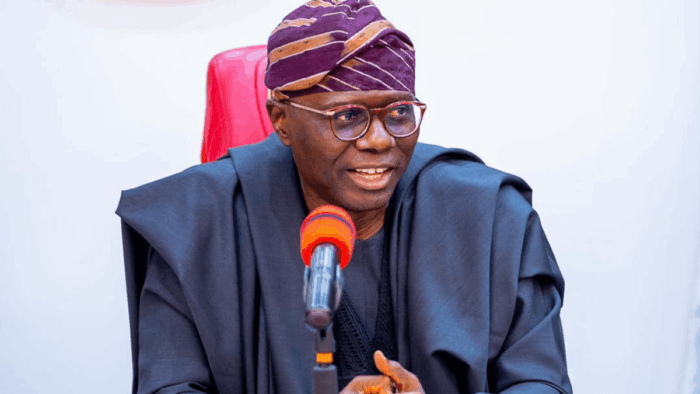
The LSIP commits Lagos to industrial leadership through 2030. Its new task force will turn the plan into output.
On 30 April 2026, at the Lagos Continental Hotel on Victoria Island, the administration of Mr Babajide Olusola Sanwo-Olu formally launched the Lagos State Industrial Policy 2025 to 2030 (LSIP). The room held the people who build, finance, regulate, and employ across our state: manufacturers; bankers; ministry leaders; organised labour; cooperative federations; and development partners. The launch carried the weight of a public commitment by an administration that has chosen industrialisation, deliberately and on the record, as the next chapter of the Greater Lagos story. The LSIP is the most consequential industrial framework Lagos has produced in a generation and the most carefully sequenced for execution. The signal it sends, to investors at home and across the continent, is direct: Lagos intends to lead.
Lagos stands at an inflection point. With a gross state product of US$259 billion, the state is one of the 3 largest city economies in Africa, alongside Cairo and Johannesburg, and the source of more than 66% of Nigeria’s industrial investment and commercial activity. Yet that scale is being tested by 3 simultaneous pressures.
First, the African Continental Free Trade Area is moving from architecture to enforcement. A market of 1.3 billion people with a combined GDP of over US$3 trillion will reward regions that produce competitively at scale and meet international quality standards. Regions that cannot be on the receiving end of imports from across the continent.
Second, urbanisation continues to redraw the demographic and consumer map of Lagos at a pace few global cities can match. The industrial base must expand to keep up with that demand and convert it into productive jobs.
Third, technological disruption is rewriting the rules of production, logistics, and competitiveness. The window in which Lagos can adapt is narrowing.
LSIP is the response to all 3, and it is built on 6 mutually reinforcing pillars, each translated into a specific delivery instrument.
Pillar 1, Competitive and Productive Industry Base, focuses on producing goods and services at quality and cost levels that meet domestic and international standards. It prioritises firm-level productivity upgrading, deeper value-chain integration, technology transfer, and the strengthening of “Made in Lagos” quality assurance so that local products can compete credibly with imports and in export markets.
Pillar 2, Enabling Business Environment and Investment Promotion, commits Lagos to regulatory and administrative reforms that materially shorten the time required to start, operate, and expand an industrial enterprise. It institutionalises one-stop investor facilitation, transparent industrial land allocation, fast-tracked approvals for priority infrastructure, and structured aftercare to retain existing firms and crowd in reinvestment.
Pillar 3, MSME and Entrepreneurship Development, segments the MSME ecosystem into 3 cohorts: survival enterprises, growth-oriented firms, and export-ready scalers. Each cohort is routed to differentiated support. The Lagos Industrial Development Fund and the LASMECO partnership with the Bank of Industry deliver a single-digit, non-collateralised credit window to qualifying small businesses. The Lagos State Export Readiness Programme (LASERP) carries qualified firms transition from informal operation into AfCFTA-grade exports.
Pillar 4, Infrastructure, Clusters, and Spatial Industrial Development, modernises and de-risks the industrial clusters at Ikeja, Apapa, Ilupeju, and Lekki; expands the Lekki Free Zone manufacturing corridor; and stands up specialised parks, including a Lagos State Medical Innovation and Industrial Zone and agro-allied hubs. Industrial power corridors, port efficiency reforms, rail connectivity, and dedicated logistics infrastructure all sit under this pillar.
Pillar 5, Skills Development and Industrial Innovation, calibrates technical and vocational training to actual industry demand through upgraded skill enhancement centres across Lagos’s divisions, alongside partnerships with universities and research institutes for STEM and advanced technical training. The objective is a steady pipeline of technicians, engineers, and scientists for Lagos’s industries.
Pillar 6, Green Lagos and Inclusive Industrialisation, embeds sustainability and equity across every other pillar. It commits Lagos to structured decarbonisation pathways, clean energy adoption, eco-industrial parks, climate-resilient industrial infrastructure, and targeted support for women-led and youth-led enterprises, keeping the state’s industrial expansion aligned with carbon border mechanisms and evolving global trade standards.
Each pillar is matched to a measurable 2030 target captured in the LSIP Results and Delivery Framework.
Policy in Nigeria has too often failed at the point of delivery. When a new strategy is announced, the public and the private sector ask the same question: will it be implemented? The Lagos State Industrial Policy answers that question structurally, through the establishment of the Industrial Policy Implementation Task Force (IPITF), the conduit between policy formulation and execution.
The IPITF will be inaugurated by Mr Governor and will sit at the centre of LSIP delivery. It will be chaired by the Honourable Commissioner for Commerce, Cooperatives, Trade and Investment, with a co-chair appointed by Mr Governor from the senior ranks of the organised private sector. Its membership will draw from the Lagos State agencies most directly engaged in industrial activity, including LASMECO, LASERP, LSETF, the Ministry of Energy and Mineral Resources, the Ministry of Physical Planning and Urban Development, the Lagos Internal Revenue Service, and the Ministry of Finance. It will seat the Manufacturers’ Association of Nigeria, the Lagos Chamber of Commerce and Industry, NECA, NASME, the Nigeria Labour Congress, the Trade Union Congress, the academic community, and representatives of the youth and innovation ecosystem.
The IPITF will meet monthly, track delivery against the LSIP Results and Delivery Framework, resolve bottlenecks in real time, and report quarterly to Mr Governor. The point of the IPITF is simple. A policy on paper does not move an economy. A delivery machine does.
The dividends of LSIP are designed to be widely shared. For citizens, the policy promises jobs through cluster-based manufacturing in Ikeja, Apapa, Ilupeju, and Lekki, vocational training calibrated to industry, and the spatial expansion of industrial activity into less developed parts of the state. The objective is a Lagos where a young person with the right skills can find dignified, productive work close to home.
For MSMEs, the policy offers cluster power, simplified permitting, and the LASMECO single-digit non-collateralised credit window in partnership with the Bank of Industry. The LASERP pathway carries an informal microenterprise from registration through certification to the AfCFTA marketplace.
For investors, the policy offers pipeline visibility, infrastructure de-risking through industrial power corridors, and a one-stop facilitation framework that will materially shorten approval cycles. The IPITF is the institutional guarantee that what is committed at launch will be delivered on the ground. LSIP is both a state commitment and a partnership invitation.
The horizon is 2030. By then, Lagos intends to operate a dynamic manufacturing and services base powered by reliable infrastructure and clean energy, a vibrant small business ecosystem supported by access to finance and technology, and a skilled workforce that drives innovation across every sector. Mr Governor framed the ambition plainly at the launch: “Lagos must take the lead, not only in Nigeria but in Africa, paving the way towards sustainable prosperity, global competitiveness, and equitable opportunities.”
The policy is published. The pillars are funded. The IPITF stands ready for inauguration. The work begins.
Mrs. Folashade Ambrose-Medebem; Honourable Commissioner for Commerce, Cooperatives, Trade and Investment, Lagos State

Join BusinessDay whatsapp Channel, to stay up to date
Open In Whatsapp