
If the allegations surrounding the so-called Presidential Foreign Intervention Promotion Council (PFIPC) are true, then Nigeria is confronting one of the most embarrassing governance scandals in recent years. It is a story that goes beyond one man allegedly forging appointment letters or creating a false government agency. It is an indictment of an entire public administration whose checks and balances appear to have collapsed under the weight of negligence, complicity, or both.
Even more disturbing is the complete silence that has followed the revelations.
According to BusinessDay’s investigation, an agency the Presidency now insists never legally existed somehow found its way into the national budget with a N1.3 billion allocation. It reportedly secured a Treasury Single Account with the Central Bank of Nigeria; obtained approval to recruit more than 300 staff; met ministers, diplomats, lawmakers and regulatory agencies; and conducted itself as an official arm of government for nearly two years. We cannot say that is a coincidence but a huge institutional failure.
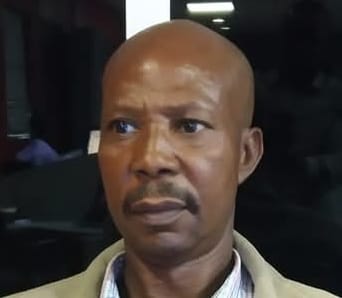
The question Nigerians should be asking is no longer whether Adeyemi Adeniyi deceived government institutions but whether government institutions deliberately ignored obvious red signs or actively participated in legitimising what has now been described as a false organisation.
Sincerely, no administration can function well where accountability ends with blaming one individual while other institutions involved conveniently escape scrutiny.
If the presidency’s explanation is accepted without question, then the implications are frightening. It would mean that the Budget Office, the Office of the Accountant-General of the Federation, the Central Bank of Nigeria, the Federal Civil Service Commission, ministries, the National Assembly, regulatory agencies and diplomatic channels all failed to carry out the most basic verification expected of public institutions.
Such a coincidence stretches the limits of credibility and probability.
It is simply unbelievable that one individual could forge dozens of official documents, deceive numerous federal institutions, obtain budgetary approval running into billions of naira, recruit hundreds of workers, secure office accommodation, interact with ministers, attend official meetings and freely represent Nigeria before foreign diplomats without someone somewhere knowingly opening the doors.
As the case is, it can be said either Nigeria’s public institutions are grossly incompetent, or there was collusion at several levels.
Sadly, rather than pursuing the truth, the agencies responsible for investigating corruption appear to have gone totally silent.
Where is the Economic and Financial Crimes Commission? Where is the Independent Corrupt Practices and Other Related Offences Commission? Where are the National Assembly committees that approved the budget? Where are the reports from the Office of the Auditor-General? Why has no comprehensive public investigation been launched to identify every official who approved, endorsed or facilitated the operations of this council?
“Sadly again, Nigeria is entering another election season, and that appears to have become the overriding priority of the political class. Conversations about 2027 have begun dominating public discourse while governance, accountability and institutional reform take the back seat.”
Sadly again, Nigeria is entering another election season, and that appears to have become the overriding priority of the political class. Conversations about 2027 have begun dominating public discourse while governance, accountability and institutional reform take the back seat.
And this is exactly what Nigerians should not be fed at this difficult moment, as millions of Nigerians are faced with rising living costs, unemployment, collapsing purchasing power, insecurity and poor public services.
What Nigerians need are practical solutions to these multi-dimensional problems and not another scandal that exposes the weakness of public institutions, followed by silence and political distractions.
Every naira lost through fraud represents medicines unavailable in hospitals, classrooms left unbuilt, roads abandoned and jobs that could have been created. The alleged N1.3 billion involved in this case may appear small compared with Nigeria’s overall budget, but the damage to public confidence is vast.
As it is said, trust is the foundation upon which governments build legitimacy. Once Nigerians begin to know that institutions can be easily manipulated, confidence in governance will further vanish, investors become cautious, international partners become sceptical, and the masses become pessimistic, which perhaps is the greatest cost of this scandal.
This current administration has repeatedly promised to strengthen institutions, improve transparency and fight corruption, and this case presents an opportunity to demonstrate that those commitments are sincere. Anything short of a transparent judicial inquiry involving every institution connected to this matter would amount to covering up a national embarrassment.
The investigation must not stop with the alleged architect of the scheme. Every official who processed documents, approved budgets, authorised recruitment, facilitated banking arrangements or endorsed correspondence must explain their role. Where negligence or complicity is established, sanctions must follow regardless of status or political affiliation.
We cannot continue to normalise institutional failures while expecting the masses to trust government promises.
At this point in our nation, we desperately need governance that inspires confidence rather than suspicion. We need institutions that detect fraud before it flourishes, not after billions have been appropriated. Above all, we need leaders who understand that restoring public trust is far more important than calculating electoral permutations for 2027.
Until the full truth behind this unusual scandal is uncovered and those responsible are held accountable (which I know may never happen), Nigerians will continue to wonder whether the greatest fraud was not the creation of a fictitious agency, but the steady destruction of the institutions meant to protect the nation.

Join BusinessDay whatsapp Channel, to stay up to date
Open In Whatsapp