You often hear people talk gleefully about experience being the best teacher. What really does experience teach?
Across almost all human enterprise, people are quick to venerate experience, presenting it as the best thing since sliced bread. In employment, organisations routinely ask applicants for experience; in fact, many roles from mid-management level and above require some form of cognate experience or the other. In politics, when individuals present themselves for elective office, people often ask to know their experience levels in the office they vie for.
What really is experience? Does it teach humans anything? In this piece, I have taken a look at how critical or otherwise experience could be to shaping our reality and our success or failure.
What is experience?
The Oxford Leaner’s Dictionary defines experience as “the knowledge and skill that you have gained through doing something for a period of time; the process of gaining this.” Another definition in the same Oxford says, “The things that have happened to you that influence the way you think and behave.” The definitions above suggest that experience could be both emotional and logical, speaking to our minds and our hearts. So, invariably, experience contributes to an individual’s personal and professional growth. For instance, a tailor, shoemaker, lawyer, beadmaker, doctor, carpenter or an entrepreneur who have been consistently doing these jobs for years should be more knowledgeable and skilled than a newbie in them.
Experience is practical, hands-on and the application of knowledge as opposed to theory. For instance, reading about a business or taking lessons on how to run a business is several streets away from actually managing cash flow, customers or employees, bookkeeping, ordering or designing products, and brainstorming ideas.
Repeated performance of an activity will enable an individual understand the processes and concepts required to do the activity well. And when one has a firm grasp of a process, it becomes easy to tackle challenges and adapt to new situations. Experience builds insight and intuition, enabling the individual gain trust in that field.
Usefulness of experience
Experience helps to boost confidence, which can be very valuable in decision-making and leadership and builds a coping mechanism when challenges come. Experience also gives broader perspective on issues and situations, builds emotional and mental maturity or stability. These are necessary ingredients for personal and professional growth.
Personal versus leveraged experience
Experience is built over time. A bank manager who has worked for 10 or more years, for instance, will better appreciate deposits and withdrawals, customer agitations and how to calm them down. She has performed those tasks in those 10 years hundreds of times, so she almost could perform them by rote. Practice, they say, makes perfect. Thus, personal experience is knowledge and skills acquired by an individual over years.
One could, however, leverage another’s experience and achieve a similar outcome as the experienced individual. A newbie banker can leverage the bank manager’s experience to shine. Leveraging another’s experience speaks to mentorship. Mentorship is a cheat sheet for inexperienced individuals or entrepreneurs. Imagine a Dangote, an Elumelu, or a Mitchell Elegbe guiding a young entrepreneur in business. The young man is more likely to grow the business faster, better, and with minimal mistakes.
Is experience overrated?
Experience may be a teacher, but it takes years to conclude its lessons. In fact, it’s a never-ending lesson. In a fast-paced digital world, where consumer tastes and trends change faster than a stadium’s electronic hoardings, time is often a luxury many startups and small businesses can least afford. Before a trend or taste is mastered or understood, the next trend is almost in full flight. That is how quickly things change in modern society. Thus, leveraging others’ experience becomes appropriate as it saves time and costly mistakes. These days, an individual or business can leapfrog legacy businesses by understudying them/leveraging their experience and adopting technology to scale faster and better.
Learning from experience could sometimes become a prison, reinforcing obsolete ideas or methods. In organisations, you’d often hear older employees schooling the newbies on how “we do things here.” Experience could stifle new, forward-looking ideas and kill initiatives.
Experience as the best teacher
Many say experience is the best teacher. It probably is but it takes a bright student to assimilate and utilise well what experience teaches. To learn from experience, an individual must be able to process feedback, reflect on actions taken and the result or action not taken and probable outcome, and based on feedback and reflection improve. Without these elements, the same wrong action would repeatedly be taken and similar outcome achieved.
The Pike Syndrome
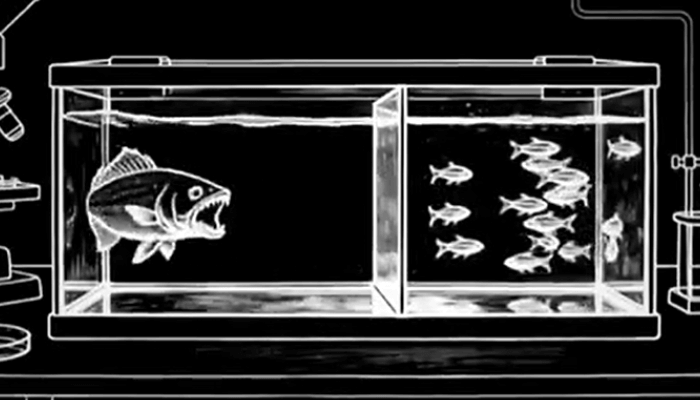
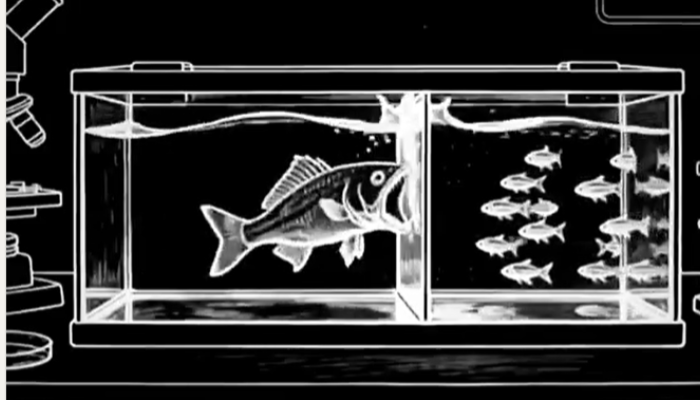
And this brings me to the pike syndrome, when experience conditions an individual for failure, what psychologists called ‘learnt helplessness.’ A pike is a freshwater fish with sharp teeth and a long body. It preys on small fish. A pike was said to have been put in a glass tank and its staple food, small fish, were put in the same tank. But a glass barrier was put in the middle of the tank to block the pike from its food. The pike sees the small fish and repeatedly lunge at them but each attempt left it in pain as its long mouth hit the glass partition. After a while the pike, out of fear of further pain, stopped attacking the small fish and retreated to a corner of the tank to probably sulk and curse its hard luck – if a fish can do that.
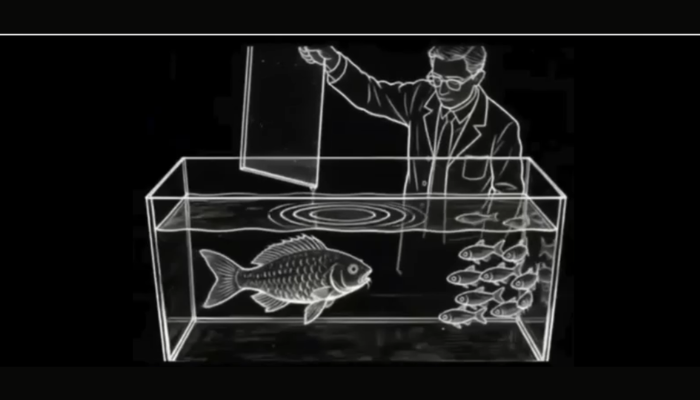
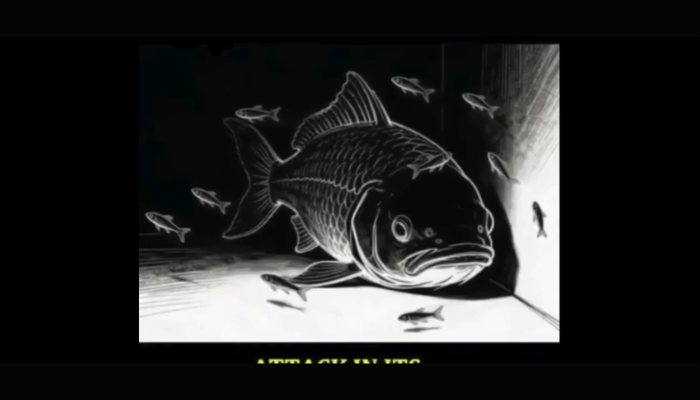
Then the glass partition was removed. The small fish swam all around the tank, including the part where the pike was and even bumping into the big fish. But the damage had been done. The pike’s experience against the glass ‘taught’ him that the frolicking small fish around it were nothing but an illusion and attacking them will bring further pain to it, and so it never attacked the small fish again and eventually died of hunger.
So, sometimes, experience may be a terrible teacher, putting fear and a psychological barrier against an individual. After repeated failures, many stop trying or making the effort. Imagine a budding entrepreneur who has repeatedly failed in business. The lily-livered may conclude that he is not cut out for business or he’s a failure and completely stop pursuing his dreams or ideas. That is what psychologists tagged the pike syndrome. The syndrome is often the effect of poor learning and assimilation from experience, a lack of reflection on what could have gone wrong or what was done wrong and then the need to improve on or change strategy.
Costly experience
In the short term, experience could also be costly. Repeated failure could cost an individual or business money. Years ago, a young guy got employed by a bank. He was sent to a branch of the bank situated in a busy market, where customer flow was heavy. Without adequate training and mentorship, he was deployed as a teller. He kept having shortages and was using his salary to cover up. At some point he felt like quitting but friends encouraged him to stay on. After several months of using his salary to pay shortages, he eventually became proficient in customer management and tellering to the point that he started getting commendations from his bosses.
Experience provides practical knowledge, a valuable learning curve, and teaches problem-solving skills necessary for personal or business growth. However, an individual’s or business’ assimilation of the knowledge taught is dependent on the ability to reflect on and act appropriately on what’s learnt. That is the difference between improvement/growth and failure/disillusionment.

Join BusinessDay whatsapp Channel, to stay up to date
Open In Whatsapp