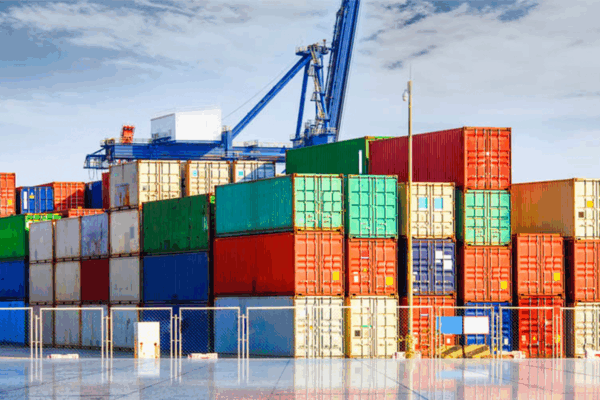
Africa’s next major economic breakthrough may not be decided in a summit hall. It may be decided at the border.
At a customs checkpoint between neighbouring countries. At a warehouse where cargo waits for clearance. At a port where containers remain longer than businesses planned. At a border crossing where a truck carrying goods from one African country into another spends more time waiting than moving. Trade in Africa is becoming a larger conversation.
Governments are talking more seriously about regional commerce. Businesses are paying closer attention to neighbouring markets. Investors are watching the African Continental Free Trade Area with growing interest. The opportunity is historic.
A continent of more than 1.4 billion people has agreed to create one of the world’s largest free trade areas. For Africa, that was more than policy. It was an economic correction.
For decades, African economies exported raw materials across the world, imported finished products back at a higher value and, in many cases, found it easier to trade internationally than with neighbouring African markets.
AfCFTA was expected to begin changing that. A real trade transition has begun. The question is whether Africa can move from signing agreements to making trade work practically at scale.
Because whichever part of the continent moves goods faster, settles payments easier and removes friction quicker will attract more investment, stronger supply chains and deeper long-term business growth.
Why the AfCFTA made sense but implementation remains harder
On paper, AfCFTA made immediate economic sense. Africa has a growing population.
The continent has expanding urban markets. African businesses increasingly need larger regional demand. Governments want stronger industrialisation.
Manufacturers want easier access to nearby markets. And economists have long argued that Africa trades too little with itself compared with Europe, Asia and North America. The economic logic was clear. But implementation remains slower than many expected.
Why? Because trade does not move on agreements alone. Trade moves on systems. And many African businesses still face major barriers:
- customs delays,
- multiple paperwork requirements,
- inconsistent product standards,
- weak logistics coordination,
- payment delays across borders,
- transport bottlenecks between neighbouring countries.
A manufacturer cannot build confidently around unpredictable clearance timelines. A logistics company cannot scale regional distribution where movement remains uncertain. A growing exporter cannot plan efficiently around avoidable delays.
Policy matters. But operational systems matter more. That is why AfCFTA feels powerful politically—but still uneven commercially.
African businesses are thinking regionally but borders still feel expensive.
African businesses are changing. More companies now think beyond national borders. A Nigerian company increasingly looks toward Ghana, Kenya, Rwanda, Uganda and Côte d’Ivoire not only as diplomatic relationships but also as commercial markets. That is progress.
Trade financing conversations are growing. Regional partnerships are expanding. Cross-border business confidence is improving. That matters. But for many businesses, borders still feel expensive. The real challenge is practical:
- delayed customs documentation,
- fragmented regulation,
- infrastructure gaps,
- long truck waiting times,
- inconsistent border processes,
- limited coordination between trade agencies.
For business owners, delay becomes a cost. Inventory becomes more expensive. Delivery becomes slower. Pricing becomes harder. Supply chains become weaker. Regional trade becomes more expensive than it should be. That reduces competitiveness. And in trade, competitiveness decides everything.
Infrastructure and systems still decide the pace.
This is where Africa’s biggest trade opportunity faces its toughest test. Infrastructure. Trade agreements can open opportunities. But systems determine speed. Africa still needs:
- stronger ports,
- faster customs systems,
- smarter border coordination,
- better transport corridors,
- predictable regulatory alignment,
- easier payment settlement across countries.
That affects scale. West Africa may move faster where land-border systems improve. East Africa may scale faster where logistics networks strengthen. Large commercial hubs may attract more trade where infrastructure improves faster. But continent-wide adoption remains slower where movement still feels expensive. Because trade—not unlike business—moves where friction is lower.
Where does Africa go from here?
Africa may not unlock its full trade opportunity at once. The transition will happen in phases. Some countries will move faster. Some trade corridors will become stronger first. Some sectors—manufacturing, agriculture, logistics and payments—will benefit earlier than others. But long-term, Africa’s opportunity remains significant. The market is growing.
Businesses are becoming more regional. Investors are paying closer attention. Supply-chain conversations are expanding. And Africa cannot afford to miss this moment. The agreement already exists. The ambition already exists. The opportunity already exists. What matters now is execution.
The bottom line
Africa’s next trade breakthrough may not be shaped by another summit. It may be shaped by systems. AfCFTA arrived with major political momentum. Businesses are responding with growing commercial interest. The opportunity is real. But borders remain one of Africa’s most expensive business obstacles. And whichever African economies make movement faster, cheaper and more predictable will attract stronger investment, deeper trade and more competitive industries.
Because Africa’s trade challenge is no longer about signing agreements. Africa already signed the deal. The next phase is making borders feel less like barriers—and more like business opportunities.
Bio Line:
Emmanuel C. Macaulay is a development thinker and writer who examines the unseen logic behind everyday realities — where leadership, systems, and design shape collective progress.

Join BusinessDay whatsapp Channel, to stay up to date
Open In Whatsapp