Nigeria’s electricity mix is quietly being rewritten. Solar now accounts for roughly a fifth of the country’s total generation capacity, and the Rural Electrification Agency says that share is closing in on half by the end of the decade, a claim that would have sounded like wishful thinking three years ago.
Abba Aliyu, the REA’s managing director, laid out the numbers at last month’s Nigerian Oil and Gas Energy Week in Abuja: solar currently makes up 20 per cent of national generation capacity, and the pace of deployment is pushing it toward 50 percent.
He’s made versions of this pitch at several forums this year, and the underlying data backs the trend line: solar component imports for local assembly more than doubled in 2025 versus all prior years combined, according to REA figures shared at an AJERAP webinar.
From importer to exporter
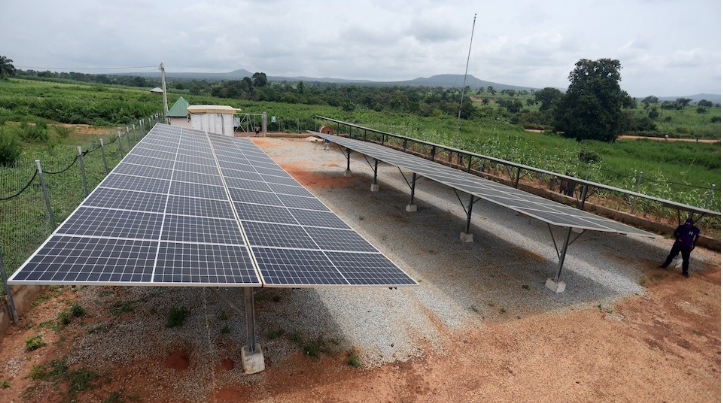
The more interesting shift isn’t domestic consumption; it’s what Nigeria is now selling. Manufacturing clusters along the Lagos–Sagamu corridor are assembling panels for export, with Aliyu telling delegates that if you visit the axis, you can see the factories going up.
Panels made in Lagos are already reaching Ghana, and Nigeria posted roughly ₦85.8 billion in solar panel exports in the first quarter of 2026, with the U.S. among the buyers, per National Bureau of Statistics trade data. A pipeline of about 3.7 gigawatts of PV manufacturing capacity is under development, and REA officials say production capacity has climbed from 120 megawatts two years ago to around 300 megawatts today.
Regulation is catching up
The Nigerian Electricity Regulatory Commission’s 2026 net billing framework now lets eligible solar users sell surplus power back to the grid, and mini-grid capacity thresholds have been raised — first from 1 to 5 megawatts, then to 10 megawatts for interconnected systems.
Aliyu argues the change opens the door to larger industrial and cross-border projects, floating the idea of solar farms in border towns feeding regional trade through an off-grid market layered on top of the West African Power Pool.
The gas caveat
Not everyone at the NOG panel was ready to hand the grid over to solar. Vincent Ozoude, managing director and CEO of Transafam Power Limited, pushed back on the idea that renewables alone can stabilise supply for a population Nigeria’s size.
His argument: intermittency is solar’s structural weakness, and gas-fired thermal capacity is the “quick fix” that keeps the baseline steady. Pull gas plants out of the equation, he warned, and renewable gains get erased rather than compounded.
That tension — expand solar aggressively, but don’t let gas infrastructure atrophy — was the throughline of the panel, and it’s echoed by people actually building the pipes.
Kenechukwu Nwangwu, who recently took over as managing director of Oilserv, said gas reserves without transmission infrastructure are just potential, not prosperity.
Oilserv’s book right now includes the Ubeta gas project for TotalEnergies, the ANOH Renaissance and ANOH-NNPC projects, a shallow-water pipeline job for Nigeria LNG’s Train 7 expansion, and — most politically visible of all the Ajaokuta-Kaduna-Kano pipeline, where mainline welding is complete, and teams have moved into pre-commissioning.
Nwangwu’s framing of the domestic-versus-export gas debate is worth flagging for anyone tracking Decade of Gas politics: he doesn’t dodge the tension between NLNG’s export contracts and Nigeria’s own supply gaps, but argues the real bottleneck isn’t production or contracts — it’s the absence of transmission and distribution infrastructure to move gas that already exists to the households and factories that need it.
Who’s buying and why
The consumer-level story is showing up in survey data and anecdotes alike. Nigeria’s national grid was supplying around 3,940 megawatts to over 220 million people as of March, per BusinessDay reporting — output comparable to a single mid-sized European power station. Diesel and petrol generators have long filled the gap, at an estimated $14 billion a year nationally, with generator emissions in Lagos alone reportedly rivaling 8.5 million cars annually.
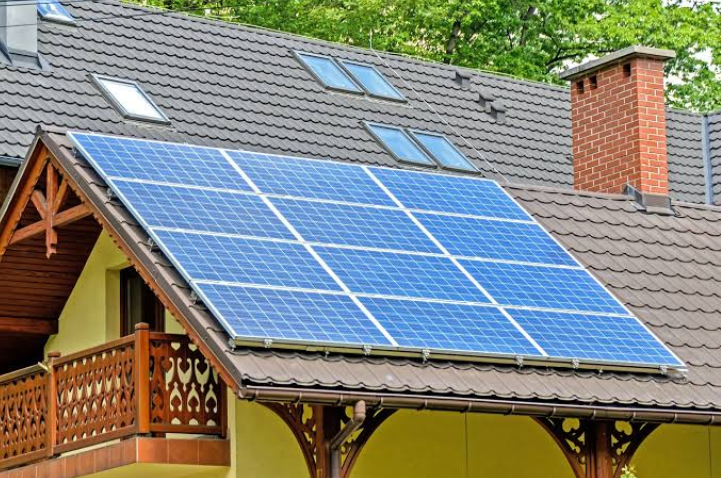
Subsidy removal and naira devaluation have made that math worse, which is pushing households and small businesses toward rooftop solar even where financing is tight.
One Abuja business owner told BusinessDay she switched to solar after repeated outages spoiled bulk-cooked meals and refrigerated stock — a small data point, but one REA officials cite often as the real driver of adoption, ahead of climate messaging.
Financing is following. Sun King closed an $80 million naira-denominated facility with the IFC and Stanbic IBTC this year to scale off-grid solar access, with co-founder Anish Thakkar calling off-grid solar the continent’s fastest route to universal electrification. FCMB has rolled out a $188 million green finance facility alongside the REA. Telecoms are in on it too — Airtel says it deployed 200 solar-powered towers between April 2025 and March 2026, while MTN reported ₦8.5 billion in combined savings from gas-powered IPP electricity and inverter systems last year.
The political subtext
Joseph Tegbe, Minister of Power, has been careful to temper expectations on timelines. He’s argued publicly that the sector’s problems are overwhelmingly governance and commercial in nature — technical issues account for only about a fifth of the challenge — and that five decades of underinvestment won’t be undone in a single administration’s tenure.
What to watch
Three things worth tracking into year-end: whether AKK actually reaches first-gas on its stated timeline, whether the 3.7-gigawatt PV manufacturing pipeline converts from announcements to operating lines, and whether NERC’s expanded mini-grid thresholds translate into bankable projects rather than just easier paperwork.
Nigeria’s power story right now is really two stories running in parallel — a solar buildout with genuine export momentum, and a gas infrastructure push that everyone, including the solar boosters, insists still has to succeed for either one to matter.

Join BusinessDay whatsapp Channel, to stay up to date
Open In Whatsapp