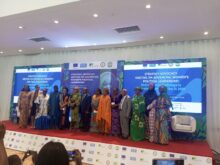
Beyond just being housewives in the house, women in the society are said to be occupying prominent roles in the society, one of which is the politics, where they bring their views to bear.
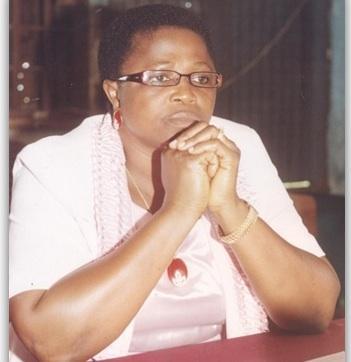
In an interview with BD Sunday, Princess Udonna Jaanna Chigozie Nwafor-Orizu, a scholar, teacher, writer and the Chairman, Promise and Gift Limited speaks on women who have decided to be part of political processes and have done very well in terms of influence and contributions like their men counterparts.
Our society perceives women as not being influential enough in politics, do you agree?
The fact is that women can actually be very influential in politics all things being equal. I want to see political influence here as ability to change the cause of political events in the society and that includes voting rights during elections. Today women world over (Nigeria inclusive) are no more pawns in the hands of politicians. Whatever makes it look like there are not enough women in either elective or appointive positions does not have to do with political influence or political will on the part of women per se. Let me explain. There is always the issue of family in the life of every nation. Women generally play more roles in the training of children especially in character formation. This is however without prejudice to certain exceptions. If you look at most men players in the political scenes, you will in most of the cases observe the strategic roles of women (mothers, wives, sisters, or daughters).
These humble women of valor generally prefer to operate from behind the scenes; not because they lack the political sagacity or whatever else it takes to openly engage in the politics of the day, but in other to concentrate in the management of the family so that the society will be a better place.
Every person is a political animal but women are generally kinder to the events at the home front.
On the other hand, there are women who have decided to be part of all political processes. They have also done very well in terms of influence and contributions like their men counterparts. However, the dearth of credible leadership in this country makes it almost difficult for me to make reference to power players as leaders even though they might be in leadership position.
In your view, what do you think is hindering strong female participation in politics in Nigeria?
Well, there is a cultural tendency and misconception that the role of the girl child and the women is more in the home than that of the boy child and the men. Though this erroneous practice is being condemned, the habit of being in this state of thought and reason is yet to leave our society completely. Political power is something that had remained the exclusive preserve of men. Like I said earlier, this is also a cultural thing. The awakening of women to their important political roles is, to some extent, novel and not until women hold on to their political responsibility will men start considering political participation as a game for all.
The number of women in Buhari’s cabinet is little compared to his predecessor, why are women like you silent on the near extinction of women in key strategic positions?
It still boils to the same thing. But we might also consider the fact that different governments have different administrative and or leadership style. Again, it may not be needful to employ unreasoned criticism against a government saddled with serious political, economic, and security challenges threatening to completely destabilize the entire country. We may actually need to refocus on the issues that are making our collective destiny as a nation almost questionable. I believe some key and strategic positions are being manned by women and I also want to believe that better times are coming in this regard.
The anti-corruption fight of the President is perceived to be a vendetta against the opposition, do you agree?
I do not see why the idea of fighting corruption should be seen as any kind of vendetta. If there are people who are proven to be corrupt and the arms of the law have not caught them, it is the duty of those who have those proofs to reach the government through the proper channels and give out those proofs. When that is done, and nothing happens, then they should cry loud so that the world will hear those proofs and how the government has decided to sweep those pieces of information under the carpet. Today, it is very easy to communicate these facts to different agencies that can take them up without exposing the sources of information.
Again, anybody who is accused and the person feels unjustly vilified; the person can actually prove his or her innocence through the legal processes. I belief our courts can vindicate the innocent. Wait a minute, are we trying to say that the president should stop fighting corruption and actually condone it so that it won’t be perceived as vendetta?
It’s very ironical that the same Nigerians who were crying foul at what was perceived as the toxic level of corruption and impunity of the immediate past administration/s, are now crying foul against the fight against corruption and impunity. Again, who perceives what? Is it that the leadership is bad or that the followership is complacent? I suspect a whole lot of insincerity. I also suspect that those who are kicking against this fight are directly or indirectly beneficiaries of this rapacious abuse of our economy. If we are patriotic and sincere the question on every lip should be How do we recover all these stupendous loots? How do we close in on those who are yet to be caught possibly including those in this present government? How do we quickly and permanently affect the life of common Nigerians with the recovered and yet to be recovered loot? By the time we constructively contribute to these solutions, we won’t be in a position to talk about vendetta.
Coming from a different angle, there is an area of corruption that we all seem to avoid. And that is the corruption in the electoral process in Nigeria.
Do you think it is still too early to judge the performance of this administration?
I do not think that it is an issue of judgment per se. I believe that we all should avoid being judgmental. I do not see how those outside the corridors of power are virtually more patriotic than those in power today. Speaking out against evil is good, but being very subjective in our opinions neither helps the leaders nor the issues at hand. The culture of constructive criticism is also a virtue Nigerians need to imbibe so that people who are trying their best will know that their efforts are appreciated.
The way this administration is going about the issue of corruption, is it ideal especially as regards disobeying court orders?
There are issues that need expert evaluation and I think this is one of such.
Some sections of the country still insist that the structure of the country is imbalanced and needs to be decentralized, do you agree?
There was a recent National Conference. I may not be fully privy to the entire content of the reports and recommendation but I believe we should visit that issue before bringing in opinions on this.
The international community seems to be putting pressure on Nigeria to devalue its currency, do you agree that devaluation is the way to go?
This is begging the issue. How can you tell a man how to live in his own house? Nigerians should be left to mend its broken fences. We must also know that there is no such thing as that ideal country with perfect systems. We have loads of problems but we should be encouraged to look inwards for solution because the answers to Nigeria’s problems are within Nigeria.

Join BusinessDay whatsapp Channel, to stay up to date
Open In Whatsapp