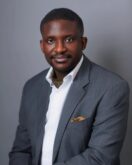
Jacob Udo-Udo Jacob is the interim associate dean, School of Arts & Sciences American University of Nigeria (AUN), Yola, Adamawa State. Jacob, in this interview with ZEBULON AGOMUO, editor, spoke on the need for the Nigerian government to show more interest in research, also stressing the need for multinational companies operating in the country to pay special taxes for that purpose. Among other issues he touched, the Dean also spoke on the impact the campaign to challenge extremism has made in the last one year, the global competition on the project, expressing optimism that AUN would win the star prize as it did last year in Accra, Ghana. Excerpts:
The challenging extremism project took the AUN team to Accra, Ghana, last year. Congratulations on the top prize your students won in that competition. May we know more about that programme?
Last year we participated in that competition; it was funded by Facebook and US State Department and implemented by EdVenture Partners (EVP), a strategic communication consulting company; it is in California. It is a global university competition where students are challenged to develop digital campaign to challenge extremism within their community. We won in Africa last year. So, now we are competing for the global top prize and this time around we again have gathered a few set of students to develop a campaign and the campaign that they have developed this time, they are focusing more on bringing attention of the international community to the problem of girl-suicide bombers. They have developed shot videos to tell important stories. It is necessary to mention that number of followers already on Facebook is getting to ten thousand now. It is a class project in a course. The campaign was developed in a classroom as part of a course and by students as part of their campaign against extremism. It is a very exciting campaign and we hope to win globally. The course is called Public Diplomacy and Strategic Media Intervention.
Again, I am excited that School of Arts and Sciences produced the valedictorian for this year 2017. She was a student of Petroleum Chemistry. In Art and Science what we try to focus on is research. We encourage students to be involved in research. Absence of research is part of the decline in the standard of education in Nigeria. Research should be the central focus of any university. Teaching should be driven by research. The Petroleum Chemistry Department has a couple of some programmes. There is a particular research that I am really excited about right now. We are exploring how we can get used plastic bags, plastic bottles that are out there; we’ll melt them, mix them with a few other things and develop them into diesel. If you drive round Yola, you’ll see several of those plastic bags, plastic bottles; so we are getting the Almajirai to be part of that project. They will pick the bottles and the plastics, and we pay them based on what they are able to gather.
Then, there’s another research on water purification. This time, it is a Natural and Environmental Sciences programme. The main objective of that particular research is for us to work with the local communities- not just in Adamawa but in other parts of the country- the Niger Delta region where the water is contaminated by the oil exploration activities. It is actually a system of water purification programme that can be home-grown. The idea of that method of water purification is that it can be deployed anywhere. It has attracted a lot of attention already. And the interesting thing about this research project is that it is not only conducted by our Faculty; we bring students as research assistants to work with us. You know, Boko Haram insurgence really affected a lot of people, but it is very funny because we do not have a register of atrocities committed or suffered by the Internally Displaced Persons (IDPs). May be, two, three, five, ten or twenty years from now there may be truth and reconciliation commission or somebody may have to face a war crime court or judges in the international criminal court over their role now. But by that time these people would have grown; they may have forgotten about what transpired. We hope that someday, these atrocities committed, not only by Boko Haram, but also by the Nigerian soldiers will be accounted for.
To what extent has the #IAmABeliever campaign positively affected the people of Adamawa State?
Now, I have to say this; what universities do is to develop models and anything we do is more of pilot for others to go and develop it. While we do this, we must not forget that we are a university and our primary business as a university is teaching and research not to undertake a nationwide or global-wide campaign to challenge extremism. We developed that campaign and we undertook a research, and we had that base-line research and end-line research to at least see how people that were exposed to that campaign look at things after their exposure to that campaign. What we found is that most of them after they had been exposed to that campaign, there were certain questions they were asking or statements, such as ‘those that do not believe in my God they deserve whatever evil that befalls them.’ So, we asked people to score based on the extent to which they agreed with such statements. At the end of it all, we found out that those that have extremist views were up to 25 percent, which was very significant. We felt that campaign that focuses not so much on challenging extremism but on creating a common space for Christians and Moslems to come together, understand more about the religious views of the other, that would actually be a lot more effective than campaigns that set to challenge religious views. This is because, the thing about violent extremism is that there is a religious justification for it. If I say, for instance, ‘I am a believer and you are an infidel’, there are certain things that should befall an infidel because you are not a believer. So, if I try to challenge that, am challenging your religious views because these are deeply-held views. So, rather than seeking to challenge, I just try to simply say that am a believer too. ‘You are a believer, I am a believer too.’ We created that Beliepaedia where we have the Bible and Quaran where we can compare texts. You can see a text on love or kindness. You look at what the Bible says about kindness and what the Quaran also says about kindness. It is basically about that shared space for different religious beliefs.
How important is religion in bringing peace to the North East?
Religion I think is extremely important. Nigeria is a very, very religious country, and there’s no way you can successfully deal with these issues without involving religion. What matters most is people’s conducts irrespective of one’s religious belief. There has to be the process of de-radicalisation; it is not so much about changing your religious belief, it is mostly about considering the religious views of people. It is about having a conversation between the Bible and the Quaran. It is not only Moslems that are radicalised; there are Christians that are equally radicalised. I don’t know how many Nigerians that have the understanding of what the Quaran or the Bible says about love or kindness for instance. Many people don’t know. If people actually understand what the Bible or Quaran says about these things, there will be that space for consideration of the views of one another. So, if we want to lead a campaign against extremism in the North East, I think we need the religious leaders because they are highly respected within their communities.
Has there been any form of collaboration with any university or other institutions of higher learning in this campaign?
We have collaborated with a number of institutions, for instance, Moddibo Adamawa University of Technology, former Federal University of Technology, Yola. We also took the campaign to Adamawa State University, Mubi. We have developed the Beliepaedia, it is actually there for the world to use. It is our campaign gift to the world. But again, let’s not forget this, it’s a student campaign; it’s a course. At the end of that course, students would move on to do another course. It is a class project, understand that. Now, it is totally different set of students that are doing that same course, but same type of competition- a global competition. This time around the focus is different, I don’t know if you saw the hash tag. This is the second part of the campaign- #IAmABeliever2 campaign. The objective is the same- to promote religious tolerance and mutual understanding between Muslims and Christians.
In this campaign, the students, under the team name WAVE (Women Against Violent Extremism), are targeting women and young girls in a bid to empower and inspire them to take a stand against violent extremism and to not be passive victims of the crises.
Facebook is particularly interested in this particular project against the girl-suicide bomber campaign and I am optimistic that we may continue to enjoy their support even after the competition.
It appears this course was built into your curriculum because of the location AUN is operating from?
Well, the course, Public Diplomacy and Strategic Media Intervention, was introduced in 2015. One of the first things I did when I became chair of the Multimedia programme of AUN, was to look at the curriculum and I felt that we needed to look at what was contained therein, and then make it align with the current challenges of the region. It wasn’t created for the purpose of this competition; it is however, one of the courses we thought has an aspect that could fit really well with the competition.
During the last competition in Accra, Ghana your team won; now you are going for a global competition, those who participated then are they all still around or they have moved on?
A few of them are still around while many of them have graduated. We have a totally new set. Now, the campaign has slightly changed from what it was the last time. Before it was #IAmABeliever, now it is #IAmABeliever2. The two there simply means #IAmABelieveralso. In the first part, the purpose of that campaign is that in addition to being a believer, I am a father, mother, brother, uncle, artisan, etc, so instead of looking at me like an infidel, see me as a fellow father, mother, brother, sister, etc. So don’t look at me from the perspective of religion, look at me as a fellow father, brother- in that sense. But this time, it slightly changed- #IAmABelieverAlso. If you are a believer, I am also a believer in my own right.
At AUN, teaching and learning are very robust. Students get quality teaching from equally quality members of the faculty; this is not so with many universities in the country where facilities and manpower are in short supply.
Do you envisage a time in the future when such attention would no longer be paid to AUN students on account of much pressure on lecturers as is the case with many other institutions of higher learning in the country?
We have very strong management at AUN. We don’t just focus attention on the academic aspect but also on administrative aspect of our work. The philosophy is there; the model is there. We shall continue to maintain that. I don’t think we will go back on our commitment to our students. We are increasingly getting known for our commitment to doing things right. Recently, we were approached by the Embassy of Israel to organise a football tournament for the IDPs in Yola to mark the Israeli National Day. They could have chosen other means to publicise that day or tell the story, but they approached us and wanted our students to create viral videos of that tournament. These opportunities are there and I wish that other universities can tap into such opportunities.
You talked about research, and researches are embarked upon to solve societal problems.
How do you describe the attitude of Nigerian government towards research?
First, I think that government can do more to support research. One of the major criticisms is about the way the TETFUND (Tertiary Education Trust Fund) is used. TETFUND should be primarily used for research. It is not supposed to be used for construction of buildings. It is not really buildings that made the university. I think we should have research council in this country. It is through researches that we can harness the intellect of our people. There should also be a tax for research purposes. Those multinational companies operating in Nigeria must pay some taxes purely for research purposes. In fact, a state of emergency should be declared on education sector in this country. We are letting down the young men and women of this country. When you go to public universities in this country, what you see there is very pathetic. Many people who want to go to school are not being allowed to do so because of lack of facility. Every university should have research centres.
Where do you see Nigeria in the next, say five to ten years from now in education going by government attitude?
Well, you will look at where we are coming from and where we are now. You look at what the public universities were 20, 30 years ago, and what they are now. The golden days of Nigerian universities are gone and the professors are not motivated. If the current trend continues, twenty, thirty years from now, Nigeria will be in serious trouble. There must be an urgent declaration of emergency in the nation’s education sector to pull the country from the brink. It is not just at the tertiary level, there are students who are coming into the university these days who do not know how to read and write. Right from the Primary school, everything is gone. You see a student that passed through secondary school and he cannot make a simple statement. So, what has gone wrong from primary to secondary level cannot just be remedied in four years at the tertiary level because there was no good foundation in the first place.

Join BusinessDay whatsapp Channel, to stay up to date
Open In Whatsapp