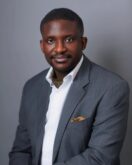
Following the recent Supreme Court’s verdict that validated the election of Governor Nyesom Wike of Rivers State, the People’s Democratic Party (PDP) and the All Progressives Congress (APC) appeared to have returned to the trenches, firing dangerous verbal salvos. Austin Tam-George, commissioner for information and communication, in this interview with ZEBULON AGOMUO, DEPUTY EDITOR, spoke on the efforts by the current government in the state to run an all-inclusive government, the injustice against the Niger Delta by the Federal Government, alleged resort to political extremism by the APC, among other issues. Excerpts:
In recent times, there have been allegations and counter-allegations between the APC and the PDP in Rivers, what is happening?
There are two forms of extremism that pose the greatest existential threat to Nigeria today. There is the religious extremism of Boko Haram which has ravaged the North East of the country, and continues to spread fear and terror across the land. Boko Haram is driven by bloodlust, and fantasies of an Islamic dystopia that promises endless supply of virgins to anyone foolhardy enough to blow themselves up in a crowded market. As a result, according to independent sources, Boko Haram has murdered over 40, 000 men, women and children.
But there is an even more virulent cancer now spreading across the country: the cancer of the ruling party’s political fundamentalism.
Since winning the general elections in May 2015, the All Progressives Congress (APC) has been acting less as a political party, and more as an extremist group. The APC controls the central government, it is in charge in 23 of 36 states in the country, it dictates domestic and foreign policy, controls the armed forces, the police, and the national treasury. In other words, the APC has sufficient control of the country to place Nigeria on a new, progressive path.
But rather than rise to the challenge of leadership, the APC seems to have lost every appetite or ability to govern. In its obsession to vanquish the Peoples’ Democratic Party (PDP) even after the general elections, APC leaders are deploying a dark, totalising rhetoric strikingly similar to that of Boko Haram.
Like Boko Haram, APC’s territorial hunger seems to be to loom in every sitting room and street corner as it seeks to impose its brand of political caliphate on Nigeria. In the aftermath of the Supreme Court’s judgment recently affirming Governor Nyesom Wike as the duly elected governor of Rivers State, among other PDP victories, the APC has ratcheted up its dangerous rhetoric. In a widely publicised media interview, Chief John Oyegun the national chairman of the APC has castigated the integrity of the justices of the Supreme Court, declaring that “Something is fundamentally wrong in the judiciary”.
Oyegun also made the bizarre suggestion that all oil-producing states of the Niger Delta region were prized assets to be acquired at all costs by the APC.
“We have lost very important resource-rich states to the PDP. No matter how crude oil prices have fallen, it is still the most important revenue earner for the country,” Oyegun said.
In Oyegun’s company was Dakuku Peterside, the defeated Rivers State APC governorship candidate, who seemed to use the meeting to incite the military and the Federal Government against the people of Rivers State.
But more dangerously we’ve seen situation where Peterside has called on the President in Abuja to purge alleged sympathiser’s of the immediate past administration from the security forces. Now, experts have warned that the constant deployment and redeployment of the police officers and commissioners across the country is undermining the security architecture of the states, including the Rivers State where we’ve seen a ramping of criminal activities by criminals because by nature as you know, criminals are very opportunistic, they’re constantly looking for gaps with the security architecture.
And what we have seen over the past few months have been some deployment and redeployment of police commissioners. And you understand the security implication of this: One, is that when a new police commissioner arrives in a state, for instance, he’s got to understand the security architecture; he’s got to understand the topography of the place; the sociology of the environment in order for him to function. Now, what this means is that certain longevity is necessary for people to remain in a place and function, but what we are seeing appears to be a politicisation of the work of the security forces. So, according to experts, what we are seeing is a gradual undermining of the security architecture in the state. That is one thing. You know, Dakuku Peterside has suggested to the president that there should be a massive purge of those suggested to have sympathy for the previous administrative. We think that this can only spell disaster for this country.
It seems like a manifesto to openly politicize the security forces in the country. We want to condemn and reject this appeal. For this kind of vindictiveness in politics, we believe that once the campaigns are over, that once elections are over, irrespective of political preference, you come back and deliver the people’s job, render service to the people and make government meaningful to the people in a very direct and non-abstract way.
But we are not seeing that, what we are seeing has been officials of the Federal Government, including Professor Itse Sagay, for instance, who just a few days ago, castigated the integrity of the supreme court judges. He is calling their decision to reaffirm the mandate of Governor Wike and his counterparts in the Niger Delta especially as very perverse decision. This is not the language of democracy. Professor Sagay seems to be drawing from the same vocabulary that you’ll expect the leader of Boko Haram to use. Shekau of the Boko Haram has something like organic disdain for institutions of state and we do not expect a party like the APC to use the same vocabulary.
We have seen situations where there seems to be a tendency to undermine democracy when it doesn’t favour the APC, and we feel this is a fast advancing totalitarianism of the APC.
Don’t you think that dialogue can help in this case?
We believe that as Chinua Achebe once said, ‘No matter how brilliant a monologue is, it cannot replace a dialogue. Dialogue means a constant traffic of ideas, recognition of diversity of perspectives. We must have competing visions on this country such that once we present these competing perspectives to the people of this country, they will be able to make informed choices. And politics doesn’t have to be a dead-end game where a winner wins all and a loser loses all. Which is why in Rivers State after his victory, Governor Wike had the magnanimity of spirit to invite his opponents in other parties to join him to do the work of the people; let us build the state together, because over the past eight years as you probably know, in Rivers State we had one of the most disastrous administrations. I am referring to the administration of Rotimi Amaechi who received over N3trillion and yet left the most abandoned projects in the history of the state since 1967. Now that we are trying to build a new trajectory, put the state on a new path; what Governor Wike has decided to do was to invite all political parties including APC to join in an inclusive administration. We already have about 28 political parties within the leadership structures of the local government in Rivers long before the Supreme Court verdict arrived. After the Supreme Court he made a state-wide broadcast inviting all parties to join him. He said, now that the campaigns and elections are over, let us make sure we come together, bury our differences and render service to our people.
He wasn’t calling for the death of the opposition. All he was calling for was this kind of dialogue of ideas. We have a blueprint on how to develop the state; it was on the basis of that blueprint that Governor Wike was elected in the first place. Even then, we are not claiming we are wiser than everyone else.
All we are calling for is a constant dialogue of ideas no matter what their perception and preferences have been; so that we can work together and deliver good service to our people. So, we wanted to invite attention to this kind of totalitarianism that we are seeing; the kind of dangerous rhetoric that we are getting from the APC.
We must have respect for democratic institutions even when a decision does not favour us. Mandela once said ‘you know the quality of a society, not so much in how they treat their rich men but the way they treat those who are most vulnerable. The same thing I think applies in our context.’ We should be magnanimous not just when we have won, but even when we have lost. That is why Governor Wike says let’s run an inclusive government. But this not the kind of rhetoric we are getting from the APC.
There are allegations of planned violence during the forth-coming re-run legislative elections in the state. Who is plotting what if we may ask?
In Rivers State, there will be a re-run legislature elections in March 2016. What this means is that Rivers State is going to have another opportunity to choose who their leaders should be. In a constitutional democracy; as you know we have three arms of government: The legislature has elections to run in order to fill that arm of government.
Now what we are hearing from the APC is also very dangerous. They are bragging already that they‘ll win every single post in that election.
They are not saying how they intend to do this other than through threats and appeals for the use of the military against the people of the state. We condemn this tendency to pre-empt elections even before they hold. So, the tendency therefore, is for people to think that once you get involved in politics you want to see it as a do-or-die game. This is something that is bad for democracy.
Our democracy is already imperfect as it is, but we think that knowing that there is a limit to pursuit of power, power ultimately belongs to the people and to God. We wanted to invite attention to this kind desperation now in full display by the APC in Rivers State. In the state as Governor Wike has said, only the sovereign will of the people will prevail. We want only free, fair and conclusive elections. I emphasised ‘conclusiveness’ because we now have an unfortunate and emerging tradition of inconclusive elections that plung some of these places into crisis. So, I want to invite attention, not just of Nigerians but of international community that they should take interest in what is happening in Rivers State. The Rivers State people are not asking for any particular favour, they simply want free, fair and transparent elections where they can freely make their choice in a transparent, credible and acceptable process.
Some of the allegations you leveled against the APC were something that your party had been accused of. It looks so much that now you are at the receiving end and you are screaming foul. Again, it is not one party that causes violence; it is usually both parties that have something at stake. Wouldn’t it be nice also if you caution your members and supporters to eschew violence?
We have organised series of town hall meetings in the state and I have attended many of them, at no time has there been appeal to violence ( or members advised to go violent against the opponent), never.
Governor Wike has always said, even at closed-door meetings, that this is a service to the people and that you cannot serve the people through recourse to violence. He has made it very clear that anybody who courts violence does not represent him and does not represent the PDP in Rivers State; or the government of Rivers State. What we are calling for is a violence-free environment, not just on Rivers State but across the country. It is sheer wickedness to think of going into public office, while resorting to violence. You can’t be violent in order to serve the people. So, this has absolutely nothing to do with the Wike administration. I happen to know that in private and public meetings that Governor Wike has dissociated himself from violence. And I use this opportunity because you asked the question to appeal to all those who many think that their interest somehow is better served in violence, to completely renounce violence and sheath their swords.
You lose and election, so be it, do not get involved in violence. I think the ultimate victory is when you actually deliver service in a way that is meaningful to the lives of the people. This has been an unfortunately recurring decimal in political practices in Nigeria since 1960.
We are in a change era and that is why we want a clean break from this unfortunate tradition of perennial violence simply because you want to serve.
Recently, Governor Seriake Dickson of Bayelsa State said since he won the re-election, the President has not deemed it necessary to congratulate him. Now you are coming with the allegation that the APC is fomenting trouble. Does it mean the party does not believe in the change it is preaching, that things must be done in a better, different way?
Well, I think ultimately democracy as a concept is too big for any government or single individual to quash. It is a very resilient concept. It is even more resilient in practice. Concerning whether the President has congratulated the winner in the Bayelsa election, that is an open question. It is up to the President to decide whether to congratulate him or not, but because he occupies a very pivotal position in our democratic structures, I think extending a congratulatory message could help to tone down the rhetoric in that place.
We have, fortunately, the tradition of a sitting President extending congratulation to his opponent who defeated him even long hours before the real result of that exercise was announced. So, we will have to leave it for him to decide.
Is there really any programme by the state government to bring the needed reconciliation in Rivers beyond the mere invitation of other parties to join the Wike administration for the overall development of the state?
Yes immediately the Supreme Ccourt verdict arrived, Governor Wike made a state-wide broadcast and announced that he has made a personal contact with the opposition.
In the church service he made it clear that he was inviting them to join his government and initially we got some positive response from leaders of the APC, including, especially Dakuku Peterside. But days afterwards, we saw a ratcheting of this kind of dangerous rhetoric. You see, you don’t dance alone. This is a bilateral relationship that we are trying to build. All other parties, 28 of them, are already within the governance structure of the state in the local governments; some of them are now being considered for board appointments and all that. Governor Wike that I work with is large-hearted not so much that he agrees with everything they say but because he believes that this is not a personal race, this is ultimately a call to the service of the state. And this kind of accommodation we are talking about we will not give up.
We will continue to invite them; we will continue to urge them and to preach to them to put this kind of do-or-die politics aside and come and work with government not because they often will agree with us, after all they are members of another party, they will not always agree with us and that is why we are talking about a dialogue of ideals. Even those of us who are in government, we want to tap into the collective wisdom of everyone. For instance, because we are in government, we no longer see ourselves as PDP. We see ourselves as government of Rivers State to provide services and protection to everyone, including those who may belong to other parties. So, this is the spirit and I think that this is something we will continue to pursue, no matter how difficult it may be.
It appears oil is at the heart of the matter in Rivers politics. Do you foresee peace in the state with the opposition feeling bad that they have lost a viable state? Secondly, members of the opposition may be saying that Governor Wike only preaches peace now because he has achieved his aim to become the governor of the state. What’s your take?
Let me answer your second question. If you have followed the political history of governor Wike he has never been part of violence, he does not believe in violence to achieve a political goal. His politics has never been characterised with violence.
He has always maintained, to the best of my knowledge, I said I know this because I am in government and sit with him in private, I sit with him in public; I attend executive council meeting; one of the things he keeps telling us, at rallies and even at project sites is that we must not be violent; his message has always been ‘do not be violent. If you are violent you are not part of this government; if you’re violent you are not part of the agenda of this government, you’re not part of this party’. He has constantly denounced violence. Now, concerning the pivotal role that oil has to play in all of this political schism, we are very worried about this because the national chairman of the APC, Chief John Odigie-Oyegun made it very clear that they could not possibly be losing oil-rich state to the opposition party. In this type of rhetoric, what seems to matter to him is not the people and few choices they make as long as the resources seem to be on the table as a price for political parties. We think that this kind of rhetoric that emphasizes resources over people is a very dangerous way of looking at things because they want to see this as a mere region to be conquered; and we can’t condemn enough this kind of dangerous and dark rhetoric and a materialistic way of looking at a people. Chief Oyegun himself seems to have lost his own sense of irony.
He is from Edo State; how come a man from Edo be speaking so disparagingly of his own people of the region and democracy generally. I want to use this question of oil to quickly elaborate my comment on the ongoing fight against corruption by the President.
How do you see the APC graft war?
We in Rives State we support any fight waged at any level against corruption in the country but we are worried about what appears to be a kind of selectivity that characterizes the process so far. That is one thing; but we are also worried about what appears to be a very limited understanding about how corruption works. So far, we seem to be seeing a disproportionate attention paid to financial crimes – people simply diverting money meant for public purse for private use; that appears to be the very limited definition of corruption that we are seeing and it shows a very limited scope of the fight itself.
We believe that the President is presiding over a structurally corrupt economy. For instance, we are running a federal state and one of the fundamental principles of federalism is that communities of state will have control over the resources found in their areas. To sit in Abuja and allocate oil wells that are as far-flung as Gbaramatu or Bonny in the Niger Delta which is a form of structural theft is a form of structural corruption.
We believe that the very economy on which this country is based is fraudulent and needs to be integrated into this co-called fight against corruption. I lived for over a decade in South Africa which is also a federal state like Nigeria.
If you want to mine platinum in South Africa for instance, you don’t go to Pretoria to get mining leases from the president you go to the North West area called the Platinum Belf, to meet the king who lives there and he gives you mining lease and he in turn pays resource tax to Pretoria. You go the US, and you want to exploit for oil, you don’t go to Washington DC to meet Barack Obama, you go to the communities in Texas, the same thing in other federal states. The kind of system we have here, where someone who is from Daura or Kaduna or Abuja will be allocating oil wells in locations he has never been to; is the ultimate from of corruption and we feel scandalised. The present administration is not addressing what appears to be the fundamental structural corruption. And it appears the government at the centre has not even understood its seriousness, let alone thinking about how to deal with it. We are urging an expansion of the definition of corruption to include the structural corruption of the economy itself. The federation account (these are not my figures they are figures from the National Bureau of Statistics) – the monies in the federation account are distributed in this way: 74% of the money that is shared every month comes from the Niger Delta communities alone, 20% comes from the whole of South West, out of this, 18% comes from Lagos alone, 8% of the federation account comes from the rest of the South East. The North contributes zero percent; Katsina where the President comes from contributes not a kobo to the federation account.
We think that this is the ultimate form of corruption to be tackled, because it has both structural problems, it has moral implications and it has, frankly, too, legal implications. May be, the Petroleum Act of 1969 will have to be repealed because these are the kind of legislatures that disentitled some communities from having control over their own resources. Now we see commodity prices collapsing all around us; last year, oil was selling for 120 or 125 dollars per barrel, today oil is selling for less than 30 dollars; what this calls for is a return to true federalism such that these communities and states will have control over their resources; and let the state governors tap into the genius of their own people, so that we all can contribute into the federal distributable pool. You can’t simply be sitting in Abuja and be hunting people that they are diverting state resources, when the state itself is stealing from the communities, it is stealing from its own self. We are not in any way addressing this critical issue, but we seem to be obsessed and going into a frenzy that individuals are diverting state resources. The individuals are doing this because the state is stealing from itself.
ZEBULON AGOMUO

Join BusinessDay whatsapp Channel, to stay up to date
Open In Whatsapp