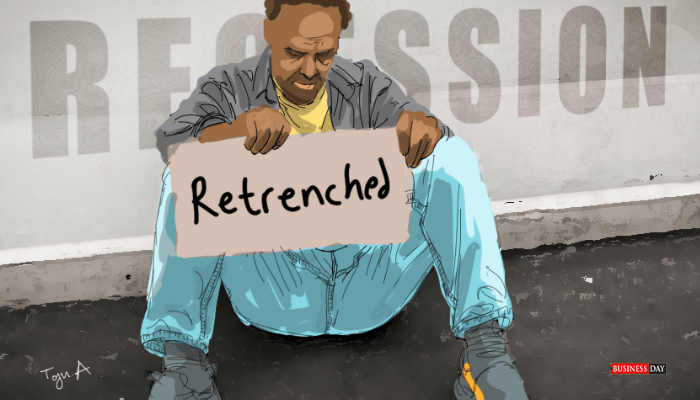
Nigeria’s recessed economy has dampened consumers’ overall confidence outlook as the index contracted by 14.8 points in the fourth quarter (Q4) 2020.
Nigerian economy slipped into recession – the second since Q2 2016 – after output contracted for the second consecutive quarter. Real GDP shrunk by -3.62 percent in Q3 2020 compared with -6.10 per cent in the preceding quarter, according to data from the National Bureau of Statistics (NBS).
Respondents of Consumer Expectations Survey (CES) attributed this unfavourable outlook to declining economic conditions, family financial situation and declining family income.
The Q4 CES was conducted by the Central Bank of Nigeria (CBN) during the period of November 16 -25, 2020 covering a sample size of 2,070 households drawn from 207 Enumeration Areas (EAS) across the country, with a response rate of 99.8 per cent.
READ ALSO: COVID-19 second wave: FG shuts bars, night clubs, restaurants, restricts meetings
Respondents’ distribution by educational attainment showed that 8.8 percent had university education, 11.5 percent had higher non-university education, while 29.1 percent had senior secondary school education. Respondents with junior secondary and primary school education accounted for 4.5 and 19.7 percent, respectively, while those with no formal education accounted for the balance of 26.3 percent.
The consumers were, however, optimistic in their outlook for the next quarter and next 12 months with indices of 10.5 and 28.9 points, respectively. The positive outlook could be attributed to the expected increase in net household income, an anticipated improvement in Nigeria’s economic conditions and expectations to save a bit and/or have plenty over savings in the next quarter and the next 12 month
The CES report released by the CBN on Monday showed that most respondents expect prices of goods and services to rise in the next 12 months, with an index of 43.1 points. The major drivers are: savings, food and other household needs, education, purchase of appliances/ durables, purchase of car/ motor vehicle, and purchase of houses.
Overall buying intention index in the next twelve months stood at 29.9 index points, indicating that most consumers do not intend to buy big-ticket items in the next 12 months.
The buying intention indices for consumer durables, motor vehicles and house & lot were below 50 points, which shows that respondents have no plans to make these purchases in the next twelve months.
Overall buying intention index in the next twelve months stood at 29.9 index points, indicating that most consumers do not intend to buy big-ticket items in the next 12 months.
The buying intention indices for consumer durables, motor vehicles and house and lot were below 50 points, which shows that respondents have no plans to make these purchases in the next twelve months

Join BusinessDay whatsapp Channel, to stay up to date
Open In Whatsapp