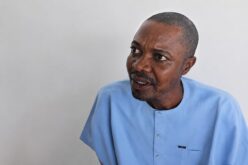
The perennial flooding in different parts of Lagos State, particularly on island, is largely a consequence of its coastal geography and low-lying terrain, Governor Babajide Sanwo-Olu has said, dismissing claims that the Lagos-Calabar Coastal Highway project was responsible for the flooding.
Speaking while hosting the David Umahi, Minister of Works, and members of the National Assembly during an inspection of the multi-billion-naira coastal highway project, Sanwo-Olu said flooding was a natural occurrence in coastal cities around the world.
“Lagos is a coastal city. When people say Lagos has flooded, without mincing words, we will always experience some level of flooding. We only pray that it will not be severe. These are natural occurrences associated with coastal environments across the world,” the governor said, on Monday, at Lagos House, Marina.
He explained that Lagos’ geographical characteristics make seasonal flooding almost inevitable, noting that the state occupies less than 0.4 per cent of Nigeria’s landmass, while nearly one-third of its territory is covered by water. According to him, rapid population growth has also placed increasing pressure on the state’s land and infrastructure.
Sanwo-Olu observed that periods of intense rainfall could temporarily overwhelm even well-designed drainage systems but maintained that floodwaters typically recede after the rains.
The governor also defended the Lagos-Calabar Coastal Highway, describing it as a transformative national infrastructure project that would stimulate economic growth and improve the quality of life of Nigerians. He urged critics not to politicise the project.
“Two years ago, it felt like it was just a political conversation, but today people are already using the road. We thank Mr. President for this landmark project. Lagos has been the first major beneficiary, and we are indeed grateful because it will enhance the quality of life of our people and improve the economy of the country,” he said.
He cautioned against allowing narratives on social media to overshadow facts.
“We cannot allow social media to define who we are. That does not mean we ignore our challenges. Whenever there are problems, we must confront them and solve them, but we must also understand the realities of our environment,” he added.
Sanwo-Olu further blamed indiscriminate refuse disposal for worsening flooding across the state, saying blocked drainage channels remain one of the leading causes of urban flooding.
He recalled that the Lagos State Government had banned the use of styrofoam because of its adverse environmental impact and disclosed that additional environmental regulations would soon be introduced to strengthen environmental protection.
The governor also revealed that the state had begun a major clean-up of the Lagos-Badagry Expressway to safeguard public infrastructure, stressing that the government would maintain zero tolerance for activities capable of damaging roads and obstructing drainage systems.
On the maintenance of the coastal highway, Sanwo-Olu disclosed that the state had entered into an agreement with a mechanised street-cleaning company to deploy specialised six-lane sweeping machines for the daily cleaning of the highway.
He assured residents that the government would continue to protect public investments through proper maintenance of critical infrastructure.
Earlier, the Minister of Works, David Umahi, said the inspection was undertaken on the directive of President Bola Tinubu following widespread claims on social media alleging that the Lagos-Calabar Coastal Highway was responsible for flooding in parts of Lagos.
Umahi dismissed the claims as false and misleading, noting that flooding had occurred in several states across the country and had already been forecast in at least 22 states.
“We were concerned about the negative narrative on social media claiming that the Coastal Highway caused flooding in Lagos.
The President directed us to come with members of the National Assembly to assess the situation ourselves,” the minister said.
He explained that the highway was intentionally elevated to withstand ocean surges and protect the corridor against flooding for the next 20 to 30 years.
According to Umahi, the affected locations were naturally swampy long before construction of the highway commenced, warning that structures built below approved flood levels would remain vulnerable to flooding regardless of the road project.
He added that more than 80 per cent of the drainage evacuation channels leading into the lagoons had already been completed.
The minister disclosed that the Federal Government and the Lagos State Government would collaborate to construct additional drainage channels and service lanes on both sides of the Lagos-Calabar Coastal Highway to further improve flood management and protect adjoining communities.

Join BusinessDay whatsapp Channel, to stay up to date
Open In Whatsapp