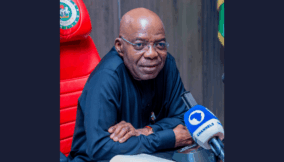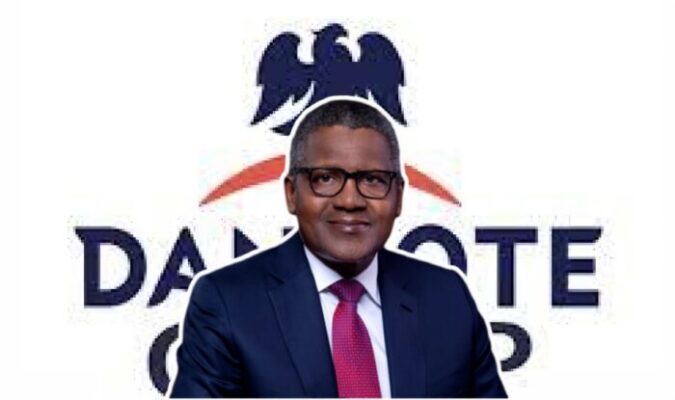
When Aliko Dangote told Femi Otedola, chairman of First HoldCo and a group of senior banking executives touring his world’s largest single-train crude oil processing facility this week, that investors had already submitted purchase requests worth nearly $2 billion for a private placement that hasn’t even launched yet, the disclosure was the boldest economic wager Africa has placed on itself in modern history.
“The IPO that we have right now, there is quite a lot of demand in terms of people disturbing us, pushing us that ‘look, we want to buy,” Dangote told journalists afterwards.
“And that is the reason why we are trying to make sure that by September, we will be out there in the market,’ he added. ”
The planned initial public offering of Dangote Petroleum Refinery and Petrochemicals FZE is targeting a valuation of between $40 billion and $50 billion. The company intends to sell up to a 10 percent stake, which would raise as much as $5 billion in a single transaction.
The planned initial public offering of Dangote Petroleum Refinery and Petrochemicals, targeted for as early as September on the Nigerian Exchange Group, is shaping up to be far more than a landmark corporate event.
“We have a lot of demands in billions of dollars. The advisers are still evaluating to see how much we are going to go to the market with,” he added while speaking on the proposed listing price.
For the continent’s fragmented capital markets, it may represent the most consequential stress test of Africa’s financial architecture in a generation.
A bet most people would ignore
For six decades, Africa’s biggest oil-producing country lived a particular kind of humiliation. The country sat on Africa’s largest proven crude oil reserves, exported millions of barrels daily to refineries in Rotterdam, Houston, and Chennai, then turned around and imported nearly all of its refined petroleum products back at global market prices.
Fuel queues became a national ritual. The petrol pump became a polling station of public fury. Billions of dollars haemorrhaged through import bills that swelled the balance-of-payments deficit and drained foreign reserves faster than the Central Bank could replenish them.
Nigeria’s petrol import bill hit N15.42 trillion in 2024 alone, a 105 percent increase from the year before.
This was the problem Aliko Dangote decided to solve. Not as a government. Not with World Bank loans conditioned on structural adjustments. As one private citizen, with his own money, his own risk, and his own timeline, eleven years of it.
The asset underneath the story
Before the investment banking machinery, the cross-border listings dialogue, and the institutional scramble can be fully understood, the physical asset demands context.
The refinery cost $20 billion to build. It took a decade. It was commissioned in 2023 and began commercial operations in January 2024.
At nameplate capacity, it can process 650,000 barrels of crude oil per day, a figure that makes it not merely the largest refinery in Africa, but the largest single-train crude processor on the planet.
That capacity is now running close to full utilisation. Disruptions to global supply chains stemming from the US-Israel-Iran conflict have pushed buyers toward alternative suppliers, and Dangote’s facility has stepped into the gap with a reliability that West African energy markets have rarely experienced. The refinery feeds a pipeline network stretching 1,100 kilometres and sits at the centre of road and infrastructure development that has reshaped the Lekki corridor.
Last October, Bloomberg reported that Dangote announced plans to expand refining capacity to 1.4 million barrels per day over three years, a figure that would, if realised, make it the largest refinery in the world by any measure.
The company has also moved to extend its logistics reach beyond Nigeria’s borders. A deal signed with the Namibian government will see a tank farm storage facility established at Walvis Bay harbour, with capacity for 1.6 million barrels of petrol and diesel, supplying refined products to Namibia, Botswana, Zimbabwe, Zambia, and South Africa.
The project, reported by Reuters in July 2025, signals that the refinery’s commercial ambitions are continental rather than national.
A Pan-African moment
The deal is not designed solely for Lagos. Five African stock exchanges, including the Johannesburg Stock Exchange, have already entered discussions with the Nigerian Exchange Group about the mechanics of a historic cross-listing.
“What we are building is not just about facilitating individual transactions, but about creating a sustainable framework that allows African capital to move more efficiently across borders,” Emomotimi Agama, Director General of the Securities and Exchange Commission, SEC, said.
He added, “Deeper collaboration among our exchanges will be critical to unlocking liquidity and positioning Africa as a competitive global investment destination.”
For South African retail investors, the JSE route would allow participation through existing brokerage accounts, removing the friction of opening a Nigerian-registered account.
Private capital vehicles and family offices across the continent are also circling the offering, according to people familiar with the process.
Nigeria’s pension regulator has opened the door for pension funds to participate through a special investment waiver, a rare policy intervention that signals how seriously the government regards the listing as a national economic event.
Retail investors are equally on alert. Investment platform Bamboo has begun to run ads to spread the word. Private chatter indicates that even villagers are storing up cash to participate.
The IPO proceeds are earmarked for an expansion phase targeting an increase in refinery capacity from 650,000 to 1.4 million barrels per day and the quadrupling of fertiliser production, with new projects in the Democratic Republic of Congo and Zambia also on the slate.
The financing that came first
Before equity investors get their turn, Dangote has already demonstrated the scale of debt appetite his assets command.
The African Export-Import Bank announced on March 31 that it had underwritten $2.5 billion of a $4 billion senior syndicated term loan in favour of Dangote Petroleum Refinery and Petrochemicals FZE. Afreximbank and Access Bank were named co-mandated lead arrangers for the five-year facility, a transaction that stands as one of the largest project finance deals ever closed on the continent.
George Elombi, president of Afreximbank, framed the investment in terms that went well beyond commercial return.
“The Dangote Refinery stands as a bold symbol of what African ambition, African capital and African execution can achieve at scale,” he said. Elombi noted that Afreximbank had invested approximately $15 billion in the Dangote Group since 2015, a commitment he described as a deliberate strategy rather than coincidence: “When we invest in ourselves, we do more than create jobs and wealth or expand government revenues; we build a secure and resilient future for our continent.”
The $4 billion loan closes out the major debt structure before the IPO, which means equity investors entering through the public offering will do so with the refinery’s balance sheet already substantially ordered.

Join BusinessDay whatsapp Channel, to stay up to date
Open In Whatsapp