Lagos, one of Nigeria’s 36 states, occupies a prominent position in the nation’s economy. It is a bustling меgacity where millions of people live, work, and commute daily between the mainland and the island.
Covering about 3,345 square kilometres—of which roughly 22 percent is made up of lagoons and creeks—Lagos is not only the smallest state by landmass but also one under immense pressure from inadequate public infrastructure. This challenge is driven by its rapidly growing population, estimated at over 20 million people.
In 2006, the Lagos Metropolitan Area Transport Authority (LAMATA), the state’s urban transport implementation agency, secured approval to develop the Lagos Light Rail Mass Transit (LRMT) system. This ambitious initiative aims to deliver six rail lines and a monorail capable of transporting millions of commuters daily across different parts of the state.
The proposed rail network forms part of the Lagos Strategic Transport Master Plan, alongside the Lagos Urban Transport Project. The plan seeks to integrate rail systems, 14 Bus Rapid Transit (BRT) corridors, and 26 water transport routes.
LAMATA’s design identifies six rail lines by colour: Green, Purple, Yellow, Orange, Blue, and Red.
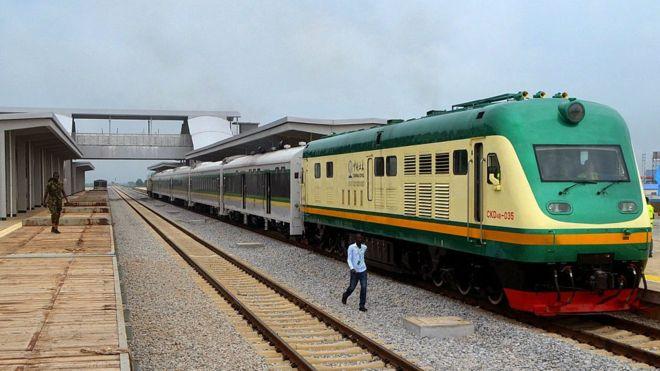
The Blue Line—a 27km route running from Marina on the island to Okokomaiko on the mainland—began commercial operations for its first phase (Marina to Mile 2) in September 2023. This was followed by the Red Line, a 37km corridor, with its first 27km phase connecting Agbado in Ogun State to Oyingbo in Lagos. The Red Line commenced operations in October 2024.
Key Facts About the Green Line Rail
The Green Line is the third rail project slated for development by the Lagos State Government.
Construction Timeline
Construction is expected to commence this year, with a projected completion period of two to three years.
Route Length
The Green Line will span approximately 70 kilometres, running through Marina, Victoria Island, Lekki Phase 1, Ajah, Lekki Phase 2, Ogombo, Elepetu, Eluju, the proposed Lekki Airport, and the Lekki Free Trade Zone.
Passenger Capacity
The line is projected to carry over 500,000 passengers daily at inception, with capacity expected to exceed one million passengers per day by 2031.
Traffic Decongestion
The Green Line is designed to reduce congestion along the Lekki-Epe corridor significantly, one of the fastest-growing corridors in West Africa. Travel time between Marina and Epe is expected to drop to under one hour.
Stations and Infrastructure
The project will feature 17 stations, 8-car trains, a depot near Sangotedo, and a 15-acre park-and-ride facility near the Lekki Free Trade Zone.
Financing
While the bulk of the funding may come from within Lagos, the Federal Government has taken steps to support the project financially through counterpart funding. On Thursday, April 30, 2026, the Federal Executive Council approved $3 billion for three rail projects nationwide, including the Lagos Green Line, the Kano Metro, and the Kaduna rail project.

Join BusinessDay whatsapp Channel, to stay up to date
Open In Whatsapp