…Spending obscures Nigeria’s fiscal deficit – Analysts
…Finance minister debunks IMF claim as Senate shrugs off report
Fiscal transparency concerns have deepened after the International Monetary Fund (IMF) said about two percent of Nigeria’s gross domestic product (GDP) in public spending was not properly reported.
The development has triggered criticism from analysts, pushback from the federal government and a dismissive response from the Senate, while also widening debate over how Africa’s most populous nation records, consolidates and reports its public finances.
The IMF disclosure, made by Christian Ebeke, its resident representative for Nigeria at a public event in Lagos, has been interpreted by fiscal analysts as pointing to gaps in Nigeria’s public finance reporting systems, even as the Fund stopped short of alleging illegality or off-budget spending.
“So far we think that there are about two per cent of GDP of expenditure that were not reported, that should be reported and should be recorded, so that this statistical discrepancy will disappear,” Ebeke said.
The estimate, which translates to more than N8 trillion, has become the focal point of a widening debate over whether Nigeria’s fiscal accounts fully capture government spending or whether classification and consolidation gaps are distorting headline indicators such as debt-to-GDP ratios and fiscal deficit calculations.
For BudgIT Foundation, a civic technology and public finance watchdog, the issue goes beyond statistical reconciliation and speaks directly to fiscal credibility, debt sustainability and investor confidence in Nigeria’s macroeconomic data.
Nigeria’s failure to accurately report public expenditure equivalent to about 2 percent of GDP “distorts the country’s debt position, weakens fiscal transparency and erodes investor confidence,” Vahyala Kwaga, country director of BudgIT, told BusinessDay.
Kwaga said the size of the figure underscores its material impact on fiscal aggregates and should not be treated as a marginal accounting difference.
“Two per cent of our GDP in 2025 was about $3.1 billion or N4.23 trillion,” he said. “This amount is clearly not insignificant and is roughly N1.27 trillion less than the combined health and education budgets for 2025.”
He argued that the issue is particularly significant given Nigeria’s reliance on debt-to-GDP ratios as a key anchor for fiscal sustainability assessments, rather than revenue-based metrics.
“Our debt has been a challenge and the government has unfortunately aligned with international reporting by comparing our debt to GDP, as opposed to comparing our debt to revenue,” Kwaga said. “In this instance, not reporting this spending accurately impacts our debt position.”
Kwaga further warned that incomplete consolidation of expenditure data also distorts the fiscal deficit, which is a central indicator for macroeconomic policy credibility.
“It would significantly reduce our fiscal deficit, which would render government accounting incomplete and, by extension, inaccurate,” he said.
He said the IMF observation reflects structural weaknesses in Nigeria’s fiscal reporting architecture, including fragmentation across institutions responsible for budgeting, execution and reporting.
“We can only hope that the current administration reverses its behaviour and makes more public how it is spending and earning money,” Kwaga added.
He also argued that weak transparency has reputational consequences beyond macroeconomic statistics, particularly in relation to investor trust and governance credibility.
“The irregular reporting shows that the Nigerian government is unable to transparently speak to its own spending,” he said. “This means that the government cannot abide by simple rules that it even imposes on domestic private companies in the country.”
The disclosures have intensified political headwinds for President Bola Tinubu, prompting leading opposition candidates like Peter Obi and Atiku Abubakar to renew demands for the president’s immediate resignation.
In a statement issued on Sunday via X, Obi, the presidential candidate of the Nigeria Democratic Congress (NDC), described the disclosure as evidence of what he called a pattern of “grand corruption” under the Tinubu administration.
“The IMF now reveals that about N8.83 trillion in expenditure undertaken in 2025 is not reflected in the budget. This expenditure is not budgeted and is therefore not under legislative oversight or administrative scrutiny. This is horrible,” Obi said.
He argued that the amount exceeds 35 percent of Nigeria’s N23.96 trillion capital expenditure budget for 2025 and is larger than the combined allocations for education and health.
“It is more than the entire combined budget for education (N3.52 trillion) and health (N2.38 trillion),” he said.
Obi said proper deployment of the funds could have significantly improved public services and job creation.
“If such an amount is properly used and accounted for, it could transform Nigeria’s public health and education sectors. It could create hundreds of cottage industries that can provide jobs for thousands of graduates and build a solid foundation for economic development. But we cannot account for it. This is not an isolated incident. This is a pattern of grand corruption that has become part of this administration.”
He added that corruption had become entrenched in government and posed risks to the country’s stability.
“We have a lot to worry about regarding the state of corruption under President Tinubu. The sort of corruption that is ingrained in total disregard of elementary rules of public finance management poses a grave danger to national security and the stability of the Nigerian state.”
Obi further accused the ruling All Progressives Congress-led government of failing to prioritise the country’s growing social and infrastructure needs.
Reacting in a statement on Saturday, Atiku said that with Nigeria’s economy estimated at about N441.5 trillion, the two per cent discrepancy amounts to roughly N8.8 trillion spent without legislative approval, audit or public accountability.
He alleged that the Tinubu administration was operating a parallel fiscal system outside constitutional oversight.
According to him, the IMF’s findings suggest that multi-trillion naira government projects were executed off-budget, beyond the scrutiny of the Auditor-General, procurement laws and the National Assembly.
Atiku, the presidential candidate of the African Democratic Congress (ADC) for the 2027 poll, also alleged that N800 billion had been deducted from statutory allocations due to state governments through the Progressive Governors Forum (PGF), claiming that the combined N9.6 trillion was being assembled as a political war chest ahead of the 2027 general elections.
“The IMF’s latest Article IV consultation, articulated by its resident representative in Nigeria, Christian Ebeke, confirmed that this staggering discrepancy arises from large-scale government projects executed entirely off-budget.
“Let us be absolutely clear about what this means: The Tinubu administration is awarding multi-trillion naira contracts, moving massive public capital, and commissioning infrastructure projects entirely beyond the reach of the Auditor-General, the nation’s procurement laws, and the legitimate oversight of the National Assembly. It is a parallel fiscal universe, one governed by executive whim,” he said.
Atiku argued that while Nigerians endured the hardship caused by fuel subsidy removal and successive naira devaluations, the government maintained what he described as a “shadow treasury.”
The federal government, however, has paid no heed to the reactions from stakeholders and analysts. It
chose to reject interpretations that the IMF’s remarks imply unapproved expenditure or spending outside Nigeria’s constitutional budget framework, insisting that the issue relates to classification and reporting standards rather than legality.
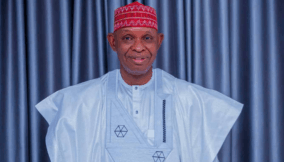
Taiwo Oyedele, minister of finance and coordinating minister of the economy, said the claims circulating in public debate misrepresent both the IMF observation and Nigeria’s fiscal system.
“The federal government does not operate a ‘shadow budget’ or expend public funds outside the constitutional and statutory framework established for public finance,” he said.
Oyedele said all federal spending is undertaken under constitutional provisions and legislation passed by the National Assembly, including Appropriation Acts, Supplementary Appropriations and statutory transfers embedded in law.
“It is inaccurate to suggest that trillions of naira have been secretly spent outside legislative approval,” he said. “Such allegations should have identified the specific projects purportedly executed without appropriation or legal authority and present credible evidence in support of the claim.”
He explained that Nigeria’s fiscal framework includes statutory transfers, debt service obligations, intervention funds and revenue collection costs, all of which are legally authorised but may be presented differently under international statistical reporting systems.
“These expenditures are neither secret nor illegal,” Oyedele said. “They are established by law, disclosed in various fiscal reports, and subject to applicable oversight, audit and accountability mechanisms.”
He added that differences between domestic budget classifications and international reporting standards can create apparent discrepancies that are methodological rather than substantive.
Oyedele also rejected suggestions that the N8 trillion figure implies a higher fiscal deficit, arguing that the financing structure does not automatically change fiscal balance outcomes.
“Whether a capital project is financed through annual appropriations, supplementary appropriations, statutory transfers, approved intervention mechanisms, or other lawful financing arrangements does not, by itself, increase the fiscal deficit,” he said.
He said the IMF’s observation should be understood primarily as a concern about reporting comprehensiveness and timing alignment, rather than legality of expenditure, adding that ongoing reforms are aimed at improving transparency and harmonising fiscal reporting frameworks.
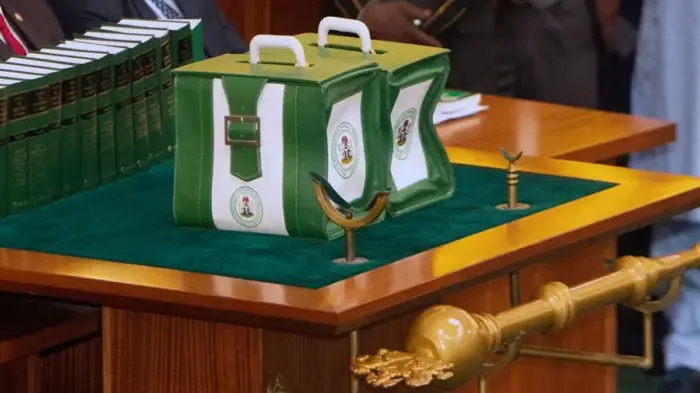
The Senate has also dismissed calls for legislative reaction to the IMF remarks, insisting that Nigeria’s parliament is not obliged to respond to external commentary on its budgetary processes.
“We are not the IMF Assembly. We don’t do oversight on their prompting,” said Senate spokesman Yemi Adaramodu.
He said the National Assembly operates strictly within its constitutional mandate and has already discharged its responsibility through the passage of appropriation legislation.
“The IMF does not have a constitutional role in our appropriations process, so the National Assembly is not obliged to react to such unofficial comments or pontificating,” he said. “The National Assembly passed the current Appropriations Bill, and the relevant committees are doing the needful on releases and execution.”
Despite the government’s firm rebuttals, fiscal analysts say the controversy has reignited deeper questions about the completeness of Nigeria’s fiscal accounts, particularly the transparency of discretionary funding channels and consolidated reporting structures.
A senior National Assembly source familiar with budget operations told BusinessDay that parts of the expenditure referenced in public debate may relate to discretionary government funding mechanisms that are not always visible in headline budget summaries.
“There is this Renewed Hope funding where a lot of discretionary spending is funding projects here and there,” the source said. “The Presidency is carrying out a lot of projects… so I am thinking the spending is from there.”
The source added that Service Wide Votes, which allow executive flexibility in funding government priorities outside ministry allocations, may also account for part of the discrepancy.
“The Presidency is carrying out a lot of projects. The National Assembly also usually approves the Service Wide Votes from which the President can make discretionary expenditures, so I am thinking the spending is from there.”
The IMF, while not alleging wrongdoing, has nevertheless triggered renewed scrutiny of Nigeria’s fiscal reporting framework at a time when the government is seeking to improve investor confidence, stabilise debt indicators and strengthen budget credibility.
Beyond official responses, the debate has widened into broader concerns about governance systems, transparency and the visibility of public spending flows across ministries, departments and agencies.
Speaking to BusinessDay, Dele Oye, chairperson of the Alliance for Economic Research and Ethics (AERE), said the scale of unreported expenditure points to structural opacity rather than routine classification differences.
He said the issue raises fundamental concerns about macroeconomic stability and fiscal credibility.
“The expenditures outside the official budget perimeter, which represent 2 percent of the national GDP, is not a mere accounting oversight but a profound breach of fiscal transparency and a structural threat to Nigeria’s macroeconomic stability,” he said.
Oye said the IMF concern reflects uncertainty over the true scale of government obligations and borrowing needs, which affects policy credibility.
“The IMF’s concern, which is also shared by all Nigerians, is not merely the legality of the spending, but the systemic opacity that obscures the true scale of the nation’s borrowing requirements and undermines the integrity of its fiscal framework,” he said.
He called for stronger institutional integration of fiscal reporting systems, including real-time financial management platforms linking key government agencies.
Separately, economist Mayowa Amao, an Abuja-based economist, said the allegations require formal investigation by statutory audit institutions rather than relying on public debate or external statements alone.
He said the Auditor-General’s office remains the constitutionally mandated authority to verify such fiscal discrepancies.
“So if there has been fraud, we have an office for public accounts. We have an accountant general. We have an auditor general,” he said.
Amao said the IMF should formally submit supporting documentation to Nigerian audit institutions to enable structured verification and investigation.
“That is the first thing we need, because the IMF said it doesn’t mean we should just go with it. But we need evidence so that even if the government will not investigate, civil society organisations, including journalists like BusinessDay, will investigate if they give us evidence.
“The more appropriate authority to deal with this issue from an independent perspective is the Auditor General’s office,” he said.
He added that credible accountability requires evidence-based investigation that can either confirm or refute the findings.
For Muda Yusuf, director-general of the Centre for the Promotion of Private Enterprise (CPPE), the controversy is largely driven by insufficient disclosure within existing budget classifications rather than evidence of off-budget spending.
He said Nigeria’s fiscal framework already includes multiple aggregated spending categories such as statutory transfers and service-wide votes, but their detailed breakdown is often not fully disclosed in public documents.
“I don’t think that those things are in the budget. What I believe is that the details of those budgets are not fully disclosed for whatever reason,” he said.
Yusuf said the policy priority should be improving transparency through greater granularity of fiscal reporting rather than assuming illegality.
“I think what we should be demanding is that more information should be provided,” he said.
He added that the debate should push reforms toward clearer disclosure rather than assumptions of extra-budgetary spending.
“I don’t think that this is a case of completely off-budget spending. I think it’s a question of details,” he said.
The debate comes as questions over public financial oversight have intensified following the government’s disclosure last week that a non-existent Presidential Foreign Intervention Promotion Council had received a budget allocation and staff postings, a case now under investigation.

Join BusinessDay whatsapp Channel, to stay up to date
Open In Whatsapp