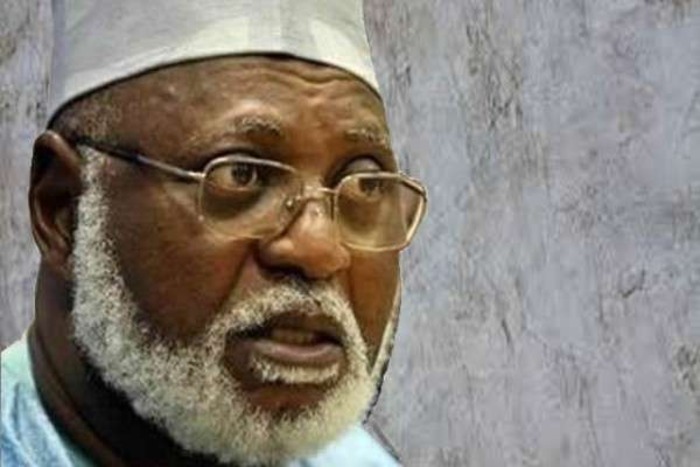
Abdulsalami Abubakar, Former Head of State, General(retd.), has called on Nigerians to forge a united front against the country’s lingering insecurity, declaring that defeating terrorism, banditry, and other criminal elements requires a collective, nationwide effort.
Speaking at his residence in Minna, Niger State, the elder statesman emphasized that the responsibility of securing the nation cannot be left solely to the military or government officials. Instead, he argued that lasting peace is only achievable through a synchronized partnership involving regular citizens, intelligence agencies, and all tiers of government.
Abubakar highlighted that local communities hold the key to breaking the cycle of violence. Because criminal elements live within communities, citizens often possess critical, ground-level information that can prevent attacks before they occur. He urged citizens to cooperate fully with law enforcement by reporting suspicious movements, emphasizing that timely intelligence sharing is the most effective weapon against urban criminality and rural banditry.
Addressing the institutional side of the crisis, the former leader called for enhanced coordination among Nigeria’s security agencies. He noted that rivalries and a lack of synergy often hamper operational efficiency. Abubakar stressed that federal, state, and local governments must align their strategies and funding to properly equip frontline personnel.
While acknowledging the immense sacrifices made by the armed forces, he pointed out that modern threats require modern solutions, including advanced surveillance technology, better welfare for troops, and deep-rooted community policing structures.
Beyond tactical military responses, Abubakar General warned that kinetic force alone would not permanently eliminate insecurity. He urged political leaders to aggressively tackle the underlying socio-economic drivers of crime, specifically pointing to widespread youth unemployment, poverty, and a lack of functional education.
According to the former Head of State, economic frustration leaves millions of young Nigerians highly vulnerable to radicalisation and recruitment by syndicates. He concluded by warning that unless the government prioritizes job creation and economic empowerment alongside military operations, the cycle of insecurity will continue to threaten the nation’s stability.

Join BusinessDay whatsapp Channel, to stay up to date
Open In Whatsapp