While economic growth often dominates discussions about global progress, income alone does not determine how well people live. Access to healthcare, education and opportunities also shapes a country’s development and the quality of life of its citizens.
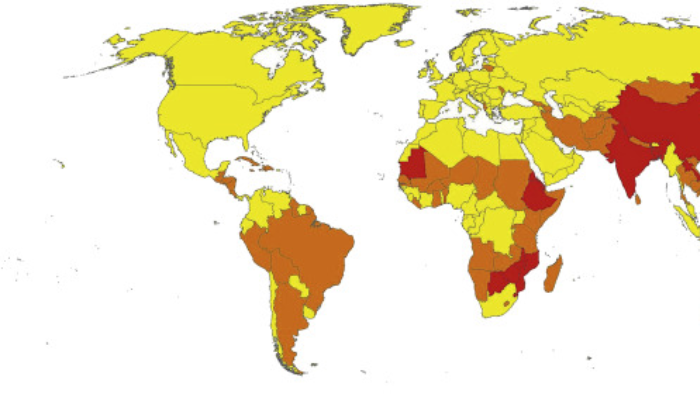
The latest United Nations Human Development Report, based on 2023 data, ranks countries using the Human Development Index (HDI), which measures life expectancy, education and gross national income per person. Countries with the lowest scores continue to face conflict, political instability, weak public institutions and limited access to essential services.
Read also: Accra floods kill at least 13 as Ghana warns more heavy rain is on the way
Here are the 10 least developed countries in the world according to the 2025 Human Development Report.
1. South Sudan (HDI: 0.388)
South Sudan ranks last on the Human Development Index. Since gaining independence in 2011, the country has struggled with a conflict that began just two years later. The fighting has displaced millions of people and slowed economic and social development.
Weak institutions have also made it difficult to deliver healthcare, education and public services. Around 99 out of every 1,000 children die before reaching their fifth birthday, making it one of the highest child mortality rates in the world.
2. Somalia (HDI: 0.404)
Somalia has faced decades of political instability following the collapse of its central government in 1991. Armed groups continue to control parts of the country, limiting the government’s ability to provide basic services.
Climate shocks have added to these challenges, with repeated droughts increasing food insecurity. More than half of the population lives in poverty, while the country remains heavily dependent on international aid.
3. Central African Republic (HDI: 0.414)
Despite having reserves of diamonds, gold, oil and uranium, the Central African Republic continues to experience political instability and conflict.
Years of violence have affected healthcare, education and economic development. Life expectancy remains around 56 years, while literacy levels remain low compared with many other countries.
4. Chad (HDI: 0.416)
Chad’s development has been shaped by political instability and internal conflict since independence in 1960.
Although the country exports oil and possesses mineral resources, many people continue to live in poverty. Limited healthcare services have left communities vulnerable to diseases such as malaria and dengue, with very few doctors available to serve the population.
5. Mali (HDI: 0.419)
Mali has experienced political unrest, military coups and security challenges over recent years. Much of the country’s workforce depends on agriculture, making the economy vulnerable to climate conditions.
In January 2025, Mali joined Niger and Burkina Faso in formally leaving the Economic Community of West African States (ECOWAS) as part of the Alliance of Sahel States.
6. Niger (HDI: 0.419)
Niger continues to face political instability following repeated military coups, including the 2023 takeover of government.
Despite holding significant uranium reserves and expanding oil production, poverty remains widespread. Frequent droughts also continue to affect agriculture and food production.
7. Burundi (HDI: 0.439)
Burundi’s development has been affected by decades of political tension and conflict dating back to independence in 1962.
Most citizens rely on small-scale farming for their livelihoods, while access to electricity remains limited. Although healthcare challenges remain, programmes targeting child nutrition and disease prevention have helped reduce child mortality compared with some neighbouring countries.
8. Burkina Faso (HDI: 0.459)
Burkina Faso has faced security challenges, military coups and growing displacement caused by armed insurgencies.
Its landlocked location also limits trade opportunities, while drought continues to affect farming. More than 40 per cent of the population lives in poverty, and child mortality remains high.
9. Sierra Leone (HDI: 0.467)
Sierra Leone continues to recover from the effects of its civil war, which ended in 2002, and the Ebola outbreak that followed more than a decade later.
The country’s economy depends largely on mining and agriculture, making it vulnerable to changes in commodity prices and weather conditions. Poverty remains a major challenge despite ongoing efforts to improve economic growth.
10. Yemen (HDI: 0.470)
Yemen rounds out the list as conflict continues to shape daily life for millions of people. Since 2011, political divisions and armed violence have disrupted public services and economic activity.
The civil war has caused one of the world’s largest humanitarian crises, with more than half of the population relying on aid for basic needs.

Join BusinessDay whatsapp Channel, to stay up to date
Open In Whatsapp