In the closing decade of the twentieth century, Africa began dismantling old certainties. Military juntas that had ruled by decree packed away their fatigues. One-party states loosened their grip and rewrote constitutions. In Southern Africa, apartheid, the world’s most notorious system of institutionalised racial segregation, collapsed under the weight of internal resistance and international pressure.
Across the continent, a new language took hold. It was the language of multiparty elections, constitutional rule and civilian supremacy. Democracy was not merely presented as a political arrangement; it was sold as a cure for Africa’s deepest ailments. It would revive stagnant economies, steady national currencies, strengthen institutions, educate children and improve public health. After decades of authoritarian rule, the ballot became a symbol of hope. For many Africans, it felt like a second independence.
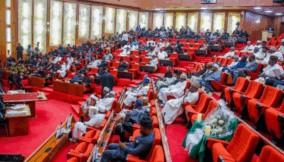
Nigeria arrived late to that moment. After years of military coups, failed transition programmes and the annulment of the June 12, 1993 presidential election, the country finally returned to civilian rule on May 29, 1999, ushering in the Fourth Republic.
It joined an ambitious cohort of six nations that had already embraced democratic governance earlier in the decade: Ghana, Benin, Zambia, South Africa, Namibia and Cape Verde.
Nearly three decades later, however, the optimism of the 1990s has encountered the unforgiving verdict of data.
The military largely stayed in the barracks. Elections became routine. Civilian governments succeeded one another. But the dividends of Africa’s democratic wave have been anything but equal.
Drawing on data from the World Bank, the International Monetary Fund, UNICEF and the United Nations Development Programme, a striking picture emerges: while some countries transformed political freedoms into measurable improvements in the lives of their citizens, others have struggled to convert democratic legitimacy into broad-based prosperity.
No country better illustrates that contradiction than Nigeria.
The paradox of plenty
At first glance, Nigeria appears to be one of democracy’s success stories. When civilian rule returned in 1999, the country’s economy was valued at roughly $59 billion. Buoyed by rising oil prices and periods of strong economic growth, Nigeria eventually overtook South Africa as the continent’s largest economy following the 2014 GDP rebasing exercise. Today, the IMF projects Nigeria’s economy at about $334 billion.
By African standards, these are impressive numbers. But numbers, stripped of context, can deceive.
GDP tells us how large an economy is. It says little about how prosperity is distributed or whether citizens actually feel its impact.
Nigeria’s population expanded dramatically, from around 122 million people in 1999 to more than 230 million today. The result is that the country’s vast economic output is spread increasingly thin.
Nigeria’s GDP per capita currently stands at about $1,084. That figure tells a very different story.
Despite its oil wealth and economic scale, the average Nigerian generates less economic output than citizens of several countries that entered democracy with far fewer advantages.
Cape Verde, a small Atlantic island nation with virtually no natural resources, records a GDP per capita of approximately $4,650. Namibia stands at about $5,120.
Ghana, whose economy was worth only $6.1 billion when it transitioned to democracy in 1992, has raised its GDP per capita to around $2,240, more than twice Nigeria’s figure.
The comparison exposes one of the defining contradictions of Nigeria’s democratic era. The country succeeded in expanding its economy. It failed to expand prosperity at the same pace.
The illusion of scale
For decades, Nigeria has been described using superlatives. Africa’s largest population, Africa’s largest oil producer and Africa’s largest economy.
Yet the experiences of countries such as Cape Verde and Namibia challenge the assumption that size automatically translates into success.
Neither country possesses Nigeria’s crude oil reserves. Neither commands its market size. Instead, they invested heavily in institutions, human development and policy continuity.
Cape Verde built a service-oriented economy anchored by tourism, governance reforms and investments in education. Namibia expanded access to public services while maintaining relative macroeconomic stability.
Their experiences suggest that what governments do with available resources matters more than the abundance of those resources.
The exchange rate mirror
Few indicators capture the lived reality of economic management more vividly than the exchange rate.
When Nigeria entered the Fourth Republic in 1999, the naira exchanged at roughly N92 to N99 against the US dollar.
Today, following years of foreign exchange controls, repeated devaluations and recent market reforms, the currency trades above N1,300 to the dollar.
Behind those numbers lies the story of a country that remained heavily dependent on crude oil exports while importing much of what it consumes.
The consequences are visible everywhere. The cost of imported medicines has surged. Manufacturers struggle with rising production costs. Parents paying tuition abroad have watched educational expenses spiral beyond reach. Food inflation continues to erode household incomes.
Nigeria is not unique in experiencing currency pressures. South Africa’s rand weakened from around R3.55 to the dollar in 1994 to approximately R18.50 today. Zambia’s kwacha has weathered repeated shocks tied to fluctuations in global copper prices.
But in Nigeria, the effects of currency instability have been amplified by structural weaknesses: inadequate industrialisation, limited export diversification and persistent foreign exchange shortages.
For millions of Nigerians, exchange rate movements are not abstract economic concepts. They determine whether salaries stretch to the end of the month.
The true measure of democracy
Ultimately, democracy cannot be assessed solely through peaceful elections or constitutional longevity. The more important question is whether governments improve the quality of life of the people they govern.
A graduate turned transport operator, Emberga Gabriel, told BusinessDay that democracy’s benefits have not trickled down to ordinary citizens.
“We love our country, but the country doesn’t seem to love us back. When I compare my effort to my income, migration begins to look like the logical option.”
The United Nations Development Programme’s Human Development Index offers one of the clearest measures of whether growth translates into human progress.
Combining indicators of health, education and income, the index assesses how effectively countries expand opportunities for their citizens.
Nigeria falls within the low human development category, with an HDI score of 0.548. Cape Verde records 0.662. Namibia stands at 0.615. Ghana scores 0.628. South Africa reaches 0.717.
These differences represent more than rankings on an international table. They reflect whether children survive infancy, whether mothers receive adequate healthcare, whether young people complete school and whether citizens can aspire to a better future than the generation before them.
The longevity gap
Nothing reveals the effectiveness of public policy quite like life expectancy. It captures the cumulative effects of nutrition, healthcare access, sanitation, immunisation and living standards.
According to World Bank estimates, a child born in Cape Verde today can expect to live to around 76 years.
In Namibia and Malawi, life expectancy stands at approximately 68 years. Zambia, despite enduring one of the world’s most devastating HIV/AIDS epidemics, has increased life expectancy to about 67 years through sustained investments in public health. In Ghana and South Africa, average life expectancy is around 66 years.
Nigeria ranks at the bottom of this democratic cohort. A Nigerian born today is expected to live for only 55 years.
For a country that has earned hundreds of billions of dollars from oil exports during the democratic era, the figure represents a sobering indictment. It points to decades of underinvestment in primary healthcare, maternal services, nutrition and public infrastructure. The tragedy is not merely statistical. It is profoundly human.
The educational time bomb
Perhaps nowhere is Nigeria’s democratic deficit more visible than in its classrooms. At the beginning of the Fourth Republic, the country had an estimated seven million out-of-school children.
Today, according to UNICEF, that number has risen to approximately 18.3 million. One in every five out-of-school children in the world is Nigerian.
Behind the numbers are countless stories of interrupted futures. Children displaced by insurgency in the North-East.
“I graduated into hopelessness,” said Yakubu Nzuwe, an Accounting graduate of Benue State University, Makurdi.
Like many graduates, Nzuwe from Taraba State told BusinessDay that he believed earning a university degree would provide a pathway to a decent life, But years later, he realised democracy has failed.
“Most of the jobs go to people with connections. Some employers ask for years of experience even when they advertise entry-level positions. Democracy has not given the majority of youths anything to write home about,” he told BusinessDay.
For others, terrorism is the order of the day. Students forced out of school by bandit attacks in the North-West. Families unable to afford uniforms, transportation or learning materials. Schools lacking teachers, classrooms and basic facilities.
While Nigeria struggled with these challenges, some of its peers pursued aggressive educational reforms. Ghana introduced its Free Senior High School programme, significantly expanding access to secondary education.
Malawi abolished primary school fees shortly after the democratic transition, triggering an enrollment boom that transformed educational access.
South Africa, Namibia and Cape Verde institutionalised compulsory education systems that kept exclusion rates relatively low.
The contrast could hardly be sharper. Democracy opened Nigeria’s polling stations. For millions of children, it has yet to open the classroom door.
The unfinished promise
The stories of these countries offer an important lesson about democracy itself. Democracy creates opportunity; it does not automatically create prosperity. It provides the arena, but institutions determine the outcome.
Countries such as Cape Verde and Namibia used democratic transitions to strengthen governance systems, invest in human capital and pursue long-term development goals.
Ghana leveraged political stability to attract investment and expand social services. Even Zambia and Malawi, despite periods of severe fiscal distress, protected critical investments in education and healthcare.
Nigeria’s record is more complicated. The country deserves credit for sustaining its longest uninterrupted period of civilian rule since independence. It has witnessed peaceful transfers of power between rival political parties. But democracy’s promise was always about more than elections.
It was about ensuring that a child born in Maiduguri or Makurdi had a genuine chance to thrive. It was about making sure that mothers survived childbirth, that schools nurtured ambition, and that economic growth translated into opportunity rather than exclusion.
Nearly three decades after Africa embraced the ballot box, the democratic experiment has endured. The soldiers did return to the barracks. The constitutions survived. The elections continued.
For Nigeria, however, the defining challenge of the next democratic chapter is no longer preserving the right to vote.
It is ensuring that the vote finally delivers what it promised: dignity, security, opportunity and a better life for ordinary citizens. That remains the unfinished business of the Fourth Republic.

Join BusinessDay whatsapp Channel, to stay up to date
Open In Whatsapp