Nigeria’s economic engine is often described in terms of oil, telecoms and banking. Yet beneath these formal pillars lies a more expansive system that absorbs labour, sustains consumption and keeps commerce moving in times of stress. It is the informal sector, and it is growing in both scale and significance.
Recent estimates suggest that more than half of Nigeria’s workforce operates within this segment, with women forming the backbone of activity in trade, agriculture and micro-enterprise. In many states, they account for over half of informal employment, underscoring their central role in the country’s economic architecture.
At the same time, the disconnect between participation and financial inclusion remains stark. While overall financial inclusion has improved in recent years, gender gaps persist. About 41 per cent of Nigerian women remain financially excluded, and roughly 20 million women do not use any formal financial service. This exclusion is more acute in rural areas and among small-scale entrepreneurs who rely on cash-based systems and informal savings networks.
For telecommunications companies, this landscape presents both a challenge and an opportunity.
As voice revenues plateau and data becomes increasingly commoditised, the next phase of growth is expected to come from digital services layered on connectivity, particularly mobile money, payments and financial platforms. Reaching the informal economy, therefore, is not simply a social objective. It is a business imperative.
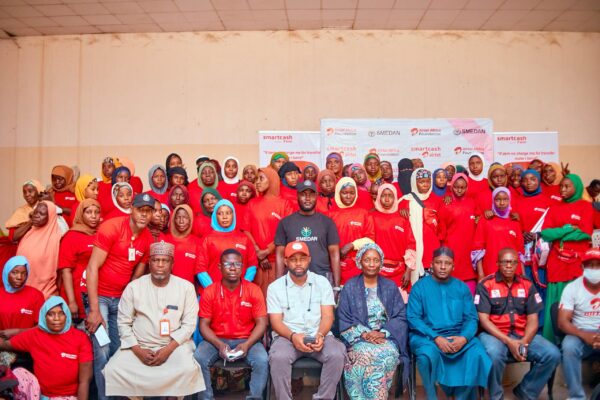
It is within this context that the Airtel Africa Foundation, working through Airtel Nigeria, has deployed its “Empower Her” programme. Positioned as a financial literacy and enterprise support initiative, it targets women running micro and small businesses across Lagos, Oyo, Enugu, Akwa Ibom, Kano and the Federal Capital Territory.
More than 1,500 women participated in the programme’s first phase, receiving training in budgeting, savings, pricing and record-keeping, alongside onboarding to digital financial tools such as mobile wallets and agent banking platforms.
For Airtel, the logic is strategic. The informal economy represents a vast, underpenetrated market for financial services. Women-led enterprises, which account for a significant share of micro-business activity, are often excluded from traditional banking due to lack of collateral, limited financial records and geographic constraints. Bridging this gap expands the addressable market for mobile money and related services.
Dr. Segun Ogunsanya, Chairman of the Airtel Africa Foundation, has described the programme in explicitly economic terms. “This programme is strategy,” he said.
His wording appears to capture a wider shift across the entire telecoms industry. Operators are increasingly positioning themselves as digital platforms rather than pure connectivity providers. In Nigeria, where smartphone penetration is rising and digital payments are gaining acceptance, telcos are leveraging their distribution networks to deepen engagement with underserved populations.
The model is already visible in the expansion of mobile money services across the sector. Airtel’s Smartcash Payment Service Bank, alongside similar offerings from competitors, is part of a broader push to integrate payments into everyday transactions. By embedding financial services within existing communication channels, operators aim to lower barriers to entry and drive adoption at scale.
However, access alone has proven to be insufficient. Data shows that even where financial services are available, uptake can be limited by low levels of financial literacy and trust.
Only about 47 per cent of Nigerian women accessed formal financial services as of 2023, compared with 58 per cent of men, reflecting persistent structural and behavioural barriers.
A programme like Empower Her may be designed to intervene here. By combining training with access to platforms and tools as well as grants, the initiative seeks to influence how financial services are used, not just whether they are available.
At the programme’s training sessions, participants are introduced to practical concepts that have immediate application. A trader learns to separate business and household finances. A food vendor begins tracking input costs to determine margins. Others are onboarded onto digital platforms that reduce reliance on cash and provide transaction histories that can support future credit access.
Dinesh Balsingh, Chief Executive Officer of Airtel Nigeria, has emphasised the economic significance of this segment. “Women in the informal sector carry a significant share of Nigeria’s economic activity,” he said. “When they gain access to the right skills and simple financial tools, the results are immediate: stronger families, stronger communities and more resilient small businesses.”
From a business standpoint, these outcomes are not incidental. As informal enterprises become more structured, they generate data such as transaction records, savings patterns and payment histories that can support credit scoring and product development. This, in turn, enables financial service providers to design offerings tailored to previously inaccessible segments.
There is also a competitive dimension. As multiple operators expand into fintech, differentiation will depend not only on pricing or coverage, but on ecosystem depth. Programmes that combine education, access and support create entry points into customer relationships that extend beyond connectivity.
The broader economic implications are equally significant. Research suggests that if women participated in the economy at levels comparable to men, Nigeria’s GDP could see a substantial increase. Improving financial inclusion is widely regarded as one of the most effective pathways to unlocking that potential.
Yet the constraints remain formidable. Only a small proportion of women entrepreneurs have access to formal credit with some estimates putting the figure as low as six percent while structural barriers around asset ownership and income volatility continue to limit scalability.
Against this backdrop, the impact of initiatives like Empower Her will depend on their ability to move beyond pilot scale. Nigeria’s informal economy spans tens of millions of businesses. Reaching critical mass will require sustained investment, partnerships and policy alignment.
Even so, the direction of travel is clear. As Nigeria’s informal sector expands, the focus is shifting toward the people who sustain it and the systems that support them. For telecom operators, this is where the next phase of growth may well be defined.
In the crowded markets and small workshops that underpin the economy, financial literacy is emerging as infrastructure in its own right, shaping how businesses operate, adapt and endure.

Join BusinessDay whatsapp Channel, to stay up to date
Open In Whatsapp