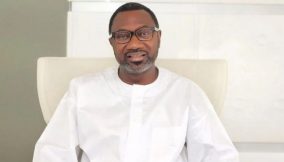
Taiwo Oyedele, Nigeria’s new finance minister, steps into office facing a difficult economic landscape marked by elevated inflation, currency pressures and the lingering social fallout from reforms introduced under President Bola Ahmed Tinubu.
Appointed on Tuesday in a major cabinet reshuffle, Oyedele inherits a fragile macroeconomic environment where cost-of-living pressures remain elevated despite recent policy adjustments aimed at stabilising public finances and attracting foreign investment.
As minister of finance and coordinating minister of the economy, he will be responsible for steering fiscal policy at a time when Nigeria is still grappling with the effects of fuel subsidy removal, foreign exchange reforms and subdued real income growth, alongside a challenging global environment.
The challenge is compounded by weak revenue generation and a narrow tax base, which continue to constrain fiscal space. At the same time, debt servicing costs remain elevated, limiting room for expansionary spending and placing further strain on public finances.
Oyedele, a tax expert and former senior partner at PricewaterhouseCoopers, is widely regarded as a technocrat with deep experience in fiscal reform. His elevation marks a shift toward a more technocratic approach as the administration seeks to stabilise public finances while maintaining investor confidence.
The role carries formidable challenges. At the top of Oyedele’s in-tray is Nigeria’s fragile macroeconomic environment, with inflation remaining elevated due to persistent food price pressures, currency depreciation and structural supply constraints.
While the removal of fuel subsidies and unification of the foreign exchange market were intended to correct long-standing distortions, they have also triggered sharp increases in living costs, deepening public frustration and testing household resilience.
As finance minister and coordinating minister of the economy, Oyedele will be expected to balance competing priorities, including restoring fiscal discipline, improving revenue generation and cushioning the social impact of reforms that continue to weigh on purchasing power.
One of his most immediate challenges will be rebuilding fiscal credibility and much needed buffers. Nigeria’s revenue base remains narrow, with heavy dependence on oil despite repeated efforts at diversification. Weak tax compliance and a large informal sector continue to limit the government’s ability to fund infrastructure, health and education without expanding debt.
Oyedele’s background in tax reform suggests a likely push to broaden the tax net and simplify compliance frameworks. However, any attempt to raise non-oil revenues risks political resistance in an economy where many businesses and households are already strained by higher costs.
Debt management is another pressing concern. Nigeria’s debt, at ₦159.28 trillion, has risen significantly over the past decade, while debt servicing continues to consume a large share of government revenue. Investors and credit rating agencies will be watching closely for signals on whether the new finance leadership can rein in deficits without stalling growth.
Coordination across government ministries will also be critical. The role of coordinating minister of the economy places Oyedele at the centre of policy alignment across sectors, from energy to infrastructure and trade. Past economic reforms have often been hampered by implementation gaps between ministries, a challenge he will now need to address.
His appointment also comes at a politically sensitive moment ahead of Nigeria’s January 2027 general elections. Public patience with economic reforms has been thinning as inflation erodes purchasing power. Any misstep in policy sequencing could deepen social tensions, while any reversal could undermine investor confidence.
Still, Oyedele’s reputation as a detail-oriented policy thinker may reassure markets that Nigeria is leaning toward a more structured reform agenda rather than abrupt policy shifts.
For Tinubu, the appointment appears aimed at reinforcing economic management with technical expertise while maintaining continuity of his reform programme. For Oyedele, however, the test will be translating policy ideas into tangible economic relief in an environment where expectations are high and policy space is constrained.
Experts say the success of Nigeria’s reform agenda in its next phase will depend on how effectively the new finance chief balances fiscal discipline, growth and social stability.

Join BusinessDay whatsapp Channel, to stay up to date
Open In Whatsapp