
The Nigeria Democratic Congress (NDC), the new political platform adopted by ex-governors Peter Obi and Rabiu Kwankwaso, was registered by the Independent National Electoral Commission (INEC) following a court order, checks have shown.
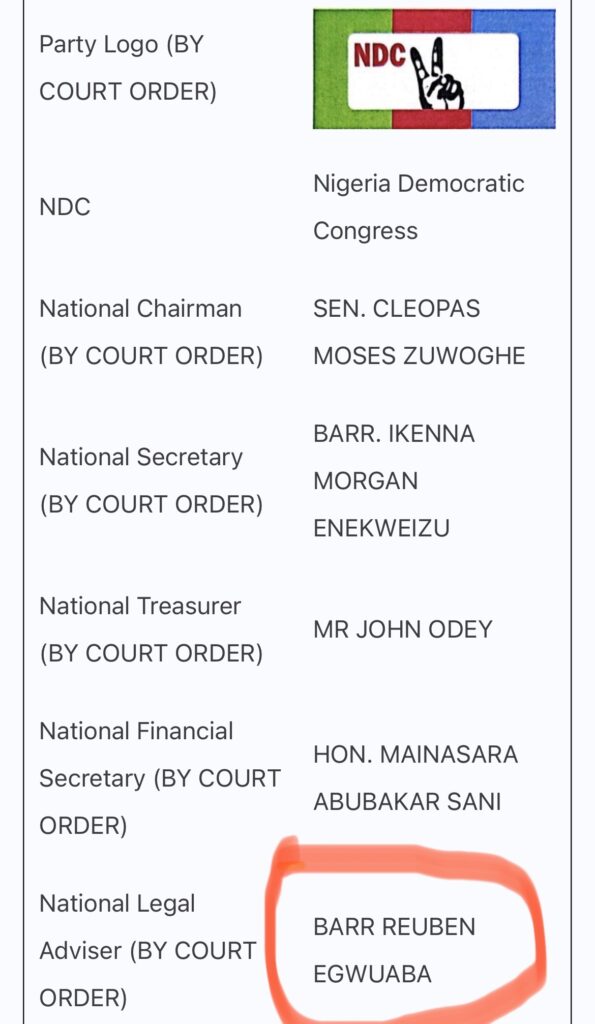
A review of INEC’s website indicates that the party’s national executives are listed with “court order” annotations attached to their names, suggesting judicial intervention in its recognition process.
Obi and Kwankwaso formally exited the African Democratic Congress (ADC) on Sunday and immediately aligned with the NDC, marking a significant shift in opposition politics ahead of the 2027 general election.
In a statement announcing his departure, Obi cited what he described as a “toxic” political environment and persistent internal instability within the ADC.
The ADC has been grappling with a protracted leadership crisis, which led INEC to derecognise its national executives in early April. The commission only reinstated the David Mark-led leadership last Thursday after a ruling by the Supreme Court of Nigeria. However, the apex court also directed parties to return to the Federal High Court for resolution of the substantive issues, a development legal experts say could prolong the dispute.
Despite presenting itself as a fresh platform, findings indicate that the NDC may not be free of legal complications.
BusinessDay checks revealed that the court-order designation attached to its executives on INEC’s portal could point to pending or previously contested litigation.
INEC had earlier, in February, announced the registration of the NDC alongside the Democratic Leadership Alliance (DLA), bringing the total number of political parties in Nigeria to 21.
The party’s registration process dates back to 2017, when it first applied for recognition but was denied by INEC over concerns that its logo closely resembled that of another political party. The dispute was subsequently taken to court.
According to Seriake Dickson, party promoter and former Bayelsa State governor, the court ruled in favour of the party.
“The court upheld our fundamental right to freedom of association, deemed us duly registered, and directed INEC to formalise our status,” Dickson said weeks ago while speaking on the circumstances surrounding the party’s registration.
He added that the electoral body complied with the judgment and issued the party a certificate of registration, noting that no appeal was filed within the stipulated timeframe.
However, further scrutiny of INEC records shows a potential compliance issue involving the party’s national legal adviser, Reuben Egwuaba, who is also listed in the same capacity for the Allied Peoples Movement (APM). This appears to contravene Section 77 of the Electoral Act, which prohibits dual party membership and prescribes sanctions for violations.
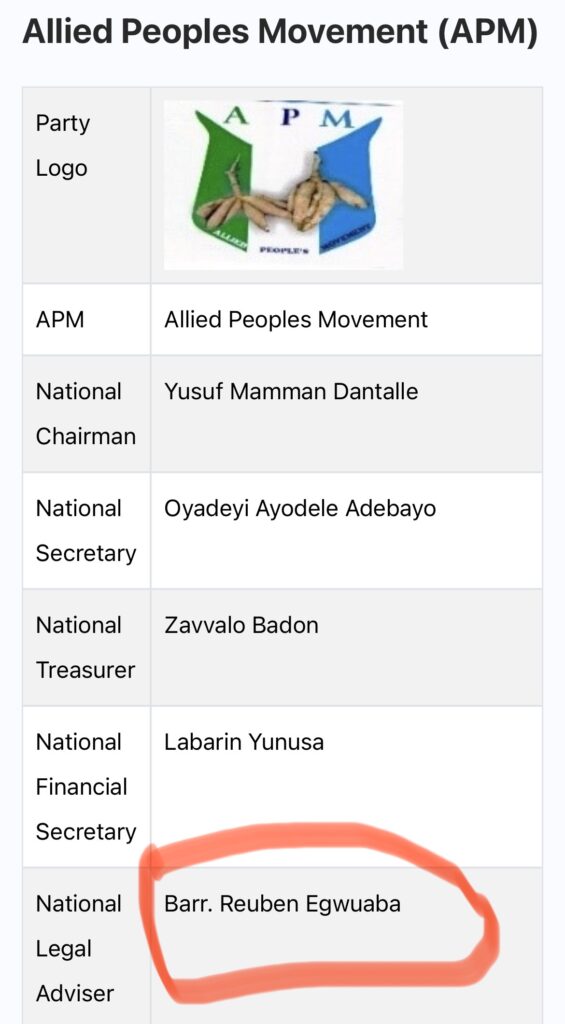
The development raises fresh questions about the legal standing and internal compliance of the NDC, even as it emerges as a new rallying point for key opposition figures ahead of 2027.

Join BusinessDay whatsapp Channel, to stay up to date
Open In Whatsapp