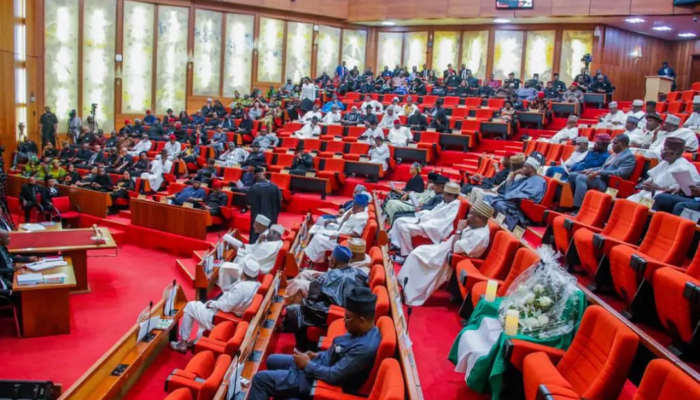
The Senate has approved a new taxation framework for sugar-sweetened beverages, a move lawmakers say will strengthen public health financing, reduce excessive sugar consumption and provide additional resources for healthcare services targeting vulnerable Nigerians.
The decision followed the adoption of the report on the Customs, Excise Tariff and related amendments bill presented by the Joint Committee on Finance and Customs, Excise and Tariff during plenary on Wednesday.
Presenting the report, Sani Musa, chairman of the Senate Committee on Finance, said the amendment seeks to replace the current flat-rate excise duty on sugary drinks with a percentage-based levy linked to retail prices.
According to the committee, the existing “N10-per-litre excise duty has been significantly eroded by inflation,” limiting its effectiveness as both a public health measure and a revenue-generating tool.
“The current excise duty of N10 per litre on sugar-sweetened beverages has been significantly eroded by inflation and is no longer sufficient to discourage excessive consumption or generate substantial revenue,” the report stated.
Under the amendment, the Minister of Finance will determine the applicable levy rate in line with global best practices, while a portion of the revenue generated will be dedicated to health promotion, disease prevention programmes, primary healthcare services and health insurance coverage for poor and vulnerable Nigerians.
Lawmakers said the reform became necessary as Nigeria continues to witness a growing burden of non-communicable diseases (NCDs), including diabetes, obesity, hypertension and cardiovascular diseases.
The committee warned that many of these illnesses are linked to unhealthy dietary habits and excessive sugar intake.
“Nigeria is witnessing a rising burden of non-communicable diseases, including diabetes, obesity, hypertension and cardiovascular diseases, many of which are associated with unhealthy dietary habits and excessive sugar consumption,” the report noted.
The Senate also expressed concern over the state of healthcare financing in the country, saying the system remains heavily dependent on out-of-pocket spending by citizens.
“The country’s healthcare system remains underfunded and heavily reliant on out-of-pocket spending, exposing citizens to financial hardship and limiting access to essential healthcare services,” lawmakers said.
According to the report, health-related excise taxes serve a dual purpose by improving public health outcomes while creating additional revenue streams for government interventions.
“Health-related excise taxes can serve both public health and fiscal objectives by discouraging the consumption of unhealthy products while generating additional government revenue,” the committee stated.
The Senate further observed that the current volume-based taxation model does not adequately reflect the sugar content of beverages and therefore offers little incentive for manufacturers to reduce sugar levels in their products.
Lawmakers disclosed that stakeholders who participated in the public hearing on the bill largely supported the introduction of a percentage-based levy tied to retail prices.
Several participants, they said, argued that such a framework would be more sustainable and effective than the current flat-rate system.
Drawing from international examples, the Senate cited countries such as South Africa, Mexico and the United Kingdom, where sugar taxes have reportedly helped reduce consumption and improve public health outcomes.
The lawmakers also referenced recommendations by the World Health Organisation, which advocates health taxes capable of increasing retail prices by at least 20 per cent to significantly influence consumer behaviour.
Data presented to the Senate showed that the Nigeria Customs Service generated more than N108.6 billion from sugar-sweetened beverage excise duties between 2022 and September 2025, underscoring the importance of the sector as a source of government revenue.
“The Nigeria Customs Service reported that the existing excise duty on sugar-sweetened beverages generated over N108.6 billion between 2022 and September 2025, demonstrating that the tax remains a viable source of government revenue,” the report stated.
The Senate acknowledged divergent views expressed during the public hearing, with public health advocates backing stronger taxation measures while some industry stakeholders raised concerns about possible increases in production costs and job losses.
To address those concerns, lawmakers recommended that the Finance Minister determine an appropriate levy rate based on prevailing economic conditions and international best practices.
The Senate also urged the government to explore tax models that better reflect sugar content or retail prices in order to encourage product reformulation and lower sugar levels.
In addition, lawmakers called for stronger enforcement of excise tax collection, sustained stakeholder engagement and complementary measures such as nutrition awareness campaigns, improved food labelling and responsible marketing practices.
The committee concluded that strengthening excise taxation on sugar-sweetened beverages should form part of a broader national strategy aimed at reducing excessive sugar consumption, preventing non-communicable diseases and improving health outcomes for Nigerians.

Join BusinessDay whatsapp Channel, to stay up to date
Open In Whatsapp