The Senate on Thursday passed amendments to the Electoral Act, 2026, introducing new measures aimed at speeding up the resolution of pre-election disputes and ending the practice of “forum shopping” in electoral litigation.
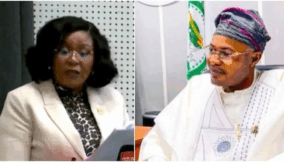
The amendment bill, sponsored by Simon Lalong, senator representing Plateau South and chairman of the Senate Committee on Electoral Matters, scaled second and third readings during plenary presided over by Godswill Akpabio, Senate President.
The legislation seeks to establish clear jurisdictional boundaries for pre-election matters and prevent litigants from filing multiple suits in courts across different states in search of favourable judgments.
Under the newly introduced Section 29A of the Electoral Act, all pre-election disputes relating to National Assembly, state House of Assembly, governorship and deputy governorship elections will now originate at the Federal High Court, with appeals proceeding to the Court of Appeal.
For presidential elections, however, all pre-election matters will commence directly at the Court of Appeal, which will exercise original jurisdiction, while appeals will lie only to the Supreme Court.
The Senate said the changes were introduced to align the Electoral Act with Section 285 of the 1999 Constitution (as amended) and eliminate conflicting judgments from courts of coordinate jurisdiction.
Section 29A(2) of the amendment provides that, “Pre-election matters relating to elections into the National Assembly, the State House of Assembly, the office of Governor and Deputy Governor shall be commenced at the Federal High Court and any appeal arising therefrom shall lie as right to the Court of Appeal.”
Section 29A(3) further states, “Pre-election matters relating to the office of the President and Vice President shall be commenced at the Court of Appeal, which shall have and exercise original jurisdiction, and any appeal arising therefrom shall lie as of right to the Supreme Court.”
The bill also bars courts from entertaining pre-election cases outside the procedures outlined in the new provisions.
Presenting the report on the bill, Simon Lalong said the amendment was designed to restore order and discipline in the handling of electoral disputes.
“The bill also seeks to eliminate the dangerous practice where litigants deliberately institute multiple suits in different judicial divisions in search of favourable orders,” he said.
“Such practices erode public confidence in the judiciary and undermine electoral stability.
“By expressly providing that no court shall entertain pre-election matters except in accordance with the proposed Section 29A, this amendment introduces certainty and procedural discipline into electoral adjudication.”
According to Lalong, the amendment would address recurring problems such as conflicting court decisions, abuse of judicial process, delays in resolving electoral disputes and constitutional tensions between courts.
Lawmakers also said the amendment would help the Independent National Electoral Commission (INEC) conclude candidate lists within the required timelines and ensure that disputes arising from party primaries are resolved before general elections.
The House of Representatives is said to have already passed similar amendments, clearing the way for the bill to be transmitted to President Bola Tinubu for assent.
The amendment represents the first major review of the Electoral Act, 2026, signed into law by Tinubu on February 18.

Join BusinessDay whatsapp Channel, to stay up to date
Open In Whatsapp