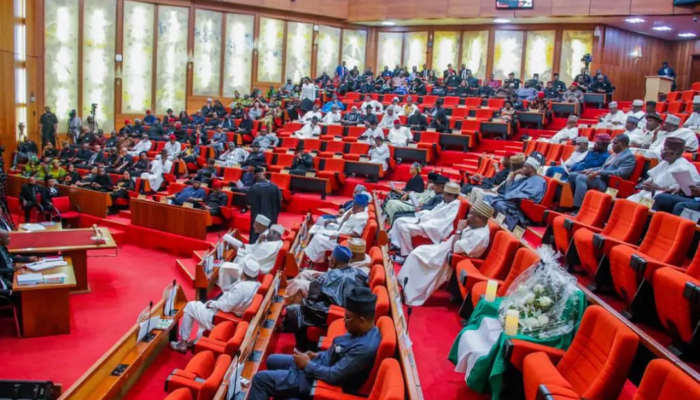
The Senate on Tuesday advanced a bill seeking to establish a legal and regulatory framework for cryptocurrency transactions and digital asset operations in Nigeria, passing the proposed legislation for second reading.
The proposed ‘Virtual Asset Service Providers Regulation Bill, 2026,’ is designed to regulate virtual and digital assets as well as entities operating within the sector.
It also seeks to introduce mandatory licensing, transparency requirements and compliance obligations for cryptocurrency exchanges and other Virtual Asset Service Providers (VASPs).
Presenting the bill on behalf of its sponsor, Jibrin Barau, Deputy Senate President, Tahir Monguno said Nigeria’s rapid adoption of cryptocurrencies had outpaced efforts to regulate the sector.
According to Monguno, despite being one of Africa’s leading markets for cryptocurrency transactions, Nigeria lacks a comprehensive legal framework to govern the industry.
He argued that the regulatory vacuum has exposed investors to significant risks and created opportunities for illegal activities to flourish within the digital asset ecosystem.
Several lawmakers who contributed to the debate described virtual assets as a permanent feature of the evolving global financial system
They warned that failure to regulate the sector could push investments and commercial activities further into informal and unregulated spaces.
The lawmakers maintained that an effective regulatory regime would safeguard millions of Nigerians, particularly young people who rely on cryptocurrency-related ventures and digital technologies for income and employment.
Barau noted that while Nigeria’s high level of virtual asset adoption presents opportunities, it also raises serious regulatory concerns.
He warned that allowing the sector to operate without adequate oversight could fuel black-market transactions, encourage criminal activities and undermine efforts to maximise the industry’s contribution to the Federal Government’s goal of building a $1 trillion economy.
Presiding over plenary, Barau said the proposed legislation would bring certainty to operators and investors in the sector.
The bill is also expected to align Nigeria’s regulatory architecture with international standards set by the Financial Action Task Force (FATF) and the International Monetary Fund (IMF).
Contributing to the debate, Natasha Akpoti-Uduaghan said the absence of a robust regulatory framework was negatively affecting Nigeria’s technology ecosystem and driving innovative businesses to foreign jurisdictions.
She cited the example of her son, who operates a gaming platform with a substantial global user base, saying international technology firms have been reluctant to establish operations in Nigeria because of regulatory uncertainties.
According to her, the country risks losing billions of dollars in investments and thousands of employment opportunities if it fails to put in place the legal structures required to support emerging digital industries.
Adams Oshiomhole also backed the proposal, describing the need for regulation as obvious and urging lawmakers to fast-track its consideration.
Meanwhile, Adetokunbo Abiru called for harmonisation between the proposed legislation and existing financial laws, including the Investments and Securities Act and the Banks and Other Financial Institutions Act (BOFIA), to ensure consistency across the broader financial system.
In his concluding remarks, Barau said the bill would strengthen investor protection and create a safer operating environment for participants in the virtual asset industry.
He stated that a well-defined legal framework would prevent exploitation, boost investor confidence and support innovation-driven economic growth.
Following the debate, the Senate referred the bill to the Committee on Capital Market for further legislative work and directed the committee to report back within four weeks.
If enacted, the legislation would place Nigeria among African countries such as Kenya, South Africa and Ghana that have established formal frameworks for regulating cryptocurrency and digital asset transactions. It would also empower regulators to license operators and strengthen efforts against fraud, money laundering and terrorism financing.

Join BusinessDay whatsapp Channel, to stay up to date
Open In Whatsapp