…to grow the Southeast economy from its current $40 billion to $200 billion in 10 years
The South East Development Commission (SEDC) is championing strategic investments in agriculture and venture capital as part of a bold plan to transform the region’s economy and align with the national $1 trillion GDP target.
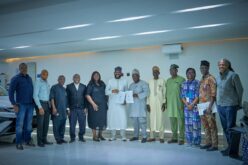
Mark Okoye, managing director/CEO of SEDC, revealed this at the 4th Intra-African Trade Fair organised by Afreximbank, the African Union Commission, and AfCFTA, emphasising that the commission’s role is to enable collaboration among state governments and unify the region under a shared economic agenda.
According to Okoye, the SEDC’s ‘Quick Win Agenda’ is focused on immediate impact in agriculture, sports development, and innovation funding. In agriculture, the commission is targeting 50,000 to 60,000 hectares for mechanised farming over the next three to four years, partnering with government agencies and private investors to create jobs for youth in rural communities. On sports, he highlighted plans to build infrastructure that would engage young people, foster unity, and boost regional morale.
To nurture innovation, SEDC is creating a regional venture capital fund aimed at giving Southeast-based startups access to seed funding locally, instead of seeking support in far-flung African cities. Okoye lamented that young innovators from top institutions like FUTO and UNN often travel abroad for modest startup capital, a gap the Southeast Regional Capital initiative intends to close.
The commission’s broader ambition, outlined in its Strategic Roadmap, is to grow the Southeast economy from its current $40 billion to $200 billion in 10 years. This will be achieved through partnerships with state governments, private sector actors, international development agencies, and local citizens.
A key part of the transformation includes reviving dormant industries through the Southeast Investment Company, which will provide technical and financial support once rightful owners are ready to engage. Okoye noted that while larger infrastructure projects like regional rail and power will take time, the commission is set on delivering quick wins to build momentum.
He also underscored the historical importance of the commission, stating that although the idea of the SEDC dates back to 1970, it was only under President Bola Ahmed Tinubu that the enabling law was passed and the commission inaugurated. Since then, Okoye said, the president has shown full support for the commission’s efforts to accelerate development in the region.

Join BusinessDay whatsapp Channel, to stay up to date
Open In Whatsapp