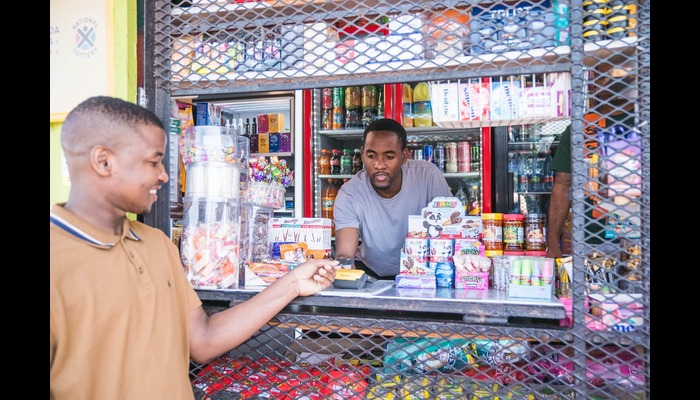
Lwandile Mtsolo, a South African human rights activist and former Secretary-General of the South African Students Union, has highlighted that part of the reasons for the anti-migrant demonstrations is the perception that undocumented foreign nationals are dominating South Africa’s small business sector, specifically informal “spaza” shops.
He noted this in an interview on Arise TV, on the heels of the June 30 deadline set by protesters for undocumented foreigners to leave the country.
Under South African law, foreign nationals generally require a minimum investment capital of five million rand to establish a business legally.
Read also:African Union pressures South Africa to arrest and prosecute anti immigrant trouble makers
Speaking on the developments, Mtolo, argued that the demonstrations are targeting those operating outside these parameters. “If you open a spaza shop in South Africa with a capital investment of less than five million, you are committing a crime,” he said, adding that everyday citizens feel that vital job opportunities and small-scale trade spaces are being unlawfully occupied.
A spaza shop is a small, informal convenience store in South Africa, typically run from a home, garage, or shipping container, serving everyday essentials.
According to him, the current crisis is underpinned by three key systemic pressures. First, border management is facing severe strain due to high volumes of undocumented regional migrants that far exceed official state records.
Secondly, deep local friction has emerged over economic displacement, particularly regarding the ownership of low-capital informal retail shops, known locally as spaza shops.
Also, the situation is compounded by systemic corruption, highlighted by widespread reports of fake documentation and state officials accepting bribes to issue residency papers.
He also defended the public’s right to demonstrate.
“South Africa is a constitutional democracy, so people have a right in South Africa to march and voice out their concerns,” Mtolo stated.
He firmly rejected allegations that the state or its defense forces condoned extrajudicial violence against migrants, asserting that the authorities do not support the killing of illegal foreigners.
Read also:South Africa secures $14bn Afreximbank deal amid xenophobic attacks
Instead, Mtolo framed the movement as a push for legal accountability, noting that being in any country illegally is a crime.
However, critics point out that the historical solidarity between South Africa and its African neighbours particularly Nigeria, which provided substantial financial and humanitarian aid to the African National Congress (ANC) during the struggle against apartheid, is being forgotten.
Mtolo dismissed the comparison, arguing that the historical context was entirely different. He noted that anti-apartheid freedom fighters in places like Nigeria were documented, known, and subject to restrictions. In contrast, he claimed the current situation involves staggering numbers of undocumented individuals, including an estimated 25,000 Malawians, which has left authorities unable to account for or control local activities.
The nature of the protests has drawn sharp criticism from human rights observers, who question why demonstrators are targeting the private homes and businesses of foreign nationals rather than marching on government buildings like the Union Buildings in Pretoria.
This has led to allegations of alternative motives, with some suggesting an underlying Zulu nationalist agenda.
Concerns have now been raised regarding the safety of properly documented foreigners. Reports indicate that some legitimate migrants have had their papers disqualified during re-validation processes, raising suspicions of bureaucratic complicity to force out foreign nationals.
Read also: Police in South Africa says it is fully mobilised ahead of Tuesday’s anti immigrant protest
Mtolo countered that the ongoing verification checks have simply exposed a massive network of forgery and institutional corruption. He acknowledged that there have been numerous arrests of individuals carrying fake papers, alongside the prosecution of corrupt Home Affairs officials who accept bribes.
Mtolo maintained that the marches are strictly regulated. He stated that whenever these marches occur, “they are accompanied by South African police services, Home Affairs and the Border Management Authority.”
According to Mtolo, this joint presence ensures a level of law and order that distinguishes current events from the deadly xenophobic riots of 2008.
As the day unfolds, the international community and human rights organizations remain watchful, hoping that the South African government’s assurances to protect all human lives, regardless of nationality or legal status will be upheld.

Join BusinessDay whatsapp Channel, to stay up to date
Open In Whatsapp