Nigeria’s oil and gas sector requires about $25 billion in annual financing to unlock new investments and expand production, a funding shortfall that local and international lenders say can only be addressed through stronger cross-border partnerships.
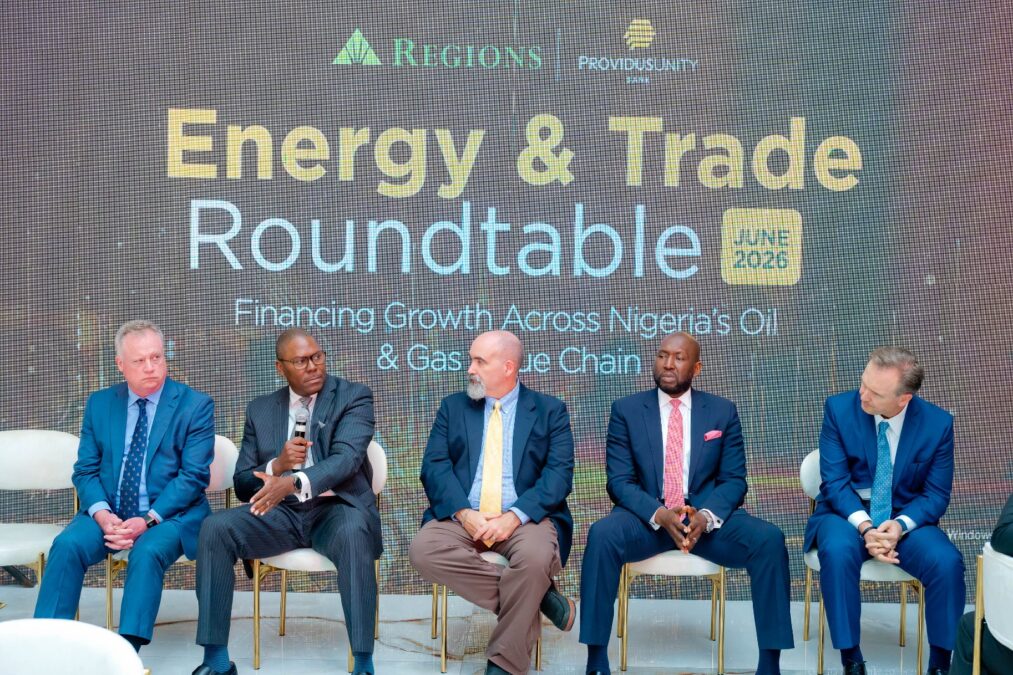
Against that backdrop, ProvidusUnity Bank, in collaboration with US-based Regions Bank, convened a roundtable in Lagos recently, aimed at connecting energy operators with financing partners and exploring new funding structures for projects across Nigeria’s oil and gas value chain.
The event, themed “Financing Growth Across Nigeria’s Oil & Gas Value Chain,” brought together executives from the banking industry, oil and gas companies, policymakers, and representatives of the Nigerian National Petroleum Company Limited (NNPC Ltd.) to discuss how to improve access to long-term capital.
Speaking at the event, Biodun Ariyo, head of global trade and structured finance at ProvidusUnity Bank, said the initiative was designed to strengthen conversations around trade finance, investment and project financing while linking industry participants with funding partners capable of supporting large-scale energy investments.
According to Ariyo, financing remains one of the biggest constraints facing Nigeria’s energy industry despite reforms aimed at attracting private capital.
“The platform is intended to connect stakeholders with the right financing structures and partners needed to accelerate growth across the oil and gas value chain,” he said.
International lenders are increasingly exploring opportunities in Africa’s energy sector as governments seek fresh capital to develop oil, gas, and midstream infrastructure while expanding domestic energy supply.
Thomas Matthias, executive director for international trade finance at Regions Bank, said the US lender plans to deepen its engagement in Africa through partnerships with established local financial institutions.
“Africa has been overlooked for far too long, and that must change,” Matthias said. “Our experience financing transactions in Nigeria has given us the confidence to deepen our engagement in the market.”
He said Nigeria is well positioned to play a larger role in Africa’s energy future as global energy markets evolve, creating opportunities to attract investment and increase production.
Industry experts at the roundtable said financing structures must evolve to accommodate the capital-intensive nature of oil and gas projects, particularly in gas development, marginal fields, and infrastructure.
Panel discussions focused on insurance solutions for cross-border transactions, financing models for marginal and idle assets, gas monetisation strategies, and the need for long-term liquidity to support large-scale energy investments.
Participants also explored ways to increase the number of bankable energy projects in Nigeria by combining the capabilities of domestic and international financial institutions to provide tailored financing solutions.
Nigeria has struggled to attract sufficient investment into its oil and gas industry in recent years despite abundant hydrocarbon reserves. Industry analysts say improving access to affordable long-term financing will be critical if the country is to raise crude oil production, accelerate gas development, and achieve its broader energy security and economic growth objectives.
ProvidusUnity Bank said it intends to continue building strategic partnerships that expand access to capital for businesses operating across Nigeria’s energy value chain.

Join BusinessDay whatsapp Channel, to stay up to date
Open In Whatsapp