Electric vehicle (EV) charging system has been built at Renaissance Energy Africa facilities in Nigeria by its workers.
This represents one of the major breakthroughs unveiled at the just-concluded two-day Port Harcourt Tech Expo.
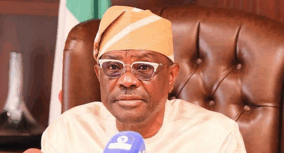
This was announced by Igo Weli, Renaissance Energy Africa Vice President, who said the company just commissioned the new tech, saying the company is proud of the breakthrough especially as it was initiated and driven by the workers on their own.
Weli is known over the years in SPDC (bought over by Renaissance) for driving youths of the oil region to stand on their own instead of adopting violence as negotiation tool.
He always urged the youths to maximise advantage by partnering the oil companies instead of the violent approach that ended up driving the IOCs far and away.
He used the EV charging breakthrough to justify the call for local initiatives and for youths to maximise investments in them by corporations.
Now, he said: “The idea did not come from the executive team. It came from a group of employees—our Future Energy Leaders Network. No mandate. No initial budget. Just conviction.
“They asked a simple question: If we are serious about reducing our carbon footprint… shouldn’t that start with how we move? From that idea, they worked across teams, navigated constraints, and delivered something real.
“Today, that facility: Supports multiple electric vehicles at a time; was designed and built in-house by our engineers; is actively enabling greener commuting choices for our people. And every single charge represents a small but meaningful step toward a lower-carbon future.
“More importantly, it proves something: At Renaissance, innovation is not a slogan.
It is something our people are empowered to build. That is the mind-set we are investing in.
Because ultimately: The most important infrastructure we are building is not pipelines; it is people.”
Speaking on Tech and Community Impact, the Renaissance Vice President, said most businesses rely on fuel and diesel that are very expensive and unreliable sources of energy.
“Now, imagine that same business powered by reliable electricity. It will be lower costs, stable business, productivity will increase, expansion becomes possible, and employment grows. That is what energy transition looks like in real life. Not just megawatts.”
Weli said that is why local innovation matters. “Because the challenges we face require solutions designed here. We are already seeing Nigerian-built energy tech; local engineering solutions; indigenous partnerships solving real problems.”
He said platforms like PH TechExpo are critical because they connect ideas to opportunity. The Niger Delta is not just resource-rich, it is idea-rich.
Placing a call to action, Weli pegged it on three thoughts, calling on Nigerians not to choose between oil and renewables but to build bridges by developing both; between oil and renewables; between tech and infrastructure.
He also urged the people to think beyond applications but think systems. “Energy is the foundation of everything you are building.”
Calling for collaboration, the energy sector top manager warned that no single player can solve this challenge alone.
He made it clear that the future of energy in Nigeria would not be imported. “It will not be outsourced. It will be built—by people like you. And the transition is not coming. It is already here. The only question is: What role will you play in it?”
He said two energy realities exist in the city: “One powers industries, drives exports, and sustains national revenue; the other plays out much closer to home—businesses, homes, and communities still searching for reliable, affordable electricity.”
He said the economy requires energy that is stable, accessible, and scalable. He said its not about oil/gas or renewables, saying the future is not about choosing one. “It is about building both—intelligently, deliberately, and inclusively – because each pathway solves a different problem. Centralised energy systems (oil and gas) deliver scale. They power industries, manufacturing, and economic growth.
“Decentralised electricity (mini-grids, solar, embedded systems) delivers access. They reach communities faster and create resilience at the local level. At Renaissance Africa Energy Company, this dual pathway is not theoretical. It is how we operate.”
He said its first through digital transformation, and then through gas-to-power enablement. With emphasis, Weli said: “Gas is one of Nigeria’s greatest strategic advantages. And its real value is unlocked when it moves beyond production into power.
“At Renaissance, we are focused on enabling that connection: from gas resources to electricity generation, and ultimately to industrial use. This is because when power becomes more reliable: factories run longer, SMEs reduce diesel dependence, production costs drop, and jobs are created.”
He went on: “Success is not measured by how much we produce but by how consistently people can depend on energy in their daily lives. At Renaissance, the transition is not theoretical.
It is being engineered, deployed, and scaled.”
Looking into the future, Weli said: “It is not a straight line from fossil fuels to renewables. It is an integrated system where gas provides stability and scale; renewables expand reach and sustainability; and digital technology optimises everything.”
He insisted that in simple terms, molecules and electrons must work together. “Gas is the bridge, but innovation is what determines how strong that bridge becomes. And that is where you all come in.”

Join BusinessDay whatsapp Channel, to stay up to date
Open In Whatsapp