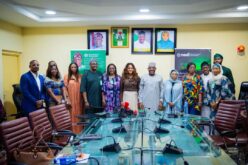
…as NRS commissions new 16-floor facility
In a bid to improve service delivery and sustain strong revenue growth, the Nigeria Revenue Service (NRS) has been urged to leverage technology, deepen efficiency, and strengthen compliance through trust and transparency.
Speaking at the commissioning of the new NRS headquarters in Abuja, Taiwo Oyedele, Minister of State for Finance, said that while the new headquarters symbolizes a modern, integrated and technology-enabled revenue system, expectations for the NRS going forward is to leverage technology to improve service delivery and sustain strong revenue growth.
He explained that the transformation of the Federal Inland Revenue Service into the Nigeria Revenue Service is more than a name change; it reflects a broader mandate, stronger governance, accountability, and a repositioning for greater performance.
Oyedele noted that since the inception of these reforms, the NRS has recorded historic revenue performance, demonstrating that outcomes multiply when institutions are effectively led and properly structured.
“One of the most important shifts we have made is moving from a fragmented system to a more coherent revenue architecture,” Oyedele said. “This matters because investors value predictability, businesses need clarity, and governments require efficiency. We cannot build a modern economy on outdated fiscal systems.”
Read also: Tinubu charges NRS to restore confidence, fairness in tax reforms implementation
He further noted that the new headquarters symbolizes a modern, integrated, and technology-enabled revenue system designed for the future. “The expectation going forward is that the NRS will continue to deepen efficiency, strengthen compliance, and leverage technology to sustain strong revenue growth.”
Speaking on the administration’s legacy, Oyedele stated that the completion of the headquarters mirrors the progress recorded under the leadership of President Bola Tinubu. He noted that while the administration inherited a fiscal system crippled by fragmented laws and a staggering debt-to-revenue ratio, these reforms have successfully pivoted Nigeria toward a more sustainable trajectory.
“This occasion sends a simple but profound message to all stakeholders: Nigeria’s revenue institutions are now robustly built to facilitate economic growth. The Ministry of Finance remains fully committed to providing the institutional support required for the NRS to deliver on its strategic mandate,” Oyedele added.
In his remarks, Zacch Adedeji, Executive Chairman of the NRS, commended President Tinubu for the courage to embark on the economic reforms, which he said were critical tool needed to reset of the nation’s economic and fiscal architecture.
Adedeji noted that Nigeria at the inception of this administration, faced a critical inflexion point, marked by constrained fiscal space, weakened investor confidence, and structural distortions across key sectors.
He said, ” What followed was not an incremental adjustment, but a comprehensive reset of the nation’s economic and fiscal architecture, through decisive actions, restored macroeconomic credibility, unifying foreign exchange markets, clearing longstanding backlogs, and re-establishing confidence in Nigeria’s ability to operate a transparent and market-driven system.
“These were not easy decisions, but they were necessary decisions, and history will recognise them as such. Building on this foundation, your administration undertook one of the most significant revenue reforms in Nigeria’s history. Over 60 fragmented tax laws were streamlined into a simplified and more coherent framework, strengthening compliance, improving predictability, and enabling efficiency in administration,” he said.
The executive chairman emphasised that this reform was not driven by higher tax burdens, but by better systems, broader coverage, and stronger governance which he said has yielded an historic domestic revenue performance, demonstrating that disciplined reform yields sustainable results.
He said that beyond taxation, fiscal governance has been strengthened through improved remittance systems, enhanced transparency mechanisms, and tighter controls on public financial flows.
Read also: IMF sees Nigeria’s bank recapitalisation as timely shield against global shocks
“Tax reform is not always elegant at inception; it is technical, contested, and requires sustained alignment across institutions. It demands discipline, patience, and resilience. Yet, through persistence and clarity of direction, what once appeared difficult has produced something coherent, structured, and of lasting national value.
“Trade has been modernised through the recently launched National Single Window,
reducing inefficiencies and strengthening revenue assurance. In energy reforms, the revolutionary sales of crude in Naira initiative has repositioned the sector from a fiscal burden to a stabilising anchor for the economy, especially at this crucial time.
“Across these areas, what we are witnessing is not an isolated change, but a coordinated transformation of the fiscal state. Mr. President, if you will permit me to illustrate in empirical terms the three critical policies that have truly revitalized Nigeria under your leadership. This is indeed what visionary leadership looks like: the ability to take difficult decisions, align institutions, and translate reform into measurable outcomes that reposition a nation for the future.
” This headquarters stands today as one of the tangible expressions of that reform journey, a visible, enduring symbol that reform is not abstract, but real; not temporary, but structural; not theoretical, but implemented,” he added

Join BusinessDay whatsapp Channel, to stay up to date
Open In Whatsapp