Nigeria’s banking sector has emerged from its biggest recapitalisation exercise in nearly two decades with N4.65 trillion in fresh capital, stronger balance sheets, and renewed investor confidence.
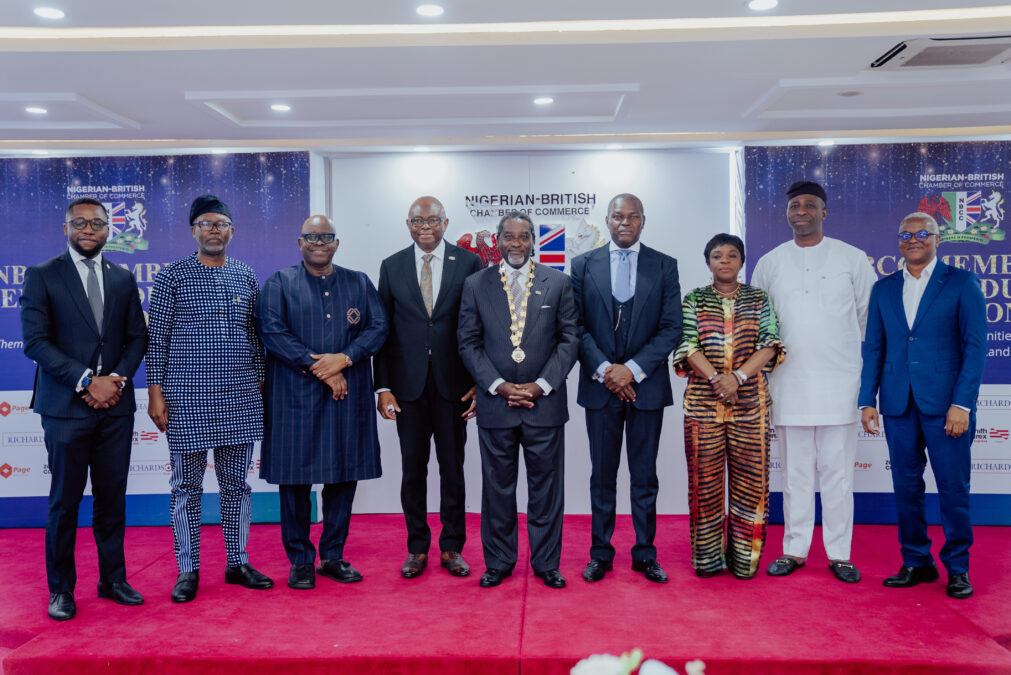
Yet, rather than unleashing a wave of credit to small businesses, the new lending capacity is more likely to flow to Nigeria’s largest corporates, potentially widening the financing gap for millions of small and medium-sized enterprises (SMEs), Sonnie Ayere, founder and group chief executive officer of DLM Capital Group, said at the Nigerian-British Chamber of Commerce (NBCC) Members’ Evening in Lagos on Thursday.
The Nigerian investment banker stated that the banking industry’s challenge has shifted from raising capital to deploying it efficiently, following the successful recapitalisation exercise that saw 33 banks meet the Central Bank of Nigeria’s revised minimum capital requirements in March 2026.
Ayere, however, argues that the fresh capital may not immediately translate into broader credit expansion across the economy.
“The rational deployment is top-heavy,” he said, noting that banks facing a 45 percent Cash Reserve Ratio (CRR) and equipped with credit teams structured for large-ticket lending will naturally prioritise bigger corporate borrowers where the cost of originating loans is significantly lower.
Big corporates stand to benefit
Rather than spreading the new lending capacity across thousands of SMEs, Ayere expects most of the credit growth to be concentrated among the country’s largest companies and sovereign-linked borrowers.
Reports from rating agencies project nominal loan growth above 20 percent this year but say much of that expansion will likely be absorbed by Nigeria’s top corporate borrowers, compressing lending margins at the upper end of the market while leaving smaller businesses with limited access to finance.
That outlook challenges a common assumption that higher bank capital automatically translates into greater access to finance for small businesses.
SMEs account for nearly half of Nigeria’s GDP and employ the majority of the country’s workforce, yet many continue to cite limited access to affordable financing as one of their biggest constraints.
Banks face deployment dilemma
The DLM Capital Group founder notes that the banking industry now faces a profitability challenge rather than a capital shortage.
“The opportunity lies in the gap between reforms already implemented and capital yet to be deployed,” he said, arguing that banks now possess the financial capacity to lend but must decide how to deploy that capital without compromising returns or asset quality.
For lenders, extending a few billion-naira facilities to established corporates is operationally cheaper and less risky than managing thousands of smaller SME loans that require more intensive monitoring.
That economic reality could reinforce the concentration of bank credit among large businesses despite policymakers’ long-standing efforts to improve financing for smaller enterprises.
Opportunity shifts to intermediaries
Instead of lending directly to SMEs, Ayere believes banks may increasingly rely on intermediaries such as finance companies, microfinance banks, and specialised credit originators.
That suggests that institutions capable of originating, servicing, and packaging SME loans into investable portfolios could become major beneficiaries of the recapitalisation.
Under his preferred scenario, banks would purchase SME exposures through funding lines, portfolio securitisations, and risk-sharing arrangements involving institutions such as the Development Bank of Nigeria and InfraCredit rather than build those capabilities internally.
“The SME opportunity exists, but only for those who can originate, service, and package small-ticket credit at scale—capabilities banks will buy, not build,” he said.
Macro risks remain
In his presentation, Ayere also warned that the success of the recapitalisation will depend on broader macroeconomic conditions.
Although inflation has fallen sharply from its 2024 peak, the recent fuel-price shock has interrupted the disinflation trend, creating uncertainty around when the Central Bank of Nigeria can begin reducing interest rates.
He outlines three possible scenarios for inflation and interest rates through 2027, ranging from a temporary interruption to a more persistent inflation cycle that could keep borrowing costs elevated and weaken real credit growth.
If inflation proves sticky and lending rates remain around 30 percent, banks’ ambitions to expand their loan books could collide with weaker borrower demand and rising repayment risks, Ayere said.
NBCC calls for stronger partnerships
Speaking earlier at the event, Prince Abimbola Olashore, president and chairman of the council of the Nigerian-British Chamber of Commerce, said the Chamber is positioning itself to deepen trade and investment ties between Nigeria and the United Kingdom as it approaches its 50th anniversary.
He said initiatives including trade missions, business forums, policy dialogues, and the recently launched British Trade Centre are designed to expand market access, strengthen strategic partnerships, and support enterprise development.
Olashore urged businesses to embrace collaboration and innovation, saying stronger partnerships would be critical to creating investments, generating jobs, and supporting sustainable economic growth.

Join BusinessDay whatsapp Channel, to stay up to date
Open In Whatsapp