…As mining revenue rises from N6bn to N70bn
Nigeria has announced a significant breakthrough in its solid minerals sector with the discovery of a polymetallic mineral province in Kaduna State even as reforms lifted mining revenue from about N6 billion to over N70 billion within a few years.
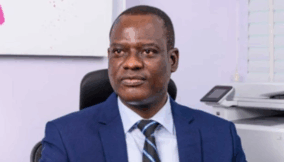
Dele Alake, Minister of Solid Minerals Development, disclosed this on Wednesday at the opening of the African Natural Resources and Energy Investment Summit (AFNIS 2026) in Abuja, themed “One Africa, One Resource Vision.”
Alake said exploration activities, verified by the Nigerian Geological Survey Agency (NGSA), confirmed a mineral belt in Kaduna containing platinum group metals, gold, nickel, copper, lithium, and rare earth elements.
“Recent exploration breakthroughs have unveiled a polymetallic mineral province in Kaduna State consisting of platinum group metals and other strategic minerals,” he said.
He explained that the discovery was made by a private sector operator with technical support from the NGSA, underscoring growing collaboration between government and investors.
The announcement coincided with data from Steron Mining and Company Limited, which estimated lithium reserves of 3.3 million metric tonnes at its Abuja site during a field tour for summit delegates.
Abu Omar, the company’s Managing Director and Chief Executive Officer, said the estimate followed extensive exploration, drilling, and geological mapping.
“We have an estimated lithium reserve of about 3.3 million metric tonnes, alongside granite and emerging tantalite occurrences. Exploration is ongoing,” he said.
He added that total mineral resources at the site were estimated at 94.8 million metric tonnes, including lithium and granite deposits.
“The Kaduna discovery comes amid renewed investor interest in Nigeria’s mining sector, driven by reforms aimed at increasing value addition, strengthening regulation, and attracting capital inflows”, he said.
Alake said the Tinubu administration had repositioned the solid minerals sector as a key driver of economic diversification with greater emphasis on local processing rather than raw export.
He noted that weak enforcement, low beneficiation, and informality had historically limited value creation in the sector.
“That is why we are restoring discipline in licensing, strengthening compliance, and ensuring only serious operators hold mineral titles,” he said.
According to him, more than 3,000 dormant and defaulting mineral licences have been revoked to unlock productive assets.
He added that applicants for mining leases are now required to submit value-addition plans, in a shift away from raw extraction toward processing and industrial development.
“We want mining investments that lead to processing plants, refineries, industrial clusters, jobs, and technology transfer,” he said.
Alake said ongoing reforms were already attracting significant capital inflows, particularly in lithium processing and refining.
He cited ongoing and completed projects, including an $800 million lithium processing plant, a $600 million lithium facility in Nasarawa State, a $200 million plant near Abuja awaiting commissioning, and a $50 million lithium refinery in the Federal Capital Territory.
He also highlighted a $1 billion iron ore-to-steel project in Kogi State.
According to him, mining revenues have risen from about N6 billion before the current administration to over N38 billion in 2024 and more than N70 billion by end-2025, reflecting the impact of structural reforms in the sector.
He described the performance as evidence of improved governance, tighter regulation, and renewed investor confidence.
Alake also called for stronger African collaboration in mineral development, stressing the need to move from fragmented resource extraction to integrated industrial value chains across the continent.
“The question is no longer what Africa has, but what it does with it,” he said.
He urged investors to prioritise projects that promote local processing, job creation, and technology transfer, adding that Nigeria remains open to long-term strategic capital.
Omar said the company had transitioned from granite quarrying to lithium production following positive exploration results.
“We now process lithium ore locally, increasing purity from about one to three per cent to between six and seven per cent before export,” he said.
In his remarks, President Bola Tinubu called on African nations to deepen cooperation in harnessing the continent’s vast natural resources for industrialisation, economic prosperity, and sustainable development.
Represented by Alake, the President said Africa must move beyond being a supplier of raw materials to becoming a global hub for value addition, manufacturing, and energy production.
He noted that Africa’s vast deposits of oil, gas, lithium, cobalt, gold, copper, iron ore, and other strategic minerals position the continent at the centre of the global energy transition and emerging supply chains.
“The question before us today is whether Africa will finally turn its wealth into power—power for our homes, industries, young people, economies, and rightful place in the world,” he said.
Tinubu stressed that Africa must end the longstanding practice of exporting raw resources while other regions capture most of the value.
“For too long, Africa has exported the future in unfinished form. The time has come for us to process, manufacture, power our factories, train our engineers, and build our own value chains,” he said.
He said Nigeria’s reforms align with a broader continental agenda focused on diversification, industrialisation, infrastructure development, energy access, and job creation.
The President called for stronger regional integration, where mineral resources in one country support processing industries in another, and energy systems are shared across borders.
“A mine in one African country should feed a refinery in another. A gas field in one region should power factories across borders. A solar corridor within a single nation should support a continental grid,” he said.
Tinubu also urged African governments to adopt policies that attract investment, harmonise regulations, reduce trade barriers, and strengthen transparency in resource governance.

Join BusinessDay whatsapp Channel, to stay up to date
Open In Whatsapp