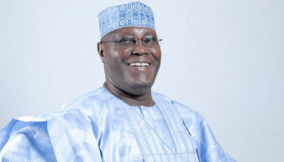
The commercial relationship between the United Kingdom and Nigeria is expanding in scale and scope, but investors remain hesitant to commit long-term capital, highlighting a gap between financial flows and real economic investment, according to Sam Abu, regional senior partner and country senior partner at PwC Nigeria.
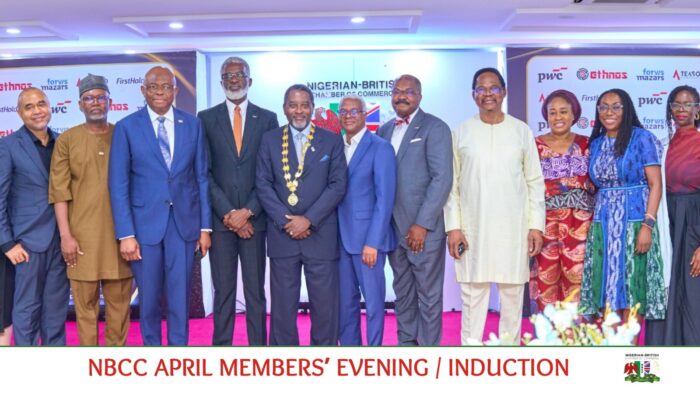
Speaking at a members’ evening and induction ceremony hosted by the Nigerian-British Chamber of Commerce in Lagos, Abu said capital inflows into Africa’s most populous economy are increasingly dominated by short-term portfolio investments rather than foreign direct investment (FDI), limiting the impact on infrastructure, jobs and industrial growth.
“The money is visiting. It has not yet moved in,” Abu said, capturing investor sentiment toward Nigeria’s market despite reforms, including eliminating costly fuel subsidies, relaxing currency controls and, more recently, overhauling colonial-age tax laws, policies that have well-positioned the country.
Read also: UK targets Nigeria as priority market in schools, skills drive
Nigeria recorded about $3 billion in capital importation in 2025, an increase of roughly 88.5 percent from the previous year, according to official data. However, about 80 percent of those inflows were portfolio investments, while FDI remained subdued at under $400 million in the fourth quarter alone.
That imbalance meant global investors are willing to engage Nigeria’s capital markets but remain cautious about deploying longer-term capital into productive sectors such as manufacturing, housing and infrastructure.
Trade grows, services dominate
Despite those constraints, bilateral trade between the UK and Nigeria continues to expand. Total trade in goods and services reached about £8 billion in the year to 2025, with the UK exporting roughly £6 billion—more than 60 percent of which came from services including finance, consulting, insurance and education.
Imports from Nigeria stood at about £2.4 billion, largely driven by energy exports, leaving the UK with a trade surplus of £3.4 billion.
The UK has also emerged as Nigeria’s largest source of capital in recent quarters, accounting for about 58 percent of total inflows in the fourth quarter of 2025, driven largely by institutional investors and asset managers.
Still, Abu noted that strong portfolio participation has not translated into sustained project financing, particularly in capital-intensive sectors.
Diaspora and trust underpin flows
Beyond headline figures, Abu framed the UK-Nigeria corridor as a relationship anchored in deep social and historical ties, including a diaspora of more than 300,000 Nigerian-born residents in the UK and over one million people of Nigerian heritage.
Remittances—estimated at more than $20 billion annually—remain one of Nigeria’s most stable sources of foreign exchange, supporting households, education and small businesses.
“Behind every investment, there is trust,” Abu said, arguing that cultural familiarity and long-standing institutional links—from legal systems to education—differentiate the UK-Nigeria relationship from other trade corridors.
Read also: UK study visas for Nigerians rise to 30,204, remain among top four sources
That interdependence also extends to labour markets, with Nigerians playing a significant role in sectors such as healthcare, finance and academia in the UK.
Post-Brexit pivot meets Nigeria’s scale
The UK’s post-Brexit push to expand bilateral trade partnerships has sharpened its focus on Africa, where Nigeria stands out due to its market size, demographics and diaspora links.
With a population of about 230 million and one of the continent’s largest consumer markets, Nigeria is often viewed as the gateway for investors targeting African growth.
“When people say Africa is next, what they really mean is Nigeria,” Abu said.
However, converting that potential into sustained investment largely depends on addressing longstanding structural constraints, including regulatory inconsistency, weak project bankability, infrastructure deficits and contract enforcement challenges.
Read also: FAAN MD projects strong air export growth as Nigeria-UK trade hits £8.1bn
Opportunities in infrastructure, energy, tech
Abu identified infrastructure, energy and technology as key sectors where UK expertise and Nigerian demand align.
Africa’s infrastructure financing gap is estimated at $68 billion to $108 billion annually, with Nigeria accounting for a significant share. He pointed to a recent £746 million UK-backed financing facility for port rehabilitation in Lagos as an example of how structured deals can unlock capital at scale.
In energy, Nigeria’s vast gas reserves—estimated at over 210 trillion cubic feet—offer opportunities across the value chain, from processing and pipelines to LNG and industrial applications.
Meanwhile, Nigeria’s technology sector continues to attract global attention. Between 2019 and 2023, African startups raised more than $9 billion in venture capital, with Nigerian firms accounting for the largest share.
Read also: Nigeria eyes $125m export revenue through UK DCTS, aviation reforms
From conversations to deals
While the foundation for deeper investment is already in place, Abu said the next phase requires moving beyond dialogue to execution.
“The gap between an MOU and a signed agreement is where most opportunities die,” he said, calling for stronger advisory frameworks, regulatory consistency and greater involvement of bilateral institutions in co-investment rather than facilitation alone.
Local capacity, including talent and supply chains, will also be critical to sustaining investment and ensuring long-term returns, he added.
Prince Abimbola Olashore, president of the chamber, said the organisation has spent nearly five decades building commercial ties between both countries, describing it as a “living, breathing connection built from trust”, while encouraging the new members to leverage the chamber to enhance trade relations.
As Abu puts it, “The trade already exists,” he said. “What it needs now is more traffic.”

Join BusinessDay whatsapp Channel, to stay up to date
Open In Whatsapp