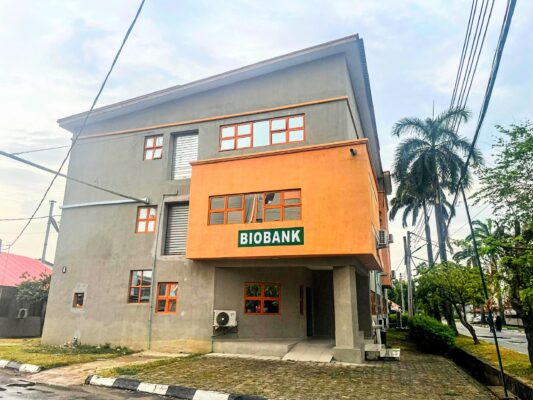
Nigeria is stepping up efforts to reduce its dependence on foreign medical data with the development of a 400,000-sample biobank, a move that could reshape how diseases are studied and treated in Africa’s most populous country.
The Nigerian Institute of Medical Research (NIMR) says its growing repository of biological samples, collected over years of clinical research and collaborations, offers a pathway to generate locally relevant health data, long seen as a major gap in Nigeria’s healthcare system.
John Oladapo Obafunwa, director-general, NIMR, said the biobank is central to the country’s ambition to build a more independent and data-driven research ecosystem.
“For too long, much of the data guiding treatment and policy has come from outside our environment. This resource allows us to study diseases based on our own population,” he said during a meeting with a visiting Chinese scientific delegation in Lagos.
Read also: Lagos leverages five years’ biosecurity roadmap in COVID-19 fight
Nigeria, like many African countries, has historically relied on international datasets and foreign laboratories for advanced research, particularly in areas such as genomics and complex diagnostics. While useful, experts say such dependence often limits the accuracy of findings when applied to local populations with different genetic, environmental, and lifestyle factors.
The NIMR biobank, now holding more than 400,000 samples, represents one of the largest structured collections of biological data in the region. It includes samples linked to infectious diseases, non-communicable conditions, and other health challenges prevalent in Nigeria.
Access to such a dataset could improve disease surveillance, speed up diagnosis, and support the development of targeted treatments tailored to local needs. It also opens the door to more robust clinical trials and homegrown innovation in diagnostics and therapeutics.
The shift comes as Nigeria faces a dual health burden: persistent infectious diseases such as malaria and tuberculosis, alongside a growing rise in conditions like cancer, diabetes, and cardiovascular illnesses.
NIMR’s strategy goes beyond sample collection. The institute is positioning itself as a hub for data-driven research, focusing on generating high-quality evidence that can inform national health policies and guide investment in healthcare.
But significant gaps remain. Obafunwa said the biobank’s full potential is yet to be realized due to limited technical infrastructure, weak data management systems, and shortages of skilled personnel in advanced fields like bioinformatics and genome sequencing.
“These samples are valuable, but without the right systems and expertise, we cannot extract their full meaning,” he said.
Nigeria still depends heavily on foreign laboratories for genome sequencing and complex analyses, a situation that increases costs and delays research outcomes. Building in-country capacity, will be key to unlocking the biobank’s value.
The institute is now seeking partnerships to address these gaps, including collaborations that can deliver technology transfer, training, and improved laboratory systems. The recent engagement with Chinese researchers reflects a broader push to deepen international cooperation while strengthening domestic capabilities.
NIMR’s role during the COVID-19 highlighted both its potential and its limitations. The institute was a frontline player in testing and response efforts, but the crisis also exposed weaknesses in infrastructure and scale.
Since then, Nigeria has intensified efforts to build more resilient health research systems, with the biobank emerging as a key pillar of that strategy.
Still, infrastructure challenges persist. NIMR lacks a fully centralized research complex, and funding delays have slowed the expansion of laboratories needed to process and analyze samples at scale.
For policymakers, the stakes are high. Countries that control large, high-quality health datasets are increasingly shaping global research priorities, attracting funding, and advancing precision medicine.
Nigeria’s biobank could help position the country within that landscape, giving it greater influence in global health research while improving outcomes at home.
However, analysts caution that data alone is not enough. Sustained investment, regulatory support, and a clear national strategy will be required to translate the biobank into measurable health gains.
Read also: When Nigeria’s economic expansion fails its people
If successfully developed, the repository could reduce Nigeria’s reliance on imported knowledge, shorten research timelines, and enable faster responses to disease outbreaks.
For now, the 400,000-sample collection represents both an opportunity and a test of whether Nigeria can convert scientific potential into practical impact.
“We want to build systems that serve our people. That is how we reduce dependence and create solutions that truly work for Nigeria,” Obafunwa said.

Join BusinessDay whatsapp Channel, to stay up to date
Open In Whatsapp