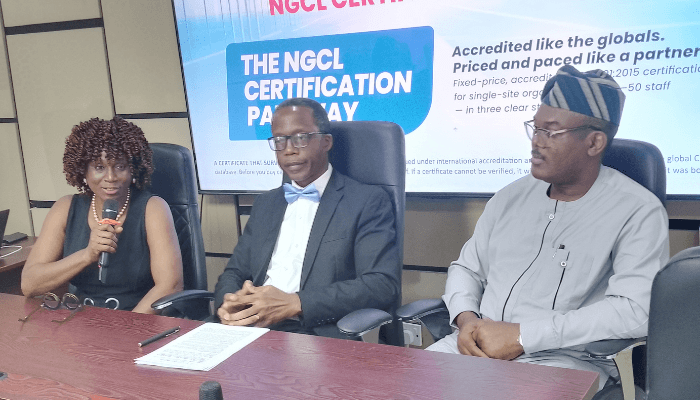
Nigeria’s micro, small and medium enterprises (MSMEs) have received a major boost in their quest to compete for bigger contracts and international markets, following the launch of a structured ISO certification programme by Neca’s Global Certification Limited (NGCL).
The Lagos-based internationally accredited management systems certification body unveiled “The NGCL Certification Pathway,” a three-stage programme designed to make internationally recognised ISO 9001 certification more affordable, transparent and accessible to small businesses.
The initiative addresses one of the biggest constraints facing Nigerian SMEs—limited access to globally recognised certification due to high costs, opaque pricing and concerns over the credibility of certificates issued by unaccredited providers.
For many SMEs, internationally recognised certification has increasingly become a prerequisite for participating in government procurement, supplying multinational companies and accessing export opportunities under the African Continental Free Trade Area (AfCFTA). Yet many businesses have remained excluded because certification has traditionally involved unpredictable costs, payments in foreign currency and lengthy processes.
NGCL said its new pathway replaces that model with fixed, published pricing in naira, clearly defined timelines and a three-step process covering readiness assessment, certification and ongoing compliance support.
The programme is targeted primarily at single-location businesses with between 10 and 50 employees seeking ISO 9001:2015 certification—the globally recognised standard for quality management systems.
Speaking on the launch, Noruwa Edokpolo, acting managing director of NGCL, said the initiative was created to remove longstanding barriers preventing smaller businesses from accessing internationally accredited certification.
According to him, businesses requiring certification should be able to understand the entire journey—from costs to timelines—before committing resources.
“Our mission is to certify compliance to standards and remove barriers to trade. For too long, the businesses that most need the doors certification opens—tenders, corporate contracts and export markets—have been the least able to access it. The Pathway changes that by combining international accreditation with pricing and service delivery tailored to Nigerian businesses,” Edokpolo said.
Industry analysts say the initiative comes at a time when quality assurance is becoming a key determinant of competitiveness.
As governments tighten procurement requirements and multinational corporations strengthen supplier qualification processes, accredited ISO certification is increasingly moving from a voluntary credential to a strategic business asset.
Unlike certificates issued by unaccredited organisations, NGCL said every certificate issued through the pathway will be independently verifiable on the International Accreditation Forum (IAF) CertSearch database, giving customers, regulators and procurement agencies confidence in their authenticity.
The company also stressed that it maintains strict independence throughout the certification process by not offering consultancy services or preparing documentation for organisations it certifies, in line with international accreditation requirements.
Under the pathway, businesses first undergo a readiness assessment, which includes a gap analysis, staff awareness training and a roadmap for meeting ISO 9001 requirements.
Successful organisations then proceed to formal certification audits before receiving internationally accredited certification upon satisfying all audit requirements. The final phase provides annual surveillance audits, refresher training and certificate maintenance through quarterly payment options designed to ease pressure on SME cash flow.
Beyond certification, experts believe structured quality management systems can help SMEs improve operational efficiency, reduce waste, strengthen customer confidence and position themselves for sustainable growth.
With Nigeria seeking to diversify its economy through increased non-oil exports and stronger private sector participation, initiatives that improve the competitiveness of SMEs are expected to play a critical role in helping local businesses integrate into regional and global value chains.
For many Nigerian enterprises seeking to scale beyond local markets, the availability of a transparent, locally priced and internationally accredited certification pathway could significantly lower one of the most persistent barriers to growth, enabling more businesses to compete for larger contracts, attract new customers and build globally recognised quality standards into their operations.

Join BusinessDay whatsapp Channel, to stay up to date
Open In Whatsapp