…as UNILAG hosts Lagos professional chair in tax matters public lecture
Nigeria’s newly enacted tax laws have reignited long-standing debates over the balance of power between the federal government and the states.
Experts who spoke at the 2026 Lagos State professional chair in tax and fiscal matters public lecture hosted by the University of Lagos (UNILAG), emphasised that the implementation of the Nigeria Tax Act 2025 and related legislation could weaken the authority of states over revenue generation, unless transparency and cooperation are prioritised.
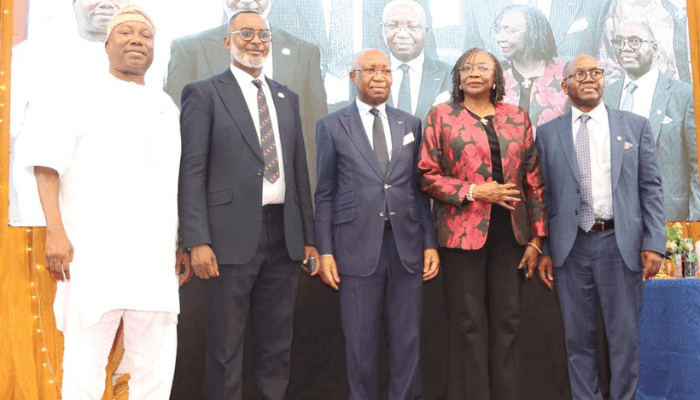
Babajide Sanwo-Olu, former governor of Lagos State, speaking at the public lecture held on Tuesday, said resistance to the new laws was rooted not only in economic hardship but in a “deep trust deficit” between citizens and government.
Sanwo-Olu stressed that success would depend on collaboration across federal, state and local governments, as well as visible public value from tax proceeds, while acknowledging that tax reform was unavoidable and necessary after decades of dependence on oil revenues and borrowing.
Wole Olanipekun, the Pro-Chancellor and chairman of the governing board of the University of Lagos, warned that consolidating fiscal authority at the federal level without recalibrating state powers could undermine the spirit of federalism.
“Where fiscal power is unduly concentrated, federalism withers,” he said, cautioning that efficiency must not be pursued at the expense of consent.
The reforms, which came into effect on January 1, 2026, despite calls for postponement, include expanded enforcement powers for the newly established Nigeria Revenue Service and provisions allowing deductions from states’ allocations in cases of tax default.
Critics argue that such measures could heighten tensions between Abuja and the states, particularly as governors remain accountable to citizens for services they cannot fully fund or control.
Abiola Sanni, dean of the Faculty of Law at UNILAG, said states currently lack sufficient authority over key taxes such as personal income tax, stamp duties and capital gains tax, creating a disconnect between responsibility and power.
“The implication is that states cannot correct inefficiencies until the Federal Government acts,” he said, warning that this imbalance could provoke constitutional disputes.
Despite the warnings, proponents insist the reforms are designed to simplify Nigeria’s fragmented tax system, broaden the tax base and improve revenue mobilisation.
However, analysts say the deeper test will be whether the reforms strengthen cooperation within Nigeria’s federal system—or inflame long-standing centre–state rivalries at a time of economic strain.
Taxing the Digital Economy: Questions Linger Over Fairness and Readiness
Nigeria’s new tax reforms aim to bring the fast-growing digital economy into the tax net, marking a significant shift in how the country seeks to raise revenue in a changing economic landscape.
Under the new laws, income from digital activities and modern forms of work will be formally recognised within the tax system, as the government attempts to broaden its narrow revenue base.
Babajide Sanwo-Olu, the executive governor of Lagos State, said the move was part of a broader effort to modernise a system he described as “complex, narrow and sometimes unfair”.
“For many Nigerians, there is confusion about what they owe, who they should pay, or why they should pay at all,” he said, adding that the reforms were intended to simplify compliance and ensure everyone paid their fair share.
But legal and policy experts warn that taxing the digital economy presents unique challenges in a country where informal work dominates, and public trust in government remains fragile.
Sanni reiterated that the credibility of the reforms, not their legality, was the central issue.
“The deficit bridge between the people and the government is trust,” he said, noting that many citizens feared taxes collected would not translate into tangible public benefits, particularly at the grassroots level.
Freelancers, online traders and digital entrepreneurs are expected to be among those most affected by the changes, raising questions about enforcement capacity and fairness.
Experts also cautioned that federal reforms alone may not address the reality of informal taxation by non-state actors in markets, motor parks and streets, an issue that disproportionately affects small traders and low-income earners.
While Lagos State says it is investing in digital tools and strengthening tax administration, analysts argue that uneven capacity across states could widen inequalities and fuel resistance.
There are also concerns that some charges, such as stamp duties on electronic transfers, could have regressive effects if not carefully reviewed.
Supporters of the reforms counter that exemptions for low-income earners and small businesses, estimated to cover about 90% of enterprises, mean the laws are not anti-poor.
Yet critics say the success of digital taxation will depend less on technology and more on whether citizens see visible improvements in services, infrastructure and accountability.
As Nigeria looks beyond oil for sustainable revenue, the attempt to tax the digital economy may prove pivotal, but only if the government can convince citizens that modern taxation will deliver modern governance.

Join BusinessDay whatsapp Channel, to stay up to date
Open In Whatsapp