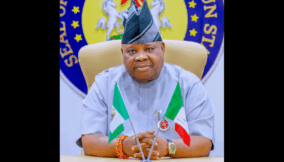
…unveils 5-year Industrial Policy
Lagos State is seeking to become Africa’s leading manufacturing hub with the launch of its new industrial policy.
The 2025-2030 plan prioritises regulatory reform, access to finance and power, and cluster development to drive competitiveness and position Lagos as a strategic gateway under the African Continental Free Trade Area.
The policy, launched by Governor Babajide Sanwo-Olu, outlines a series of strategic initiatives to boost competitiveness, drive innovation, and attract investment in key sectors.
Speaking at the launch, Sanwo-Olu, who was represented by Abimbola Salu-Hundeyin, SSG, noted that the policy provided a clear roadmap to reimagine, rebuild, and reposition the state’s industrial sector for the future.
“Lagos industrial policy acts as an implementation engine that localises national ambitions, accelerates industrial productivity and positions Lagos as a strategic gateway for Nigeria’s industrial expansion and global competitiveness,” Sanwo-Olu said.
“This policy positions Lagos to emerge as a leading manufacturing hub in Africa,” the governor noted.
He emphasised the need for Lagos to adapt to rapidly changing global supply chains and technological advancements.
He said that the state is committed to regulatory reform and the ease of doing business, to ensure that enterprises can operate in an environment that is transparent, predictable, and efficient.
He explained that Lagos is strengthening access to finance and investment promotion, while working with financial institutions and development partners to de-risk and unlock capital for industrial growth.
Read also: $900m fibre gamble: ATCON bets on local ISPs to close Nigeria’s digital gap, unlock growth
Sanwo-Olu added that the state is advancing skills development and workforce readiness to ensure that Lagosians are equipped with the capabilities required for modern manufacturing.
According to him, the policy aligns with Lagos’ broader development vision, including its STEAMS Plus agenda and the Lagos State Development Plan 2052. Key focus areas include regulatory reform, access to finance, skills development, and promoting innovation and sustainability.
With Nigeria’s industrial sector facing structural challenges, Sanwo-Olu stressed the urgency of coordinated action between government and industry to achieve sustainable growth. The policy is seen as a critical step towards making Lagos a globally competitive megacity by 2052.
Folashade Ambrose-Medebem, commissioner for Commerce, Cooperative, Trade and Investment, in her welcome address, said the policy reflected months of stakeholder consultations, data-driven analysis and alignment with global best practices in industrial planning and sustainable economic growth.
She noted that the policy provided a clear roadmap for economic diversification, reduced import dependence and increased value addition across critical sectors of the state’s economy.
Ambrose-Medebem described the document as the most ambitious industrial agenda ever conceived by the Lagos State Government in recent history.
The commissioner emphasised that small and medium-sized enterprises would play a central role in achieving the policy’s objectives. “The most consequential commitment in this policy is the one where we have a need for small and medium-sized enterprises.”
She explained that the policy addresses constraints to industrial growth, with timelines to tackle infrastructure, regulatory and supply chain challenges. The policy document is in line with the country’s recently launched Industrial Policy document.
Speaking also, John Enoh, minister of State for Industry at the Federal Ministry of Industry, Trade and Investment, described the policy as a strategic signal that Nigeria’s industrialisation will be achieved through coordinated action at both federal and sub-national levels.
“The Lagos State Industrial Policy aligns strongly with the Nigeria Industrial Policy 2025 in its emphasis on infrastructure as a backbone of industry,” he said.
“A competitive and enabling business environment, MSME growth as a driver of industrial depth. Skills, innovation and human capital development. Export competitiveness under air safety and sustainably inclusive industrialisation. This alignment is not accidental,” he noted.
“It is essential because industrialisation in Nigeria will only succeed when federal vision and strategic plan execution move in that step,” he added.
The organised private sector applauded the industrial policy but stressed the need for execution.
Segun Ajayi-Kadir, director-general of the Manufacturers Association of Nigeria, noted that Nigeria has lacked a comprehensive national industrial policy for over 60 years and said Lagos’ version could bring “certainty to businesses” and curb “regulatory tyranny” by forcing agencies to commit to ease of doing business.
He added that manufacturers hope the policy will be “practicalised” to improve cluster management, access to power and ports, and help firms achieve economies of scale.
Ayotunde Coker, representing the Lagos Chamber of Commerce and Industry, said Lagos is already Africa’s digital infrastructure hub but “needs the right infrastructure to make it a reality” for digital innovation to thrive.

Join BusinessDay whatsapp Channel, to stay up to date
Open In Whatsapp