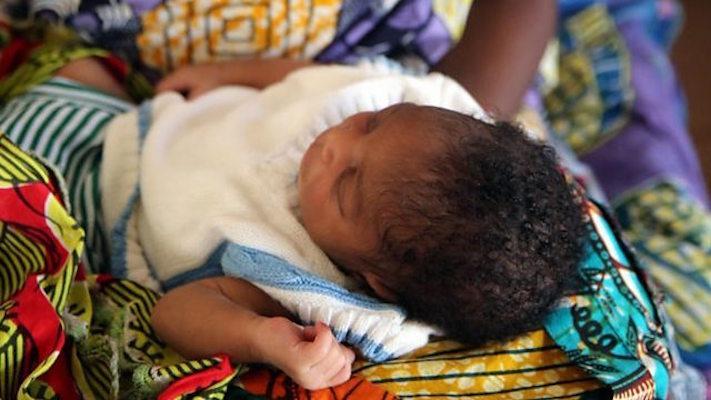
ISN Medical and Revvity have launched the one million New Born Screening (NBS) campaign, aimed at reducing Nigeria’s under five mortality in four years.
The campaign, themed ‘Every Nigerian child deserves a healthy start in life’ is geared towards screening one million newborns by 2030, for life-altering conditions before symptoms appear.
It will also help to connect families to care within the critical first weeks of life, and ensure every screened child grows up with intended full potential.
Muhammad Ali Pate, the Coordinating Minister of Health and Social Welfare, stated that the initiative is timely and firmly grounded in evidence, which fully aligned with the ministry’s health sector reform agenda.
“It will ensure that Nigeria’s newborn screening programme is aligned with global best practices, while remaining responsive to our local system readiness,” stated Pate, who was represented by Amina Mohammed, Director, Child Health of the Ministry.
According to Pate, data and outcomes generated through the newborn screening will strengthen Nigeria’s evidence base research and directly support the implementation of the country’s Health Sector Renewal Investment Initiative.
“By improving child survival indicators, strengthening health information systems, and promoting data-driven decisions. It also complements the sector-wide approach by demonstrating the principles of one plan, one budget, one report, one conversation, and one voice.”
Felix Ofungwu, MD/Chief Executive Officer (CEO), ISN Medical, said that newborn screening is a standard practice in many developed countries that enables the early detection of serious but treatable conditions shortly after birth.
He disclosed that early diagnosis allows healthcare providers to intervene promptly, prevent complications, reduce healthcare costs, and improve long-term health outcomes for children and their families.
According to him, the partnership with Revvity aims to introduce global best practice in newborn screening capabilities, by expanding access to testing, build local capacity, and support healthcare providers in identifying congenital conditions earlier to help children receive timely and life-saving care.
“We recognise that achieving this vision will require collaboration across multiple stakeholders,” he said.
According to him, success will depend on strong partnerships with government institutions, healthcare professionals, key opinion leaders, medical facilities, and development partners.
“Together, we can build awareness, strengthen infrastructure, develop local expertise, and establish sustainable newborn screening programs that will benefit generations to come,” Ofungwu said.
Adejumoke Idowu Ayede, professor and consultant Paediatrician in the department of Paediatrics, College of Medicine, University of Ibadan, said NBS is not seen as a priority in Nigeria.
According to her, Nigeria must adopt a multi-institutional approach to NBS, supported by data driven policies to strengthen newborn screening across the country. “Let us institutionalize NBS.”
She added that there is a need to develop a sustainable, implementation framework, in order to be part of the global movement on NBS.
Sanna Selin, Finland Ambassador to Nigeria, stated that newborn screening is not just a medical intervention; rather it is a life-saving public health investment with immediate and lasting impact.
She stated that the partnership between Revvity and ISN is a collaboration that reflects the power of combining global innovation with local expertise and leadership.
According to her, the goal of screening one million newborns by 2030 is both ambitious and achievable, especially with strong collaboration.
“Together, these efforts can significantly reduce preventable child mortality and disability, while strengthening Nigeria’s health system for generations to come,” stated Selin, who was represented by Eero Toivainen, the Commercial Counsellor of the embassy in Lagos.

Join BusinessDay whatsapp Channel, to stay up to date
Open In Whatsapp