… Senate tells FG to stop reintegrating repentant Boko Haram members
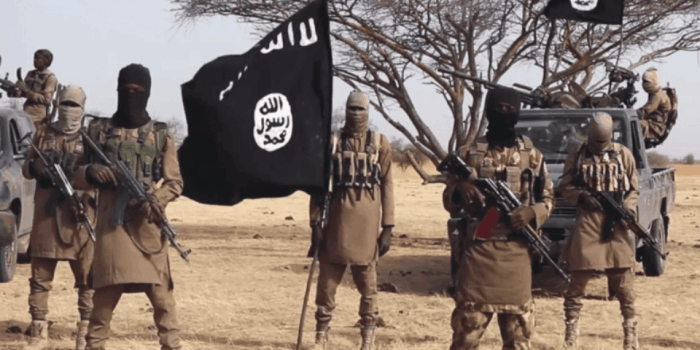
The Nigerian military is deploying former Boko Haram militants to the frontlines to hunt down their former comrades across the Lake Chad Basin.
These former militants are the products of a deradicalisation and reintegration campaign supported by Borno State governor Babagana Zulum, who noted that over 300,000 terrorists have surrendered in recent years. Thousands of these ex-combatants are not just returning to civilian life; they are being repurposed as the military’s insider weapon.
The transition pipeline is formalised under the auspices of Operation Safe Corridor. After undergoing re-indoctrination, a select group of these former fighters are heavily relied upon for their intimate knowledge of terrain and the playbook of active terrorist groups.
Ba Modu, a man who spent nearly two decades as a dreaded Boko Haram Qa’id (war commander), is an example. Having enlisted in 2005 as an early disciple of the sect’s founder, Mohammed Yusuf, Modu commanded major operations against the Nigerian state. Today, two years after his surrender, he serves as a fierce battlefield asset for the very military he once sought to destroy.
“It’s true that we are working closely with the military in fighting the remaining Boko Haram and ISWAP members. I am one of them; we comb the bush with soldiers and the Civilian Joint Task Force, organise, and execute attacks on the terrorists’ enclaves.”
According to Modu, the military equips them with AK-47 rifles, motorbikes, and camouflage uniforms. Operating primarily around Dikwa, Mafa, and the Sambisa Forest, these squads rely on stealth, frequently trekking on foot to ambush insurgents. The strategy yields dividends, with Modu recounting recent operations where his unit successfully seized machine guns, military trucks, and anti-aircraft weaponry from the Islamic State West Africa Province (ISWAP).
The work does not come without a severe cost. Modu notes that several ex-fighters who surrendered alongside him have already paid the supreme price, dying in battles at Gazuwa, Damboa, and Monguno.
To sustain this shadow force, authorities provide financial incentives. Surrendered fighters receive N20,000 monthly stipend from the military, while some local governments supply an additional N10,000 alongside foodstuff. In areas like Mafa Local Government, dozens of ex-combatants fight purely as volunteers, driven by motives that range from civic duty to personal vengeance.
Abu Dadai is another surrendered insurgent fighting with the troops against both ISWAP and Boko Haram.
“The military appreciates our contributions in the terror fight immensely; they have even promised to increase our monthly stipend in recognition of our contributions,” he revealed.
“I never imagined this day in my life: me, as a former Boko Haram fighter, now working with the military and the members of the civilian joint task force to fight my former comrades,” he expressed surprise.
“As a trained insurgent fighter, I can honestly say it amazes me. I feel incredibly happy to be fighting against active insurgents. Even the military and the civilian joint task force can’t believe that we travel together in the same vehicle to fight the insurgents,” Abu Dadai said.
Sheikh Bukarmi, another ‘repentant’ insurgent, was among the original set of people who formed Boko Haram in 2002, with Mohammed Yusuf as its founder.
Apart from being a fighter, Bundi, as he is hailed, was a “respected scholar” in the group who travelled far and wide to try to convince people – particularly youths to join JAS.
He revealed that he underwent training in four different countries as an insurgent fighter.
He recalled: “When I surrendered to the military, I decided to assist them in the counterinsurgency operations because my hometown of Marte is still not safe.
“We had a series of discussions with the military and local government officials to ask them to provide us with motorbikes and rifles so that we could liberate the town. Our requests have been approved. We are just waiting for the final feedback,” he revealed.
Counterinsurgency experts believe that having former fighters working with the military – giving them motorbikes and AK-47 rifles – might be ill-advised. Nearly 10,000 surrendered terrorists have been reintegrated.
An anonymous counterinsurgency expert in the Sahel argues that it is too early to engage the ‘repentant’ fighters in counterinsurgency operations in the Lake Chad Basin region.
He advised the military authorities to think twice before taking any further step in engaging the former Boko Haram fighters.
He advanced reasons.
“The majority of those who have surrendered to the military are from the JAS faction and we all know what happened between the two factions [JAS and ISWAP].
“ISWAP killed [Abubakar] Shekau and his followers, destroyed Shekau’s den and expelled them from the bush. ISWAP has been hostile to Shekau’s loyalists and justified killing them by declaring they were infidels.
“They [ISWAP] became more powerful and organised than the JAS faction, which resulted in many JAS members deciding to surrender to the military.
“The reason former JAS fighters now support the military could be that they see this as an opportunity to take tactical revenge against ISWAP, whose members made life difficult for them after Shekau’s death.”
The counterinsurgency expert stressed: “There is a need for the authorities to understand what kind of support they offer to the former fighters.”
He said those who had given themselves up to the military just two years ago after spending nearly 14 years fighting the same system might not be ready to take up arms against active fighters and might not “fully believe” in the system to which they had surrendered.
“I think it’s too early for the government to consider them as fighters in ongoing counterinsurgency operations. There is every likelihood that some of them may frustrate the counterinsurgency efforts by sabotaging or betraying the military on the battlefields.
“I think the best option is to use them for communication. The military should take the best out of them by collecting key information that will enable them to review, restrategise and plan their future operations,” he suggested.
In a plenary session held by the Nigerian Senate on Tuesday, lawmakers called for an end to the government’s policy of rehabilitating repentant terrorists. Joseph Ikpea (APC, Edo Central) made the call.
“The government should stop granting pardon or rehabilitating repentant Boko Haram terrorists,” he said.
The prayer was unanimously adopted after Adams Oshiomhole (APC, Edo North) seconded it.
Supporting the proposal, Oshiomhole said the policy was unjustifiable while victims of terrorism and families of slain security personnel continued to bear the consequences of insurgent attacks.
“I rise to support the prayer, because it does not make even common sense to grant pardon, rehabilitate and reintegrate criminals into society.”
He added, “Therefore, I support it in total.”
Presenting the motion, Yar’Adua described insecurity as increasingly complex and alarming, saying criminal groups had become more sophisticated by deliberately targeting serving and retired military personnel.
Also contributing, Abdul Ningi (ADC, Bauchi Central) disclosed that six policemen had recently been killed in his constituency, lamenting that while the families of the deceased received little support, those responsible for their deaths were being treated with kid gloves.
The Senate observed a minute’s silence in honour of Maj.-Gen. Rabe and other victims of terrorism and resolved to send a delegation to console his family, the Katsina State Government and the Nigerian Army.
It also commended the Armed Forces and other security agencies for their sacrifices while urging them to strengthen intelligence gathering, inter-agency collaboration, community engagement and the deployment of technology to combat insecurity.

Join BusinessDay whatsapp Channel, to stay up to date
Open In Whatsapp