As companies worldwide mark the World Day for Safety and Health at Work 2026, a quiet but consequential shift is underway in how workplace risk is defined and managed. Once dominated by hard hats, hazard signs and compliance checklists, the safety agenda is increasingly turning toward less visible forces, those that shape human judgment under pressure.
This year’s theme, “Let’s ensure a healthy psychosocial working environment,” underscores that evolution. It signals a growing consensus that safety outcomes hinge not only on engineering controls or regulatory adherence, but also on culture, communication and the confidence of workers to act when conditions feel unsafe.
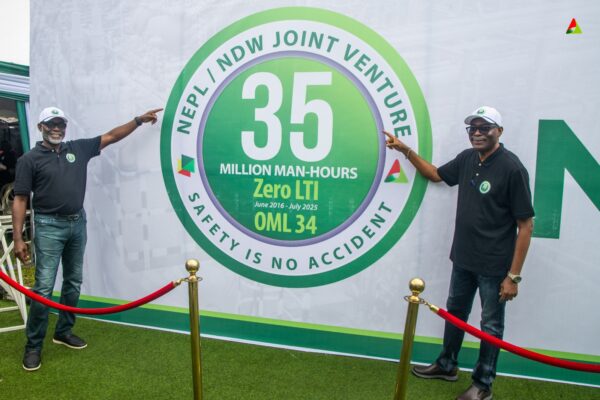
For ND Western, an indigenous operator in Nigeria’s energy sector, the shift formalises an approach that has been taking shape over several years. The company recently crossed 39 million work hours without a Lost Time Injury (LTI), extending a streak that stood at over 35 million hours the previous year. In an industry where operational risk is inherent, that performance places the firm among the sector’s standout safety performers.
Yet executives at ND Western frame the milestone less as a finish line than as evidence of a deeper operating philosophy.
“Safety isn’t a slogan we tick off during audits; it’s how we think and how we live,” Chief Executive Officer Lanre Kalejaiye said in an interview. The distinction, he added, shifts the focus from systems alone to the human behaviours that determine how those systems function in practice.
That emphasis reflects a broader recalibration within oil and gas, where complex operations, tight timelines and high financial stakes can create conditions in which human factors become decisive. Industry analyses have increasingly pointed to fatigue, stress and communication breakdowns as underlying contributors to incidents, even in environments with robust technical safeguards.
ND Western’s response has been to expand its definition of risk. While maintaining conventional safety protocols, the company has invested in measures aimed at strengthening what it describes as “psychosocial resilience” across its workforce. This includes reinforcing channels for reporting near misses, encouraging open dialogue between field teams and management, and embedding decision-making autonomy at all levels.
Central to that effort is the reinforcement of “Stop Work Authority,” a policy that empowers any employee to halt operations if they perceive a potential hazard. While such frameworks are not new to the industry, their effectiveness often depends on whether workers feel genuinely supported when they invoke them.
Company officials say the focus has been on ensuring that authority is not merely procedural, but cultural—backed by leadership signals that prioritize caution over output when the two are in tension.
The approach also reflects the realities of operating in Nigeria, where infrastructure challenges and evolving regulatory frameworks can add layers of complexity to risk management. By aligning global safety standards with local operating conditions, ND Western has sought to create systems that are both rigorous and adaptable.
Analysts note that the company’s performance comes at a time when investors and regulators are placing greater scrutiny on environmental, social and governance metrics, including worker welfare. In that context, sustained safety records are increasingly viewed as indicators of operational discipline and long-term resilience.
Still, executives caution against complacency. Tracking safe hours, they argue, is inherently retrospective—a measure of what has already gone right. The more difficult task lies in maintaining the conditions that prevent incidents from occurring in the first place.
That is where the focus on psychosocial factors becomes critical. By addressing stress, workload and communication dynamics, companies aim to reduce the likelihood of errors before they manifest in physical harm.

Join BusinessDay whatsapp Channel, to stay up to date
Open In Whatsapp